If it seems like the push for decarbonization has suddenly picked up the pace lately, Michigan provides proof. Home to the Big 3 automakers and for many the symbolic heart of U.S. manufacturing, its efforts to move away from fossil fuels have long been met with skepticism and resistance. But changing attitudes about climate change and renewable power — and full Democratic control of the state government for the first time in 40 years — have led to a swift about-face in the state’s energy policy. In today’s RBN blog, we examine Michigan’s plans to accelerate its transition away from coal-fired power and the long-term challenges that come with it.
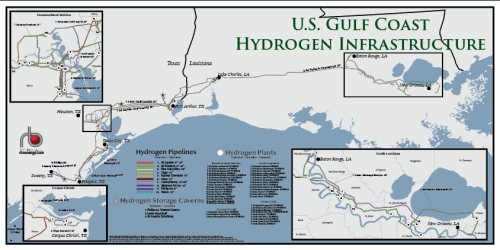
RBN’s U.S. Gulf Coast Hydrogen Infrastructure Map lays out the pipelines and merchant hydrogen plants that make up the gulf coast market, providing an unprecedented snapshot of the region’s hydrogen infrastructure network.
This is the fourth blog in our series on the ongoing state-level efforts to decarbonize U.S. energy networks. So far in this series, we have looked at four markets that could hardly be more different; Hawaii, California, Texas, and New York. While developments are playing out very differently from state to state, based on any number of factors, one thing has become clear over the past couple of years as climate-related initiatives have gained momentum: Economic and logistical realities that may have been initially overlooked are being brought to the fore. Americans expect the energy industry to deliver fuel and power where they need it, when they need it, and for a price that everyday people can afford — what’s referred to as the trilemma of availability, reliability and affordability.
Today, we turn our eyes to Michigan, which now requires the state’s electricity providers 80% of their energy portfolio from renewables, nuclear, and natural gas with CCS by 2035 and that ramps up to 100% by 2040 — among the most aggressive timelines of any state. Before we get into the details of the changes coming down the line, let’s take a quick look at where things stand today.
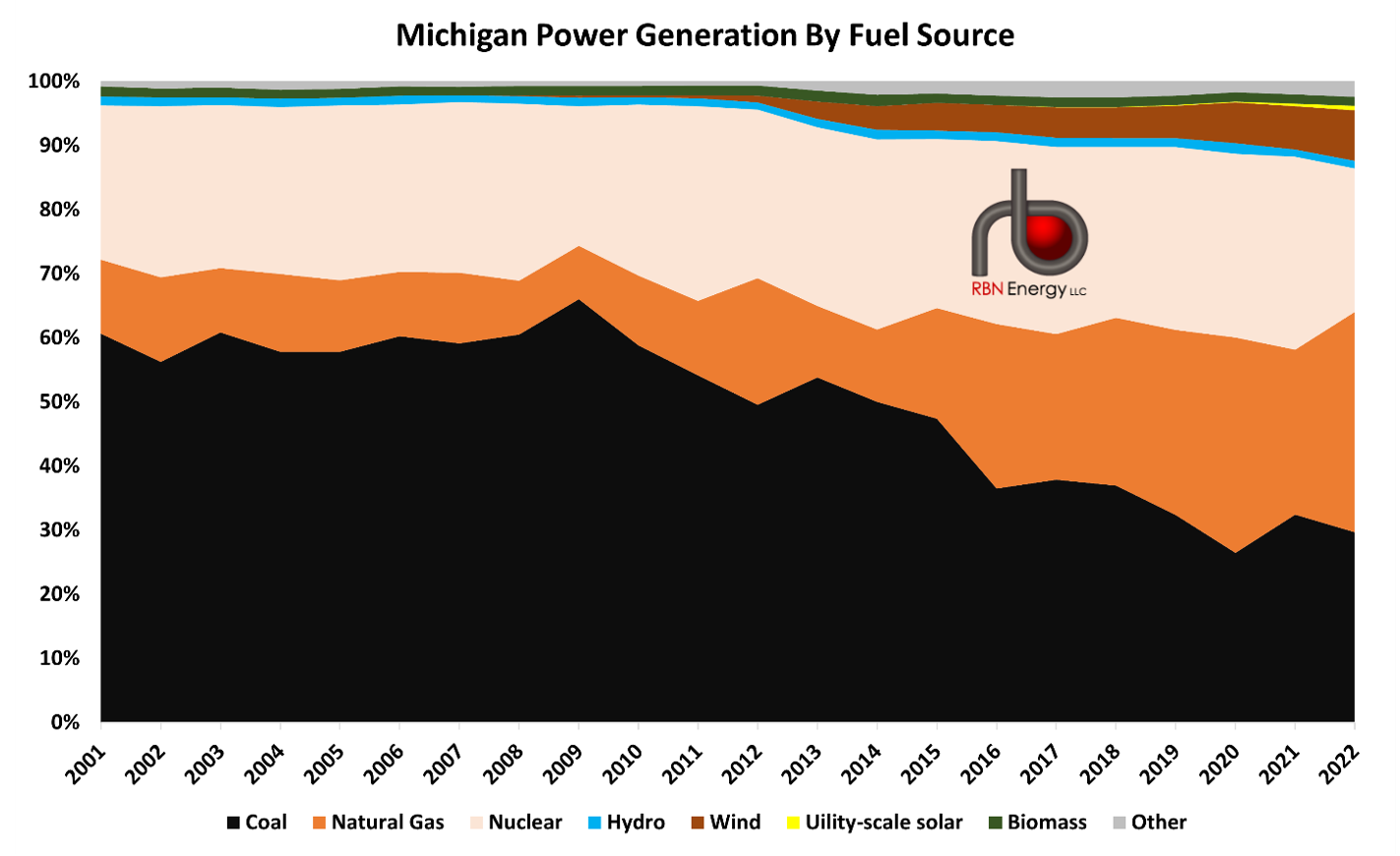
Figure 1. Michigan Power Generation by Fuel Source. Source: EIA
About the song
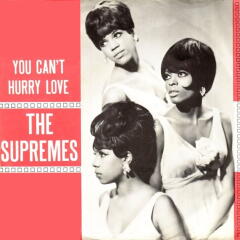
“You Can’t Hurry Love” was written by Brian Holland, Lamont Dozier and Eddie Holland. It appears as the third song on side one of The Supremes’ ninth studio album, The Supremes A’ Go-Go. The song was inspired by the 1950s gospel song, “(You Can’t Hurry God) He’s Right on Time,” by Dorothy Love Coates and the Gospel Harmonettes. It was released as the second single from The Supremes’ album in July 1966 and went to #1 on the Billboard Hot 100 Singles chart. Personnel on the record were: Diana Ross (lead vocals), Mary Wilson, Florence Ballard (backing vocals), Earl Van Dyke (piano), Robert White (guitar), James Jamerson (bass), Benny Benjamin (drums), and Jack Ashford (tambourine).
The Supremes A’ Go-Go was recorded in 1965-66 at Hitsville USA Studio A in Detroit with Brian Holland, Lamont Dozier, Hal Davis and Frank Wilson producing. Released in August 1966, it went to #1 on the Billboard 200 Albums chart and became the first album by an all-girl group to reach #1 on the charts. An additional 19 songs were recorded during the sessions for this album. In 2017, Universal released The Supremes A’ Go-Go: Expanded Edition, a two-disc limited release of the complete sessions for the LP. Two singles were released from the album.
The Supremes were an American vocal group and the most successful act for Motown Records in the 1960s. They have sold more than 100 million records worldwide and had 12 #1 singles on the Billboard Hot 100 Singles chart. The group was founded in Detroit in 1959 as The Primettes with original members Diana Ross, Mary Wilson, Florence Ballard and Betty McGlown. They met while living at the Brewster-Douglas public housing project in Detroit. The Primettes were the sister group to the Primes, a group that included future Temptations vocalists Paul Williams and Eddie Kendricks. The group changed their name to The Supremes after signing with Motown Records in 1961. They released 29 studio albums, four live albums, 52 compilation albums, two soundtrack albums, and 66 singles. They are members of the Rock and Roll Hall of Fame and Vocal Group Hall of Fame, have a Grammy Lifetime Achievement Award, and a star on the Hollywood Walk of Fame. Diana Ross left the group to pursue a solo career in 1970. Ten members passed through the group until its official breakup in 1977. Florence Ballard died in February 1976. Mary Wilson died in February 2021. Diana Ross continues to record and make concert appearances.