Despite some recent rain and snow, California continues to experience a historic drought that will further reduce the state’s hydroelectric output and again increase demand for natural gas for power generation. But the drought is only part of the story. California needs to replace the megawatts once provided by the now-shuttered San Onofre nuclear station, and specifically needs flexible gas-fired capacity to back up the intermittent production from the state’s new solar facilities and wind farms. The resulting gas shortages have led to generators being exposed to massive swings in gas prices this winter and facing higher prices this summer. Today we examine the growing connection between gas use and rain, snow, sun and wind in the Golden State.
Hydropower is big on the West Coast. In Part 1 of our series, Who Stopped the Rain?, we saw how natural gas plays second fiddle to hydro in the Pacific Northwest, especially in Oregon and Washington State, where a series of federally owned dams along the Columbia and Snake rivers generate more than half of the states’ annual electricity needs. That episode also discussed how, in relatively dry years the use of gas-fired power plants increases to fill the gap left by water-starved hydro plants. In Part 2, we looked at other forces driving increased gas use in the Pacific Northwest, including the development of new gas-fired power plants to replace coal units being taken offline and to keep pace with load growth. We also explored the new pipeline infrastructure being developed to move more gas from western Canada and the US Rockies to the increasingly gas-dependent region. Now we take a look at California.
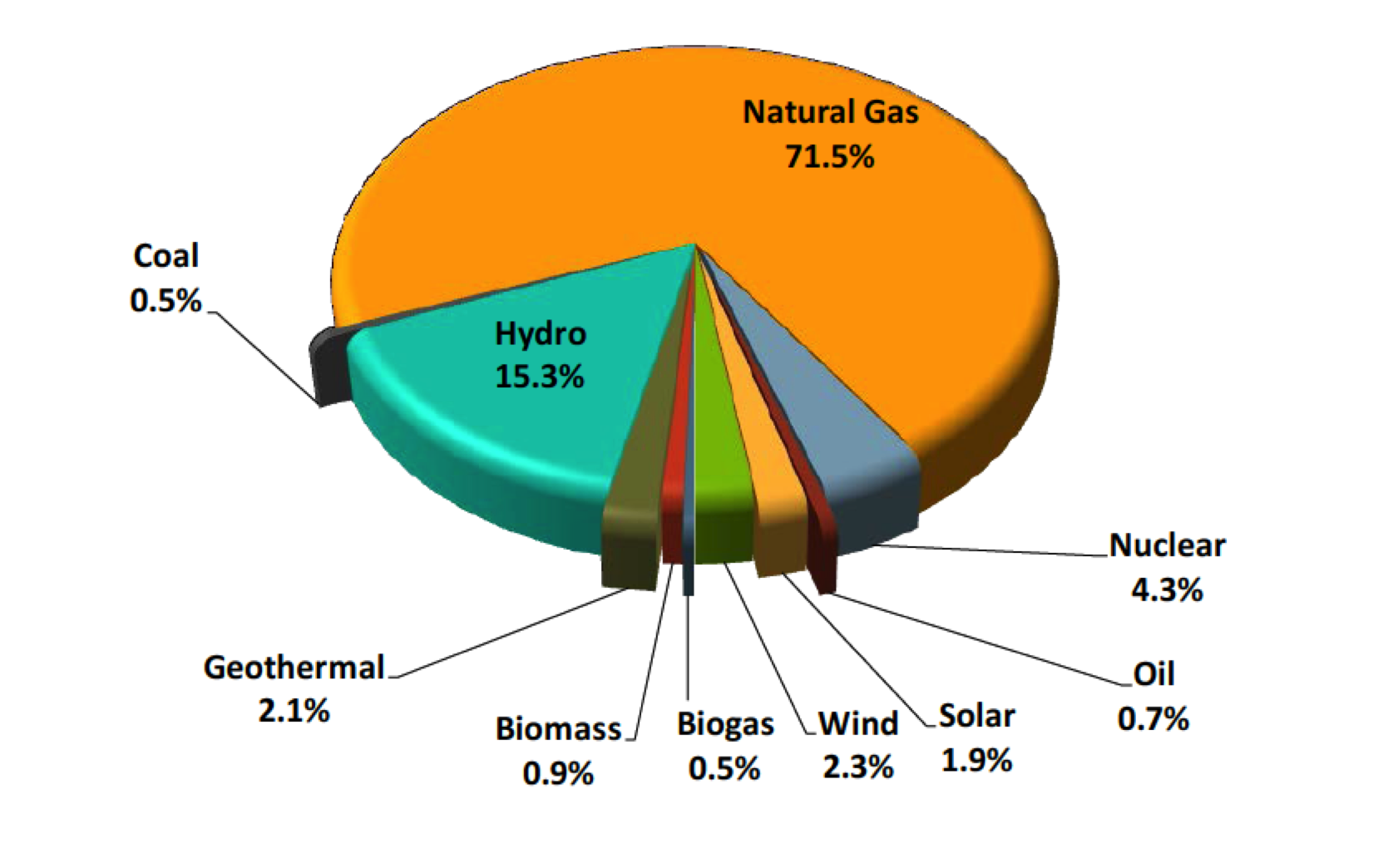
Figure 1
Source: California ISO Summer Loads Resource Assessment
The nation’s most populous state is considerably less dependent on hydro—and more dependent on gas-fired power--than the states to its north. Last year (2013) just over 15% of California’s generating capacity was hydroelectric, while 71.5% was fueled by gas (see Figure 1). But the amount of energy produced by hydro and gas units varies widely year-by-year, depending in large part on how much rain and snow falls upstream of the state’s 100-plus hydro dams. In a very wet year, hydro can contribute 20% or more of the state’s annual electricity needs, but in a dry year it may provide only half that. The yin and yang of hydro and gas output in California is pretty consistent. Figure 2 shows that throughout the 2003-12 period, when water levels and hydro output were up, gas-fired generation was down, and vice versa. In 2008, a particularly dry year, the output of gas-fired units rose to 120 million MWh, more than a third higher than in 2011, the last wet year in the state. It’s been unusually dry ever since 2011, so hydro output has been falling and the output of gas-fired plants has been rising. This trend seems almost certain to continue in 2014, which despite recent rain and snow may turn out to be the driest in state history.
About the song
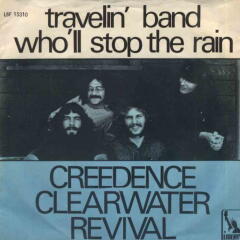
“Who’ll Stop the Rain” was written by John Fogerty and appears as the third song on side two of Creedence Clearwater Revival’s fifth studio album, Cosmo’s Factory. This song is another example of the swamp rock/Americana music that made them such a popular singles band. Released in January 1970, it went to #2 on the Billboard Hot 100 Singles chart and has been certified Platinum by the Recording Industry Association of America (RIAA). Backed with “Travelin’ Band,” it was one of three double-sided singles from Cosmo’s Factory to reach the Top Five on Billboard's Hot 100 Singles chart. Personnel on the record were: John Fogerty (lead vocals, lead guitar, piano), Tom Fogerty (rhythm guitar, backing vocals), Stu Cook (bass, backing vocals), and Doug Clifford (drums).
Cosmo’s Factory was recorded in 1969-70 at Wally Heider in San Francisco with John Fogerty producing. Released in July 1970, it went to #1 on the Billboard 200 Albums chart and has been certified 4X Platinum by the RIAA. It would be the last album with Tom Fogerty in the band. Three double-sided singles were released from the LP.
Creedence Clearwater Revival (aka CCR or Creedence) was an American rock band formed in 1959 in El Cerrito, CA, by John and Tom Fogerty, Stu Cook and Doug Clifford. They played under the names The Blue Velvets and The Golliwogs before changing their name to Creedence Clearwater Revival in 1967 after signing a record deal with Fantasy Records in San Francisco. As CCR, they released seven studio albums, five live albums, 41 compilation albums and 29 singles and have sold more than 50 million records worldwide. The band broke up in 1972, with John Fogerty pursuing a solo career and the others involved in various projects. Tom Fogerty released several solo albums before passing away at his home in Scottsdale, AZ, following surgery complications in September 1990. The band was inducted into the Rock and Roll Hall of Fame in 1992, where John Fogerty refused to play with the surviving members. Fogerty continues to record and perform and will be doing a series of shows at the Encore Theater at Wynn Las Vegas in January 2025.