


It’s one thing if you’re 25 or 30 years old and your 401(k) is just getting started — you’ve got time to build it up, so don’t sweat it — but it’s quite another if you’re 60 or 65 and you’ve still got to sock away a lot of money before calling it quits. It could be argued that the environmental community is facing a quandary very similar to that of an aging boomer short on retirement savings. The fact is that the International Energy Agency’s (IEA’s) target of achieving net-zero man-made carbon emissions globally by 2050 in order to blunt the human impact on climate change will require massive new investment and a complete and well-coordinated transformation of the world’s energy complex. In the near-term, progress along that path must include an extraordinarily rapid ramp-up in the use of carbon capture and sequestration (CCS). And like an aging worker whose late discipline may be thwarted by an unforeseen health challenge, as we’ve seen with the recent energy crisis, there’s a lot that could derail progress toward those goals. Is the IEA's goal achievable? Maybe. But, as we discuss in today’s RBN blog, it won’t be easy.
We’ve already covered a lot of topics related to carbon capture in this blog series, starting with the basics of CCS, the federal 45Q tax credit, and legislation that could encourage more CCS projects. We followed that up by checking out some of the projects aiming to capture carbon, including the Houston CCS Innovation Zone, the biggest project currently taking shape, and proposals to capture emissions from ethanol plants in the Midwest or pull carbon directly from the air through a process called (appropriately enough) direct air capture (DAC). Carbon capture was also the subject of a recent Drill Down Report.

The idea of capturing the carbon dioxide (CO2) emitted from power plants and industrial facilities and permanently storing it deep underground is widely viewed as one of the more promising ways to reduce global greenhouse gas (GHG) emissions, given the world’s growing energy appetite and existing infrastructure. As with any large-scale plan for decarbonization, there has always been a catch — finding the right incentives to convince private-sector CO2 emitters to invest tens or hundreds of millions of dollars in carbon capture — especially during a time when variable costs can make some types of projects uneconomic. But to reach long-term decarbonization targets, including goals set by the U.S. and the IEA to reach net-zero carbon emissions by 2050, carbon-capture efforts are going to need to quickly get bigger — much bigger.
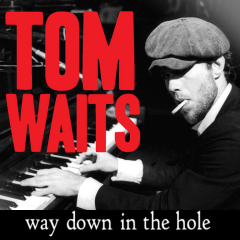
About the song
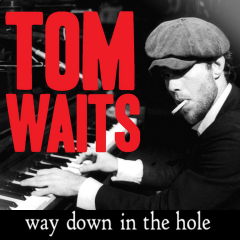
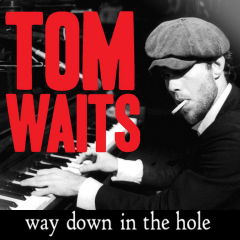
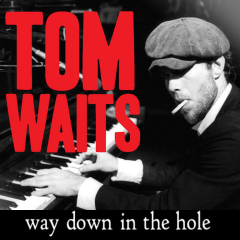
“Way Down in the Hole” was written by Tom Waits and appears as the second song on side two of Waits' 10th studio album, Franks Wild Years. The song was used as the theme song for the HBO crime drama series, The Wire. The series ran for five seasons from 2002-08. In addition to Waits’ version, a different recording of “Way Down in the Hole” was used for each season, including versions by The Blind Boys of Alabama, The Neville Brothers, DoMaJe, and Steve Earle. Personnel on the Waits record were: Tom Waits (vocals, pump organ), Marc Ribot (guitar), Greg Cohen (bass), Michael Blair (drums, percussion), Ralph Carney (sax), and Angela Brown, Leslie Holland, and Lynne Jordan (backing vocals).
Franks Wild Years was recorded during 1987 at Universal Recording in Chicago, and The Sound Factory and Sunset Sound in Hollywood. The album contains songs written for a play of the same name. Several songs from the album have appeared in television shows, movies, and stage productions. Produced by Waits, the album was released in August 1987 and went to #115 on the Billboard Top 200 Albums chart.
Tom Waits is an American songwriter, singer, musician, and actor. He began his professional career performing on the San Diego folk circuit as a teen in the late 1960s. He moved to Los Angeles in 1972, where he worked as a songwriter before securing his first record deal with Asylum Records. He has released 17 studio albums, three live albums, seven compilation albums, two soundtrack albums, and 24 singles. His songs have been covered by many artists from different genres. Waits has appeared in over two dozen motion pictures. He was inducted into the Rock and Roll Hall of Fame in 2011. His last tour was in 2008 and his last LP, Bad as Me, was released the same year. He has a featured role in the movie Licorice Pizza, which was released in the U.S. in November 2021 and received an Oscar nomination for Best Picture.




Comments
I believe one option has been overlooked, but might be considered in the Biofuel category. Municipal Solid Waste (MSW) or generally referred to as garbage, is a large carbon capture system and if processed properly can lead to a substantial reduction in atmospheric carbon dioxide and methane. MSW is largely carbonaceous materials created when plants remove carbon dioxide from the atmosphere resulting directly, or progressively, in materials like wood, paper, food waste, leather, yard trimmings, sewage biosolids/sludge, etc. which presently are composted, combusted, or landfilled releasing methane (landfilling) and/or carbon dioxide into the atmosphere. Excluding plastics (which can be processed with the biobased materials), the US alone produces about 163 million tons of biobased garbage (from 2018 EPA data) which potentially has the ability to be converted into about 212 million tons of atmospheric carbon dioxide.
Developmental gasification technology exists where the carbon from garbage would be converted into carbon dioxide with co-produced hydrogen. The carbon dioxide from this process is concentrated and easily captured for sequestration while the hydrogen is a marketable product for use as a carbon-free fuel. This can be achieved with a favorable economic outcome. The benefits are: 1) The use of a waste material containing biocaptured carbon dioxide avoids the need for artificial carbon capture systems and avoids additional pressure on agricultural systems (fertilizer, acreage, energy, time) otherwise dedicated to food production for biofuels. 2) The hydrogen produced (about 260 lbs per ton processed) can replace the equivalent in energy of hydrocarbon fuels that would produce about 1.3 tons of carbon dioxide if combusted. 4) The carbon dioxide produced is a concentrated by-product which can be sequestered. 4) The MSW is not allowed to be combusted, composted, or landfilled with the associated greenhouse gas formation.
In summary, one ton of garbage processed through the developmental gasification technology could result in 1.3 tons of atmospheric carbon dioxide sequestered, 1.3 tons of carbon dioxide production from fossil fuel consumption avoided, and an additional avoidance of methane and carbon dioxide if the garbage was to be composted, combusted, or landfilled.