Mexico’s state-owned Comisión Federal de Electricidad (CFE) and private-sector developers of LNG export terminals have been aggressively advancing new natural gas-consuming projects in Northwest Mexico. But while plans for a number of new pipelines to help bring in gas from the Permian are on the drawing board, it remains to be seen if they can be built as quickly as they would need to be to avert a potentially ugly competition for gas supplies. In today’s RBN blog, we discuss the gas-demand and gas-delivery projects now under development in Northwest Mexico.
The NATGAS Appalachia weekly report provides the data and insights to monitor the northeast natural gas market’s twists and turns and identify the risks and opportunities along the way, including tracking supply-demand trends, outbound capacity and their impact on takeaway pipeline utilization, and regional prices.
Over the past 10-plus years, the Mexican market has become increasingly important to U.S. producers, especially to crude oil-focused E&Ps in the Permian, whose wells also churn out vast volumes of associated gas that need to find a market. As we said a couple of months ago in Down in Mexico, Mexico’s gas production has declined by one-third since 2013, to about 4 Bcf/d, and only 1 Bcf/d of the gas produced there is actually sold into the domestic market — of the other 3 Bcf/d, 2 Bcf/d is used internally by Petróleos Mexicános (Pemex) for its production and refining operations and 1 Bcf/d is unusable because of its high nitrogen content. Over the same period, CFE has developed a massive fleet of gas-fired combined-cycle plants and helped to underwrite the buildout of a far-reaching network of gas pipelines from South Texas and West Texas into and through Mexico. The net result? Pipeline exports of U.S. natural gas now top 6 Bcf/d — 3X what they were 10 years ago.
Still, there have been hiccups in the expansion of U.S. gas exports to Mexico, in part because of occasional disconnects between the addition of incremental gas demand and the development of new pipeline capacity to deliver the needed gas. Last month, in Ahead of Ourselves?, we described the situation in Southeast Mexico, where new gas-fired power plants and industrial facilities (including Pemex’s new 340 Mb/d Dos Bocas refinery) are being developed — as are new gas pipelines to the Yucatán Peninsula. The problem is, there doesn’t appear to be enough upstream pipeline capacity in place or under development to transport sufficient volumes of gas from South Texas to those new pipes.
A similar scenario may be unfolding in Northwest Mexico, where new power plants have been — and will be — coming online, one LNG export facility is under construction and three others are under development. All of these will depend on U.S.-sourced gas, the vast majority of it from the Permian, but the pipeline capacity required to support that incremental demand isn’t in place, and some critically important pipeline projects face potentially serious regulatory and legal hurdles.
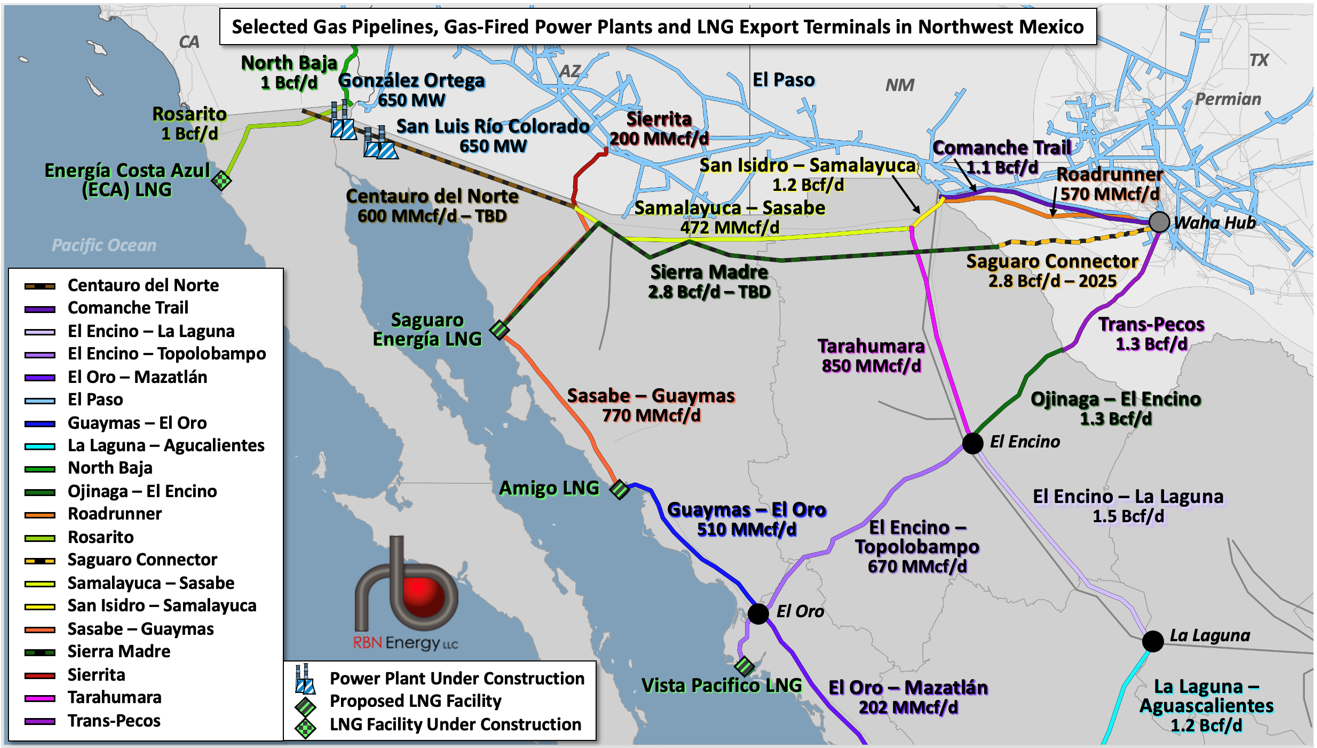
Figure 1. Selected Gas Pipelines, Gas-Fired Power Plants and LNG Export Terminals in Northwest Mexico. Source: RBN
About the song
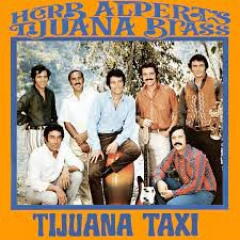
“Tijuana Taxi” was written by Bud Coleman and appears as the first song on Herb Alpert & the Tijuana Brass’s fifth studio album, Going Places. Coleman was a friend of Alpert’s who had played guitar in the Tijuana Brass and Baja Marimba Band. Released as a single in February 1966, it went to #9 on the Billboard Jazz chart and #38 on the Billboard Hot 100 Singles chart. “Tijuana Taxi” and three other Herb Alpert & the Tijuana Brass songs — “Spanish Flea,” “Lollipops and Roses” and “Whipped Cream” —received constant rotation on The Dating Game, a daytime show that ran from the mid-1960s to the early ’70s. Personnel on the record were: Herb Alpert (trumpet, Model T rubber bulb squeeze horn), John Pisano (guitar), Tonni Kalash (trumpet), Bob Edmonson (trombone), Pat Senatore (bass), Lou Pagani (piano), Nicke Ceroli (drums), and Julius Wechter (marimba), This was the first Tijuana Brass album to feature Alpert’s touring band, not Los Angeles studio musicians.
Going Places was recorded at Gold Star Studios in Hollywood during the summer of 1965 and produced by Herb Alpert and Jerry Moss. The cover photo of Alpert in the biplane was shot at Movieland of the Air in Santa Ana, CA. Four singles were released from the LP. Going Places was released in September 1965 and went to #1 on the Billboard 200 Albums chart. It has been certified Gold by the Recording Industry Association of America.
Herb Alpert is an American trumpeter, songwriter, musician, record producer, conductor, studio mogul, painter, and sculptor. Born in the Boyle Heights neighborhood of Los Angeles, his professional career began in 1957 as a songwriter for Keen Records. Five years later he would team up with Jerry Moss and start A&M Records in Hollywood. He was the leader of the highly successful Herb Alpert & the Tijuana Brass from 1962-69. He had his first #1 hit as a solo artist and vocalist with “This Guy’s in Love with You,” in 1968. His second #1 as a solo artist came with “Rise” in 1979. Alpert has released 46 studio albums and 89 singles and has sold more than 78 million records worldwide. He has won a Tony Award, eight Grammy Awards and a Grammy Lifetime Achievement Award, and has a star on the Hollywood Walk of Fame. He was inducted into the Rock and Roll Hall of Fame in 2006 and received the National Medal of Arts in 2013. He continues to record, paint, sculpt, and do philanthropic work through his foundations.