As concerns about energy security have come to the forefront, some in the mainstream have begun to pump the brakes on the idea of energy transition at any cost and reevaluate the practicality of some proposed solutions. But that hasn’t changed the long-term outlook for energy transition nor the fact that numerous individual projects focused on alternative fuels, carbon capture, hydrogen and renewable energy are in the works, gaining in prominence and attracting a prodigious amount of investment. There is still an anticipation among investors that the market will increasingly demand greener production methods — they just need to be well-conceived, planned and executed. The good thing for Fidelis New Energy — a Houston-based firm focused on climate-impact infrastructure, including low-carbon, sustainable fuels — is that, among renewable producers, they’re building a sustainable cost advantage through efficient, integrated design. In today’s RBN blog we look at what Fidelis calls the Grön Fuels GigaSystem.
The GigaSystem promises to bring sustainable aviation fuel (SAF) and renewable diesel (RD) production together with carbon capture and sequestration (CCS), while utilizing carbon-negative power to reduce the carbon intensity (CI) of its fuels. Even more fundamentally, the system has the enviable capacity to handle multiple transportation options, with rail, pipeline and dock infrastructure, centrally located at the Port of Greater Baton Rouge. Fidelis and Optimized Process Designs (OPD), an affiliate of Koch Engineered Solutions, announced the execution of a lump-sum, turnkey definitive engineering, procurement and construction (EPC) agreement for the renewable fuels facility as well as design considerations enabling the optimized add-on of CCS and carbon-negative power to the site, all of which rely on the use of existing, proven technologies from leading global companies.

RBN Energy’s US CO₂ Infrastructure map brings together legacy Enhanced Oil Recovery (EOR) assets, as well as announced large-scale Carbon Capture and Sequestration (CCS) and Carbon Capture, Utilization and Sequestration (CCUS) projects, all in our signature concise, accurate, and intelligible style.
We’ve written a lot about RD, SAF and other alternative fuels over the last year, especially in our Come Clean series, which looked at how low-carbon fuel policies are incentivizing major shifts in the transportation sector. Along those same lines, as we said recently in Playin’ by the Rules, a molecule’s pedigree — how it is produced — has become at least as important as its energy content. It’s the fundamental difference in the way value is established in renewable, decarbonized energy markets versus traditional commodities. In traditional energy markets, value is defined by physics, chemistry and geography. But in the world of renewables and decarbonization, value is primarily determined by rules that specify what a type of energy is worth, what is required to prove that worth, and how that value is ultimately captured by market participants. As we see it, the GigaSystem’s backers seem to fully understand not only those rules and how to capture value based on them, but also the driving motivations behind the rules. So even if policies change (which they are prone to do) their fundamental value proposition will likely persist. What’s more, their plan to marry proven, synchronous technologies with high-value terminaling assets ought to make them competitive under just about any regulatory regime. At the business end of the GigaSystem is alternative fuels production, so we’ll start to dig in there.
About the song
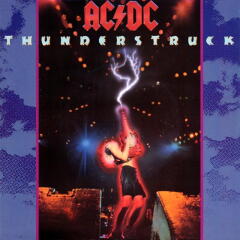
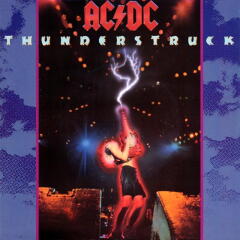
“Thunderstruck” was written by Angus and Malcom Young and appears as the first cut on side one of AC/DC’s 12th studio album, The Razors Edge. Released as a single in September 1990, the song went to #5 on the Billboard Mainstream Rock Singles chart and has been certified Platinum by the Recording Industry Association of America (RIAA). Angus Young has stated that the song started with his riff and was developed with his brother Malcom for the rhythm part of the song. The tune –– whose key lines include “I looked ’round and knew there was no turning back” –– has been featured in several films and is used prominently at Dallas Cowboys football and Oklahoma City Thunder basketball games. Personnel on the record were: Brian Johnson (lead vocals), Angus Young (lead guitar), Malcom Young (rhythm guitar, backing vocals), Cliff Williams (bass, backing vocals), and Chris Slade (drums, percussion).
The Razors Edge was recorded during 1990 at Windmill Lane in Dublin and Little Mountain Sound in Vancouver, with Bruce Fairbairn producing. Released in September 1990, it went to #2 on the Billboard 200 Albums chart and has been certified 5x Platinum by the RIAA. Four singles were released from the LP.
AC/DC is an Australian rock band formed in Sydney in 1973 by brothers Angus and Malcom Young. They have released 18 studio albums, three live albums, two soundtrack albums, one EP and 48 singles and have sold more than 200 million records worldwide. Twenty members have passed through the band's ranks since its beginning, AC/DC was inducted into the Rock and Roll Hall of Fame in 2003. Singer Bon Scott died in 1980 and guitarist Malcom Young died in 2017. There has been no official statement on the future of AC/DC since the November 2020 release of the Power Up album, which was dedicated to Malcom Young.