Discussions about energy transition and increased electrification are all around us, whether they involve accelerating the ramp-up in renewable power sources such as wind and solar, facilitating the shift to electric vehicles, or switching to alternative fuels like hydrogen. But amid all the talk about the evolution to a low-carbon world — and away from oil and gas — there’s one area that is sometimes overlooked: petrochemicals. In the U.S., most steam crackers use natural gas liquids (NGLs) as their primary feedstocks, and they also consume a lot of energy — two big red flags in an increasingly ESG-focused world. And that’s giving bioethylene, billed as a green alternative to traditional ethylene, a moment in the spotlight. In today’s RBN blog, we look at how bioethylene is produced, how it differs from ethylene produced from traditional measures, and why it may someday evolve into an attractive alternative for the petrochemical industry, even though it’s far from a sure thing.
Ethylene has been a frequent topic in the RBN blogosphere, going back a few years to You’re the One That I Want, a blog in which we explored the basic mechanics of steam crackers and how they make their money. Earlier this year, in January, we investigated what we thought were really high ethylene margins in Ethylene, Ethylene, Prettiest Margin I Ever Seen. A couple of months later, in Can’t Get Enough, we looked at how the 2021 Deep Freeze wreaked havoc on Gulf Coast crackers, causing ethylene prices to spike even higher.
Ethylene is the cornerstone building block of the petrochemical industry, the precursor for everything from food packaging to construction materials, along with detergents, lubricants, PVC pipes, antifreeze, and all things polyethylene. The strong global demand for ethylene, along with efforts to meet environmental, social and governance (ESG) goals, has led some to look at bioethylene as a greener and potentially economical alternative.
The replay of our Fall 2026 School of Energy (September 9 & 10, Houston) is now available online!
Learn from RBN experts, participate in hands-on Excel modeling, connect with industry peers, and gain a stronger understanding of today's interconnected energy markets.
To produce ethylene, steam crackers heat up a mixture of hydrocarbon feedstocks and steam, then force the stream into huge furnaces at about the speed of sound. In the furnaces, the feedstocks-and-steam mix is superheated to 850°C (1,560°F), consuming a lot of fuel in the process. That heat “cracks” the relatively stable “paraffinic” hydrocarbon molecules into their much more reactive “olefinic” petrochemical cousins — hence the steam cracker nickname. After that, the mixed stream is rapidly cooled or “quenched” to stop the reaction, and injected water cools the mix further. The stream is then sent through a series of distillation columns (very similar to an NGL fractionator) to separate the mix into individual petrochemicals.
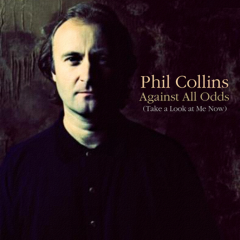
About the song
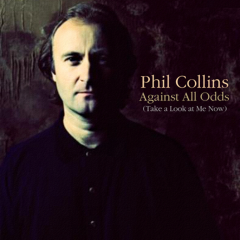
“Against All Odds (Take a Look at Me Now)” was written and recorded by Phil Collins as the title song for the 1984 movie Against All Odds. Produced by Arif Mardin and released in February 1984, the single went to #1 on the Billboard Hot 100 Singles chart, #1 on the Mainstream Rock Tracks chart, and #2 on the Adult Contemporary list. Originally an unreleased song of Collins’s titled “How Can You Just Sit There,” written about the breakup between Collins and his first wife, the song was rewritten to reflect what the film was portraying. In addition to the single, the song appears on the 1984 soundtrack album, Against All Odds, and also on Collins’s 1998 Hits album and Love Songs: A Compilation, released in 2004. Personnel on the recording were: Phil Collins (vocals, drums), Rob Mounsey (piano, keyboards), and an orchestra conducted by Arif Mardin. The song won a Grammy Award for Best Pop Vocal Performance by a Male in 1985.
Phil Collins is an English singer, songwriter, drummer, multi-instrumentalist, record producer and actor. He started in show business as a child actor, and his professional musical career began as the drummer, and later lead vocalist for the British rock band Genesis. He recorded nine studio and two live albums with Genesis. Since going solo in 1979, he has released eight studio albums, one live album, and three compilation LPs, along with 45 singles. He has sold more than 150 million records worldwide. Collins has won eight Grammy Awards, six Ivor Novello Awards, four Billboard Music Awards, three American Music Awards, two Golden Globes, one MTV Video Music Award, and one Academy Award. He is a member of the Songwriters Hall of Fame, was inducted into the Rock and Roll Hall of Fame as a member of Genesis, and has a star on the Hollywood Walk of Fame. In March 2022, at the last date of Genesis’s The Last Domino? Tour, at O2 Arena in London, Collins announced that “It’s the last show for Genesis.” A five-LP Box set was released in September entitled Both Sides (All the Sides).