
Producers in the Marcellus and Utica shale plays could be moving a lot more natural gas into New England, if only there was enough pipeline capacity to get it there. An increasingly gas-hungry neighbor to the nation’s most prolific production area, New England has added precious little capacity to transport gas, and the fates of game-changing pipeline projects that have been proposed hang in the balance. The region’s unique gas-delivery challenges, their market impacts and possible solutions are the subject of RBN Energy’s newly released Drill Down report, “Please Come To Boston—New England’s Ongoing Gas-Supply Dilemma”. Today, we provide a preview, and highlight some of the report’s findings.
A generally argumentative lot (don’t get them started on politics or the Boston Red Sox’s pitching rotation), New Englanders are in full agreement on two things: 1) Patriots quarterback Tom Brady’s punishment in the “Deflategate” scandal (a four-game suspension without pay) was too harsh, and 2) energy prices in the six-state region are too high. “Tom Terrific” has appealed the NFL’s sanction to Commissioner Roger Goodell, but there’s no appealing the sky-high natural gas and electric bills utility customers in Boston, Providence and Hartford have been receiving. The underlying problem is that there’s simply not enough gas pipeline capacity into and through New England to deliver the plentiful, low-cost Marcellus and Utica gas that the region’s growing fleet of gas-fired power plants needs to operate during high demand winter periods. Each winter, the resulting constraints cause price spikes at the Algonquin Citygate hub (see Figure #1), and force New England’s electric grid to turn off gas-fired units (or run them on stockpiled fuel oil or liquefied natural gas - LNG) and power up older coal plants to avert blackouts or brownouts.
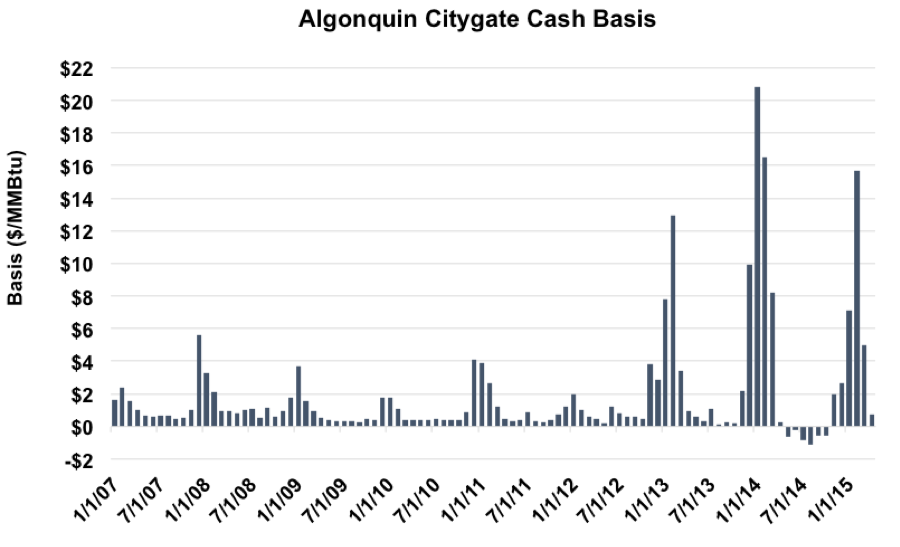
Figure #1; Source: NGI
Working around the region’s pipeline capacity shortfall is costly: By one estimate, power costs in the winter of 2014-15 would have been $2.5 billion lower if just one pipeline project--Spectra Energy’s proposed Access Northeast--had been completed and in operation. And things will only get worse if something’s not done. To comply with tightening federal environmental rules, several thousand megawatts (MW) of coal-fired capacity will be retired over the next few years, and more gas-fired units are being built to replace them. Also, more New England residents and businesses want to shift to gas from oil heat, which still dominates the region.

About the song
“Please Come to Boston,” written and sung by Dave Loggins, was released in 1974; it rose to Number 5 on Billboard’s Hot 100 and to Number 1 on Billboard’s Easy Listening chart.