
There’s been a frenetic scramble among oil and gas producers through the early 2020s to acquire top-tier acreage and production assets they think they will need to survive and thrive. Some of those acquisitions are still being done through smaller deals such as acreage swaps, but the expansion mode of choice for most has been big-time M&A, which in a single multibillion-dollar deal can add years to a company’s inventory life or perhaps give it a stronger foothold in a key production region or two. In today’s RBN blog, we discuss Devon Energy’s recently announced $5 billion acquisition of Grayson Mill Energy, yet another private-equity-backed E&P cashing in on the smart moves it has been making.
Over the past few years, executives at large U.S. oil and gas producers have put a lot of effort into increasing their company’s scale, improving cost efficiency and boosting shareholder returns. For many — almost all, it seems — that work resulted in either acquiring another E&P or becoming the acquiree. A comprehensive list would fill half a blog, but prime, 10- or 11-figure examples include Chevron buying Hess Corp., Occidental Petroleum purchasing CrownRock, Chesapeake Energy acquiring Southwestern Energy, and Diamondback Energy snapping up Endeavor Energy Resources. (And don’t forget the case of Permian pure-play Pioneer Natural Resources, which in 2021 bought Parsley Energy for $4.5 billion and DoublePoint Energy for $6.4 billion, only to be acquired itself by ExxonMobil in May for a cool $60 billion.)

The Natural Gas Master Class is a one-day online event focusing on understanding flow analysis, interpreting pipeline data and forecasting future flows. This course is designed to equip you with the knowledge and skills to effectively analyze the complexities of natural gas markets, flow analysis, and pipeline modeling. Join us online
October 21 | Online
Devon Energy — the eighth-largest U.S. oil and gas producer by market capitalization (seventh if you exclude Hess, whose deal with Chevron hasn’t closed yet) — has been busy too. First it was in divestment mode, selling its Canadian assets to Canadian Natural Resources for $2.8 billion in 2019 and following that up in 2020 with the sale of its Barnett Shale assets to Banpu Kalnin Ventures for $320 million. Then came an expansion round. In January 2021, Devon and WPX Energy closed on an all-stock “merger of equals” valued at $5.8 billion that increased Devon’s holdings in the all-important Delaware Basin in West Texas and southeastern New Mexico and also gave it a foothold in the Williston Basin (aka the Bakken) in western North Dakota. The merger propelled Devon toward the front of the pack: Before the merger, Devon and WPX ranked 11th and 12th in production, respectively, among unconventional oil producers in the U.S., but after the transaction Devon ranked fourth, behind only Occidental, ConocoPhillips and EOG Resources.
Devon’s push to gain scale didn’t end there. As we discussed a couple of years ago in Spread Your Wings, the company in 2022 embarked on a “portfolio renewal” effort that included the $865 million acquisition of RimRock Oil & Gas, the $1.8 billion purchase of Validus Energy, and a number of acreage swaps in the Delaware. The RimRock deal gave Devon about 38,000 net acres, 15 Mboe/d of production (78% of it oil) and more than 100 highly economic undrilled locations in North Dakota’s Dunn County — the acreage being contiguous to Devon’s then 45,000 acres and 45 Mboe/d of production (67% oil) on the Fort Berthold Indian reservation. The Validus transaction, in turn, roughly doubled Devon’s acreage and production in the Eagle Ford (to about 82,000 net acres and 83 Mboe/d when the deal closed) and increased the oil cut of its South Texas production from 49% to 60%.
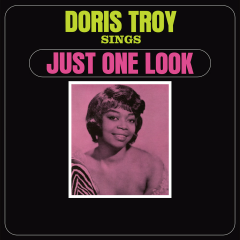
About the song
“Just One Look” was written by Doris Payne (Troy) and Gregory Carroll and appears as the third song on side one of Doris Troy’s debut studio album, Just One Look and Other Memorable Selections. She was discovered by James Brown while working as an usher and backup singer at the Apollo Theater in Harlem. Brown introduced her to people he knew in the music business, which led to her recording a demo of “Just One Look” for Juggy Morrison and Bobby Robinson’s New York R&B label, Sue Records. After they passed on the demo, Jerry Wexler at Atlantic Records heard it and released the demo as a single in May 1963. It went to #3 on the Billboard Hot R&B chart and #10 on the Billboard Hot 100 Single chart. The release of the single marked the first time Doris Payne used her stage name, Doris Troy. She took the name from the legendary Greek heroine, Helen of Troy. Personnel on the record were: Doris Troy (vocals), Ernie Hayes (piano), Wally Richardson (guitar), Bob Bushnell (bass), and Bernard Purdie (drums). The song has been covered by The Hollies, Linda Ronstadt, Martha Reeves & The Vandellas, Anne Murray and Michelle Phillips. Doris Troy’s recording was used in a television commercial for Pepsi in 1991, 2002, 2002 and 2025. It was also used for a series of ads for Mazda in 1979 and 1980.
Just One Look and Other Memorable Selections features 12 songs, eight of which were co-written by Troy under her legal name, Doris Payne. Recorded in New York City and produced by Artie Ripp, the album was released in 1963.
Doris Troy (Doris Payne) was an American R&B singer and songwriter. Her fans referred to her as “Mama Soul.” Her professional career got its start as a songwriter in 1960, when she penned the hit “How About That” for Dee Clark. She also wrote songs for Jackie Wilson and Chuck Jackson during this time. She worked as a backing vocalist for Atlantic Records, backing up Dionne and Dee Dee Warwick and joining them in the original lineup of The Sweet Inspirations, along with Cissy Houston. Her songs have been covered by The Hollies, Linda Ronstadt, The Small Faces, Bryan Ferry, Nilsson and others. After relocating to London in 1969, Troy was signed to The Beatles’ Apple Records. She released the album, Doris Troy, produced by George Harrison, on Apple in 1970. She sang backing vocals on The Rolling Stones’ “You Can't Always Get What You Want,” Pink Floyd’s “Dark Side of the Moon,” and Carly Simon’s “You're So Vain.” She also sang for Humble Pie, George Harrison, Dusty Springfield, and Nick Drake. Troy moved back to the U.S. in 1974 and continued performing in nightclubs and casinos. She released four studio albums and 11 singles. A stage musical on her life, Mama, I Want to Sing, ran for 1,550 performances at the Heckscher Theater in Spanish Harlem. Troy died in February 2004 at her home in Las Vegas at the age of 67.