Countries around the world are formulating and refining their strategies to reduce greenhouse gas emissions. Their policies target numerous areas such as stationary emissions, electricity production, and transportation. Within the transportation sector, one aspect that has spurred quite a bit of investment relates to reducing the carbon intensity of transportation fuels. The low-carbon fuel policies that are in place today, coupled with those being evaluated for the future, have the potential to incentivize the development of a wide range of “greener” alternatives to petroleum-based fuels in the regions where they are adopted. In today’s RBN blog, we discuss highlights from Part 2 of our Drill Down report on low-carbon fuels, focusing this time on ethanol, biodiesel, sustainable aviation fuel, and hydrogen, and the government policies that help support them.
From a regulatory perspective, the goal of reducing greenhouse gas (GHG) emissions from the consumption of on-road transportation fuels can be addressed in a number of ways, from fuel economy standards and renewable blending requirements to zero-emission vehicle mandates and low-carbon fuel policies. As we detailed in a recent Drill Down report and the accompanying Part 1 of this blog series, one outcome is that the U.S. is poised for a massive buildout in renewable diesel production capacity — a boom spurred by increasingly supportive government policies and a big push by ESG-minded refiners wanting to reduce the carbon footprint of their operations. Also fueling the push to renewable diesel is that it meets or exceeds the fuel specifications of traditional ultra-low sulfur diesel (ULSD) and thus is considered a “drop-in” replacement — there’s no “blend wall” that limits its use. In that report we looked at why renewable diesel has become such a hot topic, with a focus on California’s Low Carbon Fuel Standard (LCFS) program and how much new renewable diesel capacity is in the works. Today we’ll begin with a very brief overview of some of the topics covered in that first report before discussing various fuels that may be impacted.
LCFS programs such as the one in California, seen by many as a model for other states, are usually established and measured based on the carbon intensity (CI) of fuels used. CI is a measure of the lifecycle GHG emissions associated with producing, distributing, and consuming a fuel, which is measured in grams of carbon dioxide equivalent per megajoule (gCO2e/MJ). Typically, LCFS policies establish downward-sloping CI benchmarks for the jurisdiction’s total transportation fuel pool and incentivize the production and blending of lower-CI fuels to meet the benchmarks. Credits are awarded for the production and use of alternative fuels based on their CIs. The lower the CI the fuel achieves, the greater the LCFS credit.
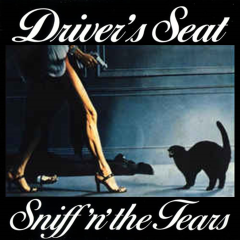
About the song
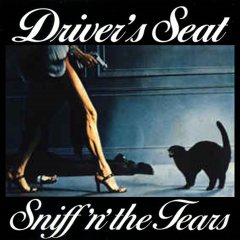
“Driver’s Seat” was written by Paul Roberts and appears as the first song on Sniff ’n’ the Tears debut album, Fickle Heart. Released as a single in August 1979, the song went to #15 on the Billboard Hot 100 Singles chart. Personnel on the record were: Paul Roberts (lead vocals, acoustic guitar), Mick Dyche, Loz Netto (guitars), Chris Birkin (bass), Luigi Salvoni (drums, percussion), Alan Feldman (keyboards), Keith Miller (synthesizer), and Noel McCalla, Jim Nellis (backing vocals).
Fickle Heart started life as a group of songs Paul Roberts had demoed while living in Paris in 1975. He signed a deal with UK label Chiswick in 1977 to record the songs for an album. Steve Lipson produced the LP on a 16-track machine for less than $10,000, but the band had to wait until late 1978 for its UK release. Manager Bud Prager got the band a deal with Atlantic Records in the U.S. to release and distribute the LP. Two singles were released from the album.
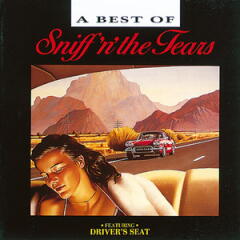
Sniff ’n’ the Tears is a British rock band known for their lone hit single, “Driver’s Seat.” They are led by singer/songwriter Paul Roberts, the band's sole constant member. Twenty members have passed through the band since its formation in London in 1977. They have released nine studio albums, one compilation album, and 11 singles. Paul Roberts still records and tours as a solo artist, and under the Sniff ’n’ the Tears moniker. An acoustic version of Sniff ’n’ the Tears played two shows in the Netherlands in November. Roberts also has a career as a painter, with many one-man and group gallery exhibitions to his credit.