The promise of vast quantities of shale gas at low and stable prices is sparking a U.S. industrial revival no one could have envisioned only a few years ago. Most of the big-dollar industrial expansion projects planned for later this decade are chemical facilities and gas-to-liquids (GTL) plants; many of the rest are steel mills and other energy-intensive industrial facilities. If all—or even most—of these projects become a reality over the next five to 10 years, gas producers in the big shale plays would benefit from sharply higher demand and the likelihood of higher prices as well. But how many industrial projects will actually be built? Will the forecasted industrial boom turn out to be more of a boomlet? That could happen if several factors converge, like the approval of a few more LNG export terminals, environmental regulations that result in big growth in gas fired generation, and higher natural gas exports to Mexico. Any combination of these factors could result in significant upward pressure on domestic gas prices. In this two-part series we explore the potential for a shale-driven industrial revival.
In Part 1 we look at the drivers behind what many think will be an unprecedented shale-driven industrial revival in the U.S., and discuss some key chemical, GTL and other industrial projects now on the drawing boards. There are many reasons why the U.S. over the past 40 years has become a less and less dominant force in chemicals, steel and manufacturing in general. Key factors in the decline of our chemical industry, of course, include what until recently was falling domestic production of gas; the desire of hydrocarbon giants in the Middle East and elsewhere to add value to their natural resources by producing chemicals themselves; and tightening environmental regulations that often tipped the economic scales in favor of moving chemicals production overseas. For steel makers and other manufacturers, moving production from the U.S. to China or India or other fast-developing nations sometimes seemed to be a no-brainer from a dollars-and-cents standpoint. Plus, the new ease and low cost of moving goods vast distances won out over the old need to be physically close to your market.
Now a new set of factors—cheap, plentiful U.S. shale gas chief among them—has come into play, and U.S. and foreign companies in a wide range of industries are planning projects each valued in the billions or hundreds of millions of dollars. Forecasters predict that the industrial sector will regain and retain its long-held role as the leading consumer of natural gas, a role that the electric power sector has challenged the past two or three years as utilities shifted away from coal (see Figure 1).
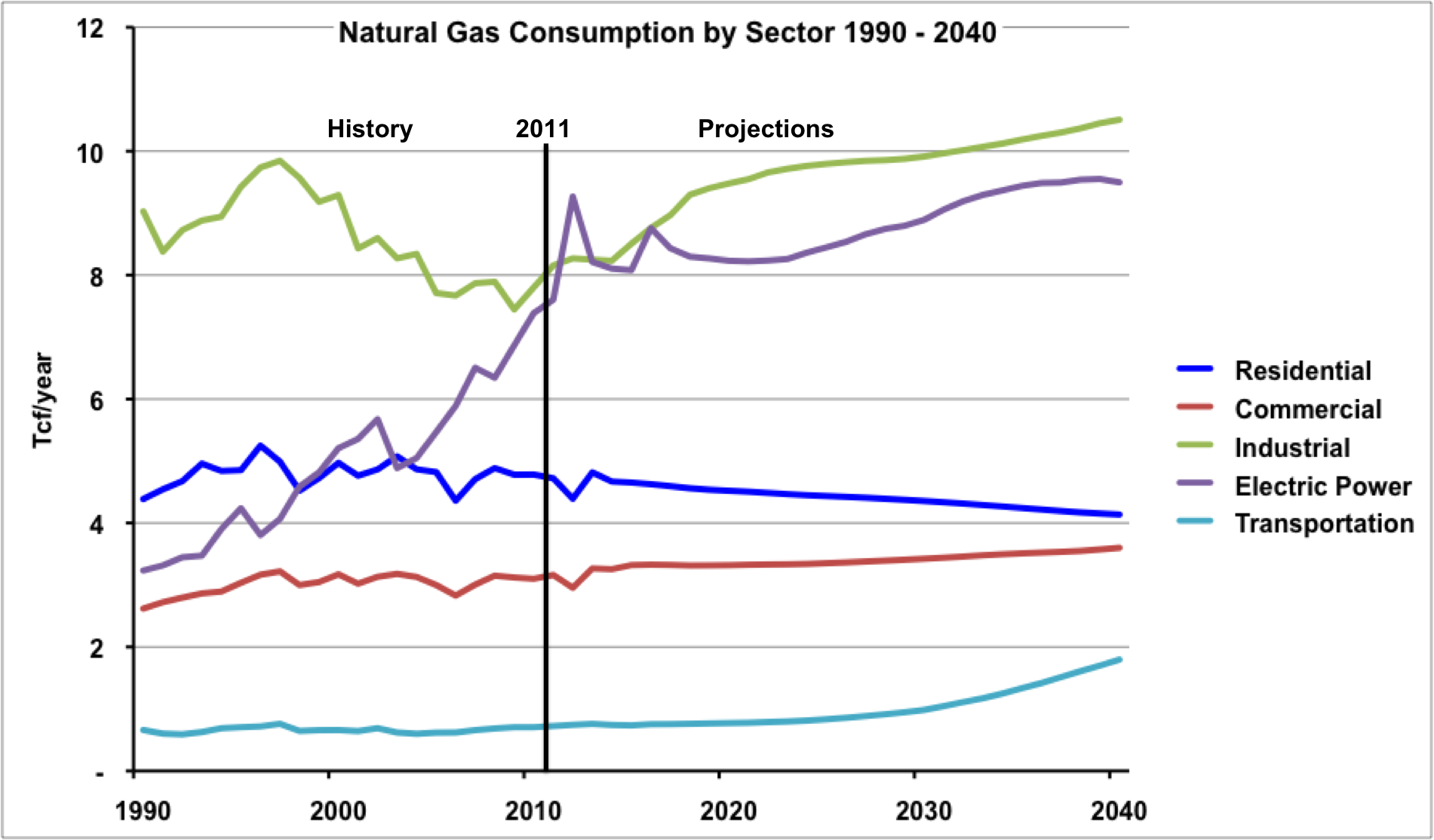
Figure 1
Source: EIA Annual Energy Outlook 2013 (Click to Enlarge)
Thanks to the nation’s almost limitless shale reserves and the now-widespread use of directional drilling and hydraulic fracturing (see Tales of the Tight Sand Laterals) U.S. gas prices are roughly one-third what they were at their peak five years ago, and they are projected to remain within the $4-to-$5/MMbtu range well into the 2020s (see Figure 2). That’s music to the ears of energy and chemical giants like Sasol and Dow Chemical, who see the potential for large-scale shale-driven industrial projects, especially in the Gulf Coast and Midcontinent regions because—to paraphrase bank-robber Willie Sutton—that’s where the hydrocarbons and the infrastructure are.
About the song
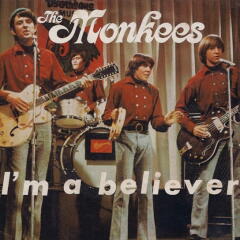
“I’m a Believer” was written by Neil Diamond and appears as the sixth song on side two of the Monkees’ second studio album, More of the Monkees. Recorded in October 1966 at RCA Studio A in Hollywood, the song was released as a single in November 1966. It went to #1 on the Billboard Hot 100 Singles chart and remained there for seven weeks. It has been certified Gold by the Recording Industry Association of America. Personnel on the record were: Micky Dolenz (lead, backing vocals), Davy Jones, Peter Tork (backing vocals), Al Gorgoni, Sal DiTroia (electric guitars), Neil Diamond (acoustic guitar), Stan Free (organ), George Butcher (electric piano), Russ Savakus (bass), Buddy Salzman (drums), and George Devens (tambourine).
More of the Monkees was recorded between June-November 1966 at RCA Studio A in Hollywood with Jeff Barry, Tommy Boyce, Bobby Hart, Michael Nesmith, Jack Keller, Gerry Goffin, Carole King, Neil Sedaka, and Carole Bayer Sager producing. Thirty-four songs were recorded for the album, with 12 being chosen for inclusion on the LP. The album was released in January 1967 and went to #1 on the Billboard 200 Albums chart. It has been certified 5x Platinum by the RIAA. Three singles were released from the LP.
The Monkees were an American pop rock band formed in Los Angeles in 1966 featuring Micky Dolenz, Michael Nesmith, Davy Jones and Peter Tork. The band was put together by producers Bob Rafelson and Bert Schnieder to star as the fictional band for their sitcom, The Monkees. The series aired from 1966 to 1968 and featured music credited to the Monkees. They released 13 studio albums, eight live albums, 31 compilation albums, 24 singles, and one feature-length motion picture. The group was inducted into the Vocal Group Hall of Fame in 2007. The band officially broke up in 1970, with each member pursuing solo careers. Over the years there have been several reunion tours featuring various members of the group. Davy Jones died in February 2012 at the age of 66, Peter Tork died in February 2019 at the age of 77, and Michael Nesmith died in December 2021 at the age of 78. Micky Dolenz continues to act, direct, and perform live concerts.