The largest single expense associated with operating wells in a number of U.S. shale plays — including the Permian — is the cost of dealing with the large volume of produced water that emerges from wells along with crude oil, natural gas and NGLs. In many cases, produced-water disposal costs account for more than half of total well-operating costs, and every dime or dollar per barrel that an exploration and production company (E&P) needs to spend on produced water increases its break-even cost and saps its bottom line. To rein in trucking and other produced water-related expenses, more E&Ps and midstream companies are (1) developing produced-water treatment plants that allow the water to be reused in hydraulic fracturing and (2) building centralized systems that efficiently transport untreated produced water from multiple wells to treatment plants or to regional disposal wells. Today we continue our surfing-themed series on the effect of sand and water costs on producer economics with a look at how the old ways of dealing with produced water are being replaced by the new.
Before we delve into today’s blog, our Houston-based RBN team and all of our folks throughout the country again wish to express our heartfelt condolences for the victims of Hurricane Harvey and its aftermath.
Faced with lower-for-longer hydrocarbon prices, E&Ps have been working hard to reduce their operating costs and improve the productivity of their wells. This has been an all-out effort — it’s had to be. With crude oil and natural gas prices falling below $30/bbl and $2/MMBtu, respectively, a year-and-a-half ago and struggling to stay near $50/bbl and $3/MMBtu today, E&Ps have had no choice but to become leaner and (most of all) smarter if they want to survive and even thrive in an era with oil and gas prices much lower than they were three years go.

Crude Oil Permian provides detailed analysis of the fundamental drivers impacting the Permian Basin crude oil market including weekly data, analysis and market intelligence updates of: Permian crude oil supply and demand, pipeline outflows and capacity, prices, and infrastructure updates.
Among the more significant trends during this particularly cost-conscious period has been what you might call the supersizing and assembly-lining of oil and gas production. As we said in Back in the Saddle Again, producers have been piecing together ever-larger leaseholds in the parts of key shale plays they have determined to be the most promising; drilling multiple wells from the same pad; drilling much longer laterals (made possible by large, contiguous leaseholds); and increasing production by ramping up how much frac sand they use per linear foot of horizontal well. While it may cost more to drill longer laterals and use more sand (and frac water), these steps and others (such as throttling, or “choking back”, initial production from wells to increase their long-term production) have enabled E&Ps to wring far more oil, gas and NGLs out of each well.
About the song
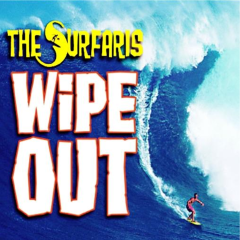
"Wipe Out" was written by Bob Berryhill, Pat Connolly, Jim Fuller and Ron Wilson (The Surfaris), and is the first cut on side one of The Surfaris' album of the same name. The band wrote the song on the spot in the studio for the B side of the single, "Surfer Joe." All of The Surfaris were in their mid-teens when they wrote “Wipe Out.” It is based on the same format as Preston Epp's 1959 hit, "Bongo Rock." Featuring an infectious drum beat throughout the song, the tune begins with a reverb-drenched sound of a board breaking, intended to sound like a surfboard breaking in two. This is followed by a manic voice saying, "Ha, ha, ha, ha, ha ... wipe out!" The Surfaris' manager, Dale Smallin, provided the recitation intro. Initially released in January 1963 on the independent label, DFS, then released again in February 1963 on the Princess label, the song became a hit after it was picked up for national distribution by Dot Records in April 1963. Dot quickly followed up with an album centered around "Wipe Out." The single went to #2 on the Billboard Hot 100 Singles chart. Personnel on the record were: Bob Berryhill (rhythm guitar), Jim Fuller (lead guitar), Pat Connolly (bass), Ron Wilson (drums) and Dale Smallin (recitation).
The Wipe Out LP, including its title track, was recorded at Pal Recording Studio in Cucamonga (now named Rancho Cucamonga), CA. During the recording, The Surfaris added saxophonist Jim Pash to the band. Richard Delvy produced the sessions. Delvy was a pioneer in the surf music scene, starting out as the drummer for The Bel-Airs, before going on to become a composer, arranger, music publisher, manager and record producer.
The Surfaris were an American surf rock band formed in Glendora, CA, in 1962. They are known for the hit records "Surfer Joe" and "Wipe Out,” which were the A and B sides of the same single. They have released nine studio albums and seven singles. "Wipe Out" has appeared on various compilation albums, and is featured in several television shows and movies. Original band member Bob Berryhill still occasionally performs with a band called The Surfaris. Pat Connolly left the music business in 1965. Ron Wilson died in 1989, followed by Jim Pash in 2005 and Jim Fuller in 2017.