Refineries with hydrofluoric acid alkylation units account for about 40% of total U.S. refining capacity. Many in the refining sector are concerned that an Environmental Protection Agency (EPA) proposal to compel refineries to conduct exacting studies of newer, alternative alkylation technologies could be leveraged to discourage and effectively ban HF alkylation, and as a result, potentially lead to more refinery closures. The U.S. already has lost more than 1.3 MMb/d of refining capacity since 2019 — losses that exacerbated the run-up in motor fuel prices through the first half of last year — and the specter of another round of refinery closures on the horizon looms large. In today’s RBN blog, we consider the challenges that refineries with HF “alky” units might face if they were required to replace them.
This is the third episode in our blog series about alkylation. As we said in Part 1, alkylate is a blendstock that represents about 15% of the total gasoline pool and is prized for its positive attributes: high octane, low volatility and low sulfur content. There are two primary and distinct catalysts that refiners use to produce alkylate: hydrofluoric acid, or HF, and sulfuric acid, or H2SO4. Both approaches are quite popular, with HF and sulfuric acid technologies each representing about half of domestic alkylation capacity — and with those shares varying significantly on a regional basis. While refiners have been safely operating both types of alky units for many decades, HF alkylation has drawn additional scrutiny from regulators, including the EPA, which has proposed that refiners using the HF-based process be required to undertake extensive evaluations of potentially safer alternative technologies. While the rule wouldn’t require refineries to replace and shut down HF alky units, there is concern among industry that such mandated evaluations could be a precursor to a total ban on HF alkylation. Under such a scenario, many are concerned that the high cost of a forced shift away from HF alkylation to another alkylation catalyst could well lead to more refinery shutdowns.

In Part 2, we discussed a few reasons why replacing an HF alky unit with another type of alkylation unit is no easy task. First, when refinery owners decided many years ago which type of alkylation process to employ (typically either HF or sulfuric acid), they considered many factors, including the configuration of their specific refinery — its layout, available land, etc. — and the availability of the catalysts themselves. Given that a sulfuric acid alky unit requires many times more acid (and acid-storage space) than its HF counterpart, it is not physically possible to simply swap out the latter for the former. Second, besides sulfuric acid, there aren’t many market-ready alternatives to HF — commercial-scale use of ionic-liquid alternatives is limited and only one refinery (in China) has a solid-acid catalyst alkylation unit. Third — and this is a big one — is cost. One recent analysis estimated that the total installed cost (TIC) of replacing an existing HF alky unit with a new sulfuric-acid alky unit would range from $200 million to $850 million, with the actual TIC depending on the size of the unit. The same study found that at more than half the 40-plus refineries with HF alky units the cost of replacing the unit would equal or exceed 70% of the entire refinery’s value — and that some refineries would likely decide to shut down rather than incur such costs.
About the song
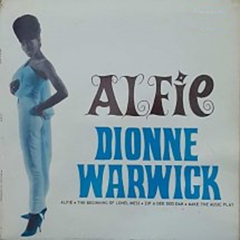
“Alfie” was written by Burt Bacharach and Hal David and appears as the first song on side two of Dionne Warwick’s sixth studio album, Here Where There Is Love. Although Bacharach has said that “Alfie” is one of his favorite songs, he and Hal David struggled with writing a song about a man named Alfie when Paramount requested it for the upcoming 1966 British comedy drama film of the same name. After viewing a rough cut of the movie, David utilized one of the lines that the film’s star Michael Caine used throughout the film, “What’s it all about,” as the opening phrase for the song. Since the film was set in England, Paramount wanted a British singer for the song. Cilla Black agreed to do the song only if Bacharach agreed to do the arrangement for the session. To her surprise, he did and conducted a 48-piece orchestra at Studio One at Abbey Road Studios with George Martin producing in the fall of 1965. Black released the single in the UK in January 1966 as a tease for the movie, and it went to #9 on the UK pop charts. Cher recorded her version of the song, which appeared at the end credits of the international version of the film, at Gold Star Studios in Hollywood, with Sonny Bono producing. Released as a single in July 1966, it went to #32 on the Billboard Hot 100 chart. When Dionne Warwick — Bacharach’s first choice to cut the song — released her version as a single in March 1967, it went to #5 on the Billboard R&B chart and #15 on the Hot 100 Singles chart.
Here Where There Is Love was recorded in late 1966 at Bell Sound in New York City, with Burt Bacharach and Hal David producing. Released in December 1966, it went to #1 on the Billboard R&B Albums chart and #18 on the Billboard 200 Albums chart. It was Warwick's first album to be certified Gold by the Recording Industry Association of America. She performed “Alfie” from the album at the 1967 Academy Awards show. Seven singles were released from the LP.
Dionne Warwick is an American singer, actress and television personality. After meeting Burt Bacharach in 1959, she started singing on demos for him and his writing partner Hal David. She signed with their production company and secured her first record deal with Scepter Records in 1962. Warwick has released 40 studio albums, five live albums, 25 compilation albums and 95 singles and has sold more than 100 million records worldwide. She has won six Grammy Awards and is a member of the Grammy Hall of Fame and the R&B Music Hall of Fame. Warwick has appeared in 16 motion pictures and numerous television shows and concert specials. She continues to record and make occasional personal appearances.