None of us knows with any certainty how big a role hydrogen will ultimately play in helping the U.S. and the rest of the world decarbonize. Sure, some true believers are convinced H2 is the next big thing, but even they must acknowledge the economic and other challenges associated with scaling up the production of “green” or “blue” hydrogen. Do we really want to devote the energy from thousands of wind turbines or many square miles of solar panels to produce relatively small volumes of green H2 from water via electrolysis? And is blue hydrogen — produced by breaking natural gas into hydrogen and carbon dioxide, then capturing and sequestering the CO2 — really a solution considering efficiency losses and the fact that only about 50% of the CO2 from steam methane reforming (SMR) units is actually snared? Which brings us to Air Products & Chemicals’ newly announced final investment decision (FID) on a $4.5 billion complex in Louisiana that will use a proprietary process — and not SMR — to produce what you might call deep-blue hydrogen and capture and sequester 95% of the resulting CO2. In today’s RBN blog, we discuss the project and its implications.
The replay of our Fall 2026 School of Energy (September 9 & 10, Houston) is now available online!
Learn from RBN experts, participate in hands-on Excel modeling, connect with industry peers, and gain a stronger understanding of today's interconnected energy markets.
Hydrogen has attracted a lot of attention lately, including in the RBN blogosphere, where we’ve helped our typically hydrocarbon-focused readers make sense of the H2 buzz (Help! Part 1), explained how hydrogen is produced (Help! Part 2), looked at H2 production economics (Help! Part 3), and sorted out the many “colors” that hydrogen can come in. These include old-fashioned — and very common — gray hydrogen, produced with natural gas via SMR without carbon capture and sequestration (CCS; see Been Around a Long Time); blue hydrogen (see above and Bullet the Blue Sky); turquoise hydrogen, produced with gas using plasma-arc technology to make H2 and solid carbon black (see Back in Black); and green hydrogen (again, see above).
Despite all the attention and talk, what we haven’t seen much of in the green or blue hydrogen space are big, multibillion-dollar plans for U.S. projects backed up with FIDs. Then came the Air Products’ announcement on October 14 that, after four years of planning, engineering, and other work, the company has committed to building a hydrogen-focused complex in Ascension Parish, LA (blue star in Figure 1) — just upriver from New Orleans — that by 2026 will start producing more than 750 MMcf/d (or about 1,850 tons a day) of blue H2. Best of all, from an environmental perspective, Air Products says that its proprietary version of “auto-thermal reforming” (ATR) will enable the project to capture about 95% of the CO2 generated during hydrogen production. That 5 million tons/year of captured CO2 will be injected into a nearby Class 6 sequestration well that the company and the state of Louisiana — a big booster of the project — expect to secure permits for within the next two years or so.
About the song
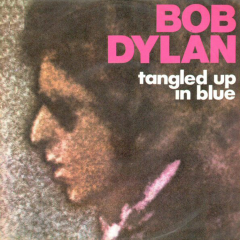
"Tangled Up in Blue" was written by Bob Dylan and appears as the first song on Dylan's 15th studio album, Blood on the Tracks. Recorded in December 1974 at Sound 80 in Minneapolis, the song was produced uncredited by Dylan's brother, David Zimmerman. Released as a single in May 1975, the song went to #31 on the Billboard Hot 100 Singles chart. Personnel on the record were: Bob Dylan (vocals, guitar, harmonica), Kevin Odegard and Chris Weber (guitar), Gregg Inhofer (keyboards), Billy Peterson (bass), and Bill Berg (drums). The song has been covered by artists such as Jerry Garcia, T-Bone Burnett, The Indigo Girls, and Robyn Hitchcock.
Blood on the Tracks was recorded between September and December 1974 at A&R Recording in New York City and Sound 80 in Minneapolis. Produced by Bob Dylan, with some assistance from his brother David Zimmerman, the album was released in January 1975. It went to #1 on the Billboard Top 200 Albums chart and has been certified 2x Platinum by the Recording Industry Association of America. Only one single, “Tangled Up in Blue,” was released from the LP.
Bob Dylan (Robert Allen Zimmerman) is an American singer, songwriter, author, and visual artist. He has been a major figure in pop culture for over six decades, with record sales of over 125 million worldwide. He has released 39 studio albums, 15 live albums, 29 compilation albums, 17 EPs, and 95 singles, and has won10 Grammy Awards, one Academy Award, and one Golden Globe Award. Dylan has been inducted into the Rock and Roll Hall of Fame and the Songwriters Hall of Fame, and is a recipient of the Presidential Medal of Freedom, a Nobel Prize in Literature, and a special citation from the Pulitzer Prize Board. His archives will be housed at The Bob Dylan Center in Tulsa, scheduled to open in May 2022. Dylan still records and tours, and will begin his Rough and Rowdy World Wide Tour in November 2021.