If you think, as we do, that (1) U.S. crude oil production is likely to increase by 1.5 to 2 MMb/d over the next five years, (2) almost all those barrels will be light-sweet crude that needs to be exported, and (3) exporters will overwhelmingly favor the marine terminals that can accommodate Very Large Crude Carriers (VLCCs), it would be hard to ignore the game-changing impacts that Enterprise Products Partners’ planned Sea Port Oil Terminal could have. SPOT, which could be completed as soon as 2026, will have robust pipeline connections from the Permian and other shale plays and be capable of fully loading a 2-MMbbl VLCC in one day, enough to handle virtually all the incremental exports we’re likely to see over the next five years. In today’s RBN blog, we discuss the fast-increasing role of VLCCs in U.S. crude oil exports and the potentially seismic impacts of the SPOT project.
RBN’s middle-of-the-road “Mid” forecast sees U.S. crude oil production increasing to 14 MMb/d by 2028, about 2 MMb/d higher than the 2022 average, with three-quarters of that incremental output coming from the Permian and most of the rest from other shale plays that also produce high-API-gravity, low-sulfur oil — see The Price You Pay for more (and a downloadable MS Excel version of that forecast). Given that U.S. refineries’ ability to economically process light-sweet crude is essentially maxed out, it’s a good bet that almost all those incremental barrels will be bound for export terminals along the Gulf Coast. And, as we said in Calling the Shots, it’s just as likely that, on their way to overseas refineries, as many of those barrels as physically possible will be headed through terminals like the Enbridge Ingleside Energy Center (EIEC) and South Texas Gateway (STG) — both in the Corpus Christi area — whose docks can receive and load VLCCs with minimal reverse lightering, the most cost-effective way to move massive volumes of oil to Europe and Asia.
The replay of our Fall 2026 School of Energy (September 9 & 10, Houston) is now available online!
Learn from RBN experts, participate in hands-on Excel modeling, connect with industry peers, and gain a stronger understanding of today's interconnected energy markets.
But crude oil pipelines from the Permian to Corpus are nearing capacity, more oil is being diverted toward Houston-area export terminals across Magellan’s pipelines, the Midland-to-ECHO pipeline system and other pipes — see Sooner or Later and Houston Bound for more on that — and Enterprise continues to advance its plan to build SPOT in 115-feet-deep waters about 30 nautical miles off the coast of Freeport. Enterprise has estimated that it will have a full license for the project in hand by September 2023, and that it will take about 30 months to build the facility. In What It Takes, we explained that SPOT will have two single-point mooring buoys (purple-and-white-striped diamonds in Figure 1) and the ability to simultaneously moor two VLCCs and load one per day — providing an extraordinary level of cost- and time-efficiency. Crude will flow to SPOT on a pair of 36-inch-diameter pipelines from two Enterprise storage-and-distribution terminals: the existing ECHO Terminal (orange tank icon southeast of Houston; 8.4 MMbbl of tank storage) and the proposed Oyster Creek Terminal (orange-and-white-striped tank icon north of Freeport; 4.8 MMbbl of planned capacity) in south-central Brazoria County.
About the song
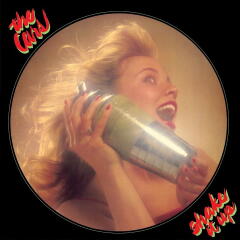
“Shake It Up” was written by Ric Ocasek and appears as the second song on side one of The Cars’ album of the same name. Released as a single in November 1981, it went to #4 on the Billboard Hot 100 Singles chart. According to Cars drummer David Robinson, “The song had been kicking around for years,” and when the band decided to approach it again as a fresh tune, it changed every element of it and “put back together, it was like a brand-new song.” Of note is lead guitarist Elliot Easton’s guitar solo, in which he switches from a Fender Telecaster for the country-infused parts to a Gibson SG for the heavier rock riffs. Elliot’s country inflections in his soloing always gave The Cars’ songs a unique flavor. Personnel on the record were: Ric Ocasek (lead vocal, rhythm guitar), Benjamin Orr (bass), Elliot Easton (lead guitar, backing vocals), Greg Hawkes (keyboards, backing vocals), and David Robinson (drums, percussion).
The album Shake It Up was recorded in early 1981 at Syncro Sound in Boston, with Roy Thomas Baker producing. Released in November 1981, it went to #9 on the Billboard 200 Albums chart and has been certified 2X Platinum by the Recording Industry Association of America. Four singles were released from the LP.
The Cars were an American rock band formed in Boston in 1976 by Ric Ocasek, Benjamin Orr, Elliot Easton, Greg Hawkes and David Robinson. Emerging from the new wave scene, the band featured Ocasek and Orr alternating on lead vocals, with Ocasek being the primary songwriter. They released seven studio albums, eight compilation albums and 26 singles before disbanding in 1988. The Cars were inducted into the Rock and Roll Hall of Fame in 2018. Benjamin Orr died in 2000 and Ric Ocasek passed away in 2019. The surviving members continue to record and perform in various projects.