Refined product markets in the U.S. are constantly morphing. Over time, demand for gasoline and diesel rises or falls, refineries are shut down, and the price spread between products sold in neighboring regions widens or narrows. These changes can incentivize refiners and marketers to push into new areas — and encourage midstream companies to develop pipeline capacity to ease the flow of gasoline, diesel and jet fuel into newly attractive markets. Midstreamers have advanced a number of pipeline projects in the past few months to help move increasing volumes of products west across Texas to the Permian, the Great Plains and into the Rockies. In today’s RBN blog, we discuss these projects and what’s been driving their development.
Our goal in this blog series is to provide an overview of the U.S.’s major refined product pipelines and to describe how the network continues to be reworked — extended, expanded, repurposed and/or reversed — to reflect changing market dynamics. In Part 1 we looked at the big picture, discussing many of the large pipelines and pipeline systems that transport gasoline, diesel and jet fuel long distances from refineries to product terminals throughout the U.S. We noted that in addition to these long-haul, higher-volume pipelines, there are scores of shorter, lower-volume pipes that fan out from these lines to distribute refined products to terminals in smaller cities and towns. In most cases, gasoline and diesel are transported “the last mile” to service stations by truck. In Part 2, we discussed the changing market dynamics between the East Coast (PADD 1) and the Midwest (PADD 2), and the resulting increase in refined product pipeline capacity east across Pennsylvania.

The Future of Fuels bi-annual report by RBN's Refined Fuels Analytics provides an in-depth analysis of the U.S. and global refinery industries, focusing on crude oil and fuel market dynamics, supply and demand, alternative fuels, refinery capacities, and price forecasts to help stakeholders navigate the evolving energy landscape.
Today, we’ll look at the market changes that have instigated a number of refined product pipeline projects in Texas and New Mexico (part of PADD 3/Gulf Coast), the Great Plains states (part of PADD 2) and the Rockies (PADD 4). We’ll begin with an overview of key changes affecting the supply of and demand for gasoline, diesel and jet fuel, and then discuss a few pipeline projects designed to help Texas and Great Plains refiners and markets take advantage of emerging opportunities.
About the song
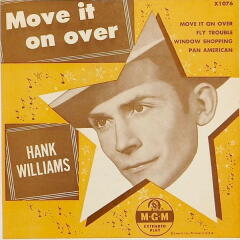
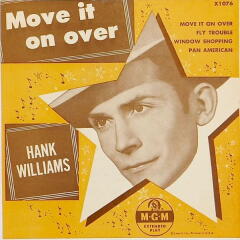
“Move It On Over” was written by Hank Williams and was released as a single by Williams in June 1947. The song, which went to #4 on the Billboard Most Played Juke Box Folk Records Singles chart, was Williams’s first major hit record and helped to secure him a spot on Louisiana Hayride, a country music radio show and a training ground for the Grand Old Opry. The song was recorded in April 1947 at Castle Studio in Nashville, with Fred Rose producing. Rose used Red Foley’s band, The Cumberland Valley Boys, to back up Williams. Personnel on the record were: Hank Williams (vocals, acoustic rhythm guitar), Zeke Turner (electric guitar), Jerry Byrd (Hawaiian steel guitar), and Tommy Jackson (fiddle).
Some musicologists have called “Move It On Over” the first rock and roll record and, listening to the approach to the song by Williams and the band — especially the rocking and swinging electric guitar solo by Zeke Turner — it’s hard to ignore its significance. However, other music writers say first-ever honors should go to “Rocket 88” by Jackie Brenston and his Delta Cats, which was recorded at Memphis Recording Service in March 1951 by Sam Phillips. (One of the members of the Delta Cats was Ike Turner, who with his wife, Tina, would have his own impact on rock and roll and soul music.) Many other artists have covered “Move It on Over” over the years, including George Thorogood and The Destroyers, who had a hit single with it from their album of the same name in 1979.
Hank Williams was an American country music singer, songwriter and musician. He is considered by many to be one of the most influential and iconic country music artists of all time. Born and raised around Montgomery, AL, Hank learned how to play the guitar from an African American blues street musician named Rufus Payne. His first professional break came when Montgomery radio station WSFA hired him to perform on and host a 15-minute program in 1937. During his lifetime Williams released two studio albums and 31 singles. Ten studio albums, eight live albums, 25 compilation albums and 30 singles were released posthumously. In 1987, Williams was inducted into the Rock and Roll Hall of Fame and received a Grammy Lifetime Achievement Award.
The last single released during Williams’s lifetime was “I’ll Never Get Out of This World Alive,” which came out in November 1952. Williams died from heart failure in the backseat of his baby-blue 1952 Cadillac convertible enroute to a show in Canton, OH, on New Year's Day 1953. He was 29 years old.