The competition for barrels and the top-spot ranking among the Gulf Coast’s crude oil export terminals is like any good PGA tournament or NASCAR race, with lots of changes in who’s out in front and the ever-present possibility of a surprise — the export-market equivalent of an eagle at the last hole at the Masters or a spin-out and multicar crash on the last lap at the Daytona 500. A couple of years ago, in the first quarter of 2019, the Enterprise Hydrocarbons Terminal in Houston was at the top of the crude-exports leaderboard, followed by Energy Transfer’s Nederland Terminal and Moda Midstream’s facility in Ingleside, TX. Since then, Enterprise has ceded the #1 spot to Moda, volumes out of Nederland have slowed to a trickle, and the Louisiana Offshore Oil Port, with its unique ability to fully load Very Large Crude Carriers, has rocketed to #3. Today, we continue our series on Texas and Louisiana’s oil export facilities with a look at the Gulf Coast’s second- and third-largest terminals by export volume.
As we said in Part 1, U.S. crude oil exports have been rising steadily since the ban on most exports was lifted in December 2015 — even during COVID-impacted 2020, when export volumes for the first time averaged more than 3 MMb/d. But the volumes of oil being exported out of the 20-odd crude-handling terminals along the Gulf Coast varies widely, and since the start of last year almost half of those barrels have been loaded at only three facilities: the Moda Ingleside Energy Center (MIEC), Enterprise’s EHT, and LOOP. According to RBN’s weekly Crude Voyager report, MIEC is leading by a considerable margin, EHT is in the runner-up spot, and LOOP ranks third.

Canadian crude output is rising, requiring new export routes. As traditional pathways face constraints, the U.S. Rockies—especially the Guernsey, WY hub—are emerging as key corridors for moving Canadian heavy crude to downstream markets, including the Gulf Coast.
In the first blog of this series, we focused on MIEC. Moda Midstream acquired the facility from Occidental Petroleum in September 2018 and has been working since then to develop millions of barrels of additional storage capacity to support export growth and directly connect it three new Permian-to-Corpus pipelines — Cactus II, EPIC Crude, and Gray Oak — as they came online in late 2019 and early 2020. Moda also has been ratcheting up the ability of the terminal’s berths to allow larger tankers to be loaded there. All three of the berths there can now fully load 1-MMbbl Suezmaxes, one can load as much as 1.25 MMbbl onto 2-MMbbl VLCCs, and a second will be able to do the same later this year. When the dredging of the Corpus Christi Ship Channel to Ingleside to a depth of 54 feet is completed by early 2022, berths 2A and 4 will each be able to load as much as 1.5 MMbbl onto VLCCs before sending them out into the deeper waters of the Gulf of Mexico for topping off via reverse lightering. Today, we turn our attention to EHT and LOOP.
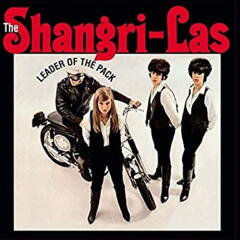
About the song
“Leader of the Pack" was written by Shadow Morton, Jeff Barry and Ellie Greenwich. It appears as the second song on side one of The Shangri-Las’ debut album of the same name. Released in September 1964, the song went to #1 on the Billboard Hot 100 Singles chart. The instrumental parts were recorded in July 1964 at Ultrasonic Studios in Hempstead, NY, and the vocals were recorded at Mira Sound Studio in New York City, with Shadow Morton producing. Personnel on the record were: Mary Weiss (lead, backing vocals), Betty Weiss (lead, backing vocals), and Marge and Mary Ann Ganser (backing vocals). Uncredited session musicians played on the record. In 1985, heavy metal band Twisted Sister released a cover of the song from their album Come Out and Play. It went to #53 on the Billboard Hot 100 Singles chart.
The album, Leader of the Pack, was compiled and released in February 1965 to capitalize on the success of The Shangri-Las’ hit singles, “Remember (Walking in the Sand)” and “Leader of the Pack.” Produced by Shadow Morton, the album went to #114 on the Billboard Top 200 Albums chart. Four singles were released from the LP.
The Shangri-Las were an American pop girl group who were popular in the 1960s. The two sets of singing sisters were discovered by Artie Ripp in New York City. The group took its name from the Shangri-La restaurant in Queens, NY. They released four studio albums, nine compilation albums, and 17 singles before officially breaking up in 1968. Mary Weiss served as the front person and main vocalist for the group. All the girls sang backup and were at times featured as the lead vocalist. Betty Weiss retired from the music business and lives on New York’s Long Island. Mary Ann Ganser died in 1970, Marge Ganser in 1996, and Mary Weiss in January 2024.