The Shale Revolution changed everything about U.S energy markets, and in the process made forecasting the production and pricing of crude oil, natural gas and NGLs a heck of a lot harder. But we all learn from experience. In the early days of the Revolution, few could have predicted how quickly output would rise, how challenging it would be for pipeline takeaway capacity to keep up with production, or how successfully crude-by-rail would fill the gap – until that gap went away with the Revolution’s most recent phase. Comparing past forecasts to what actually happened is instructive though, and maybe––just maybe––today’s projections for the future are more informed than the forecasts of 2011 or 2013. In today’s blog we look at a recent presentation on forecasting lessons learned at RBN’s School of Energy earlier this month.
It’s not often that we get to quote an ancient Greek philosopher in the RBN blogosphere––we’re much more likely to quote Yogi Berra––but we think Heraclitus of Ephesus (born more than 2,500 years ago) was really onto something when he said, “No man steps into the same river twice, for it’s not the same river and he’s not the same man.” In other words, the world is constantly changing, and as it changes our view of things adjusts, and then adjusts again. Or, as Yogi put it, “The future ain’t what it used to be.”

Visualize the infrastructure behind U.S. NGL movement.
The U.S. NGLs Map provides a comprehensive view of the transport, processing, and export networks moving NGLs across the U.S.
Which brings us to the topic of energy forecasting. Three and a half years ago (May 2013), Rusty gave a keynote presentation at Bentek’s annual Benposium in Houston. Despite the complicated title of his talk––“Why What We Thought We Knew About the North American Hydrocarbon Market No Longer Matters”––his premise boiled down to this: We can learn a thing or two from looking at forecasts that were made a few years ago, and by comparing the forecasts with current data and the latest forecasts. In our “Too Wrong for Too Long” series based on that presentation, we compared 2011 forecasts by Bentek (then partly owned by Rusty) with 2013 data and forecasts regarding Bakken crude oil production growth, Marcellus natural gas output and the need to re-plumb the gas pipeline network, the Eagle Ford’s condensate conundrum, surging NGL production and its consequences, and natural gas price fluctuations. At RBN’s recent School of Energy, which was in session November 2-3, Rusty took another look at these same five topics, this time comparing the 2011 forecasts with 2013 data and forecasts and with the latest (2016) data and forecasts. In the new series we launch today, we’ll discuss his review and what the comparison of past forecasts with what’s happened since teaches us.
About the song
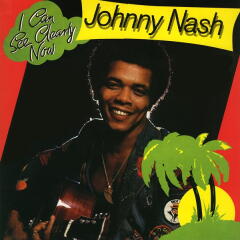
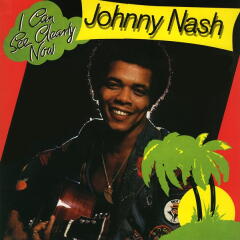
“I Can See Clearly Now” was written by Johnny Nash and appears as the first song on side two of Nash’s 12th studio album of the same name. Released as the first single from the album in June 1972, it went to #1 on the Billboard Hot 100 and Adult Contemporary Singles charts and has been certified Gold by the Recording Industry Association of America. The song has been covered by many artists, including Ray Charles, Willie Nelson, Toots & the Maytals, and Gladys Knight and the Pips. In October 1993, Jimmy Cliff released his version from the movie Cool Runnings and it went to #18 on the Billboard Hot 100 Singles chart. Personnel on the record were: Johnny Nash (lead vocals) and members of the Jamaican reggae and soca band the Fabulous Five: Freddie Campbell (bass), Cleveland Manderson (guitar), Grub Cooper (drums), Donovan Lee Palmer, Stanley Thorpe (keyboards), Harold Jr. Bailey (flute, sax), Romeo Gray (trombone), Andre Palmer (trumpet), and Andrew Cassanova (backing vocals).
The album, I Can See Clearly Now, was recorded at AIR Studios in London in 1971-72 and produced and arranged by Johnny Nash. Released in July 1972, it went to #1 on the Billboard 200 Albums chart and has been certified Gold by the RIAA. Bob Marley wrote or co-wrote four songs on the album, including the hit single, “Stir It Up.” Two singles were released from the LP.
Johnny Nash was an American reggae and pop singer, songwriter and record producer from Houston. He released his first single, “A Teenager Sings the Blues,” in 1957. He released 24 studio albums, 23 compilation albums, and 163 singles and EPs. He was the co-owner of JAD Records, which produced and released the earliest recordings of Bob Marley & the Wailing Wailers. Nash died at his home in Houston in October 2020 at the age of 80.