If you follow developments in the energy industry, you know that news about permitting for major infrastructure projects can sometimes read more like a horror story: 14 years to build an electric transmission line, a decade to get a mining permit, and the reality that some projects can be constructed in far less time than it takes to secure the required permits and work through any legal challenges. It’s a known problem with a lot of contributing factors, but no easy answers. In today’s RBN blog, we look at how permitting difficulties have become a flashpoint for all sorts of stakeholders — industry groups, environmental advocates, the general public, and politicians of all stripes. Our focus today will be on the current poster child of permitting challenges, Mountain Valley Pipeline (MVP), but we’ll also discuss how permitting setbacks complicate the development of all types of projects, from traditional oil and gas pipelines to initiatives at the heart of the energy transition.
Almost everyone acknowledges the benefit of having interested parties and stakeholders weigh in on major proposals to build or expand infrastructure, whether it be a new highway, an airport runway extension or an interstate oil or gas pipeline. Additionally, credible regulations and appropriate safeguards (such as the Clean Water Act’s focus on protecting the nation’s water supplies) are essential to the process. Still, the reality is that the permitting process for some important, badly needed projects can drag on for three, six or even nine years or longer. And permitting delays not only drive up project costs, they also put additional stress on infrastructure that’s already in place and prevent some projects from ever becoming a reality.

The NATGAS Appalachia weekly report provides the data and insights to monitor the northeast natural gas market’s twists and turns and identify the risks and opportunities along the way, including tracking supply-demand trends, outbound capacity and their impact on takeaway pipeline utilization, and regional prices.
Given the substantial regulatory challenges that a number of natural gas pipeline projects have faced in recent years (a trend we’ve covered extensively in our Midstream Conundrum series), that’s a logical place to start. Aside from blocking or delaying an individual gas pipeline project, permitting issues can also have ripple effects such as creating market imbalances, keeping gas supplies from getting where they’re needed and spurring severe price disruptions — including distressed prices where gas becomes stranded, such as in Appalachia and the Permian, and price spikes in gas-starved regions cut off from supplies, such as on the West Coast and in New England. And even with all its existing infrastructure, the Gulf Coast will need considerably more new gas pipeline capacity given the additional LNG feedgas demand expected to come online in future years. (LNG has its own permitting issues to deal with; see our Climb That Hill series for more.)
About the song
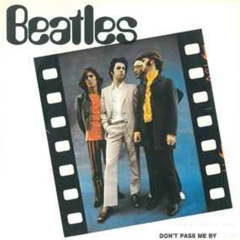
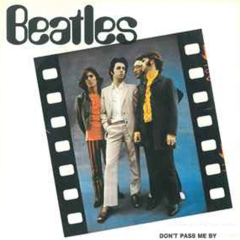
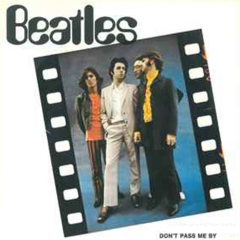
“Don’t Pass Me By” was written by Richard Starkey (Ringo Starr) and appears as the sixth song on The Beatles’ ninth studio album, The Beatles (White Album). Starr wrote the song shortly after he joined The Beatles in August 1962. He said it was the first song he wrote, “while sitting round at home, fiddling with the piano.” He wrote two songs for The Beatles, “Don’t Pass Me By” and “Octopus’s Garden,” and co-wrote “What Goes On” and “Flying.” Keith Richards once commented to Paul McCartney that the difference between their groups was that The Stones had one front man, while The Beatles had four. “Don’t Pass Me By” was recorded during June and July 1968 at Abbey Road in London. It was released as a single in Scandinavia in April 1969 and went to #1 in Denmark. Personnel on the record were: Ringo Starr (vocals, drums, percussion, tack piano), Paul McCartney (grand piano, bass), and Jack Fallon (fiddle). Both pianos on the song were recorded into a Leslie 147 speaker.
The Beatles (White Album) was recorded between May and October 1968 at Abbey Road and Trident in London with George Martin producing. Nineteen of the LP’s 30 songs were written during March-April 1968 at a Transcendental Meditation retreat that the band attended in Rishikesh, India. The double album was released in November 1968 and went to #7 on the Billboard 200 Albums chart. It has been certified 24x Platinum by the Recording Industry Association of America. The original release of the album had The Beatles name embossed on the front cover and were numbered. No singles were released from the LP but “Hey Jude” backed with “Revolution” originated from the same sessions and were issued as a single in August 1968. It went to #1 on the Billboard Hot 100 Singles chart and has been certified 4x Platinum by the RIAA.
The Beatles were an English rock band formed in Liverpool, England, in 1960. The band, with members John Lennon, Paul McCartney, George Harrison, and Ringo Starr, went on to change pop culture and are considered by many to be the most influential band of all time. They have released 21 studio albums, six live albums, 36 EPs, 54 compilation albums, and 63 singles. All of the band are Members of the Order of the British Empire (MBE). They were inducted into the Rock and Roll Hall of Fame in 1988, and have received one Academy Award, Seven Grammy Awards, and 15 Ivor Novello Awards. They are the best-selling band in history, having sold more than 600 million records worldwide. All band members went on to successful solo careers after the breakup of The Beatles in 1970. John Lennon was assassinated in December 1980, George Harrison died in November 2001. Both Paul McCartney and Ringo Starr continue to record and tour as solo artists.