In 2024, more than 9 billion gallons of propane were delivered to U.S. consumer markets, primarily for residential heating and cooking, with substantial volumes supporting the commercial, industrial, agricultural and transportation sectors. It is a physically complicated business because, unlike electricity and natural gas, which are delivered through wires and pipelines, respectively, the vast majority of the propane used by U.S. consumers is delivered by some combination of pipelines, rail cars and, ultimately, trucks. How does that complicated supply chain work in real life? In today’s RBN blog, we begin a detailed look at the U.S. propane market.

In this blog series, we will discuss the U.S. side of the propane market, starting with the journey of propane molecules from the wellhead to the fractionator to the domestic consumer’s burner tip, including an introduction to the roles played by — and the interactions between — propane wholesalers and retailers. Later in this series, we'll discuss those roles and interactions in more detail, and also look at propane inventories and pricing.
From Wellhead to Burner Tip
The voyage of a propane molecule from the wellhead to the end user involves many steps. As shown in the left-most section of Figure 1 below — under the “Supply (Midstreamer/Refiner)” subhead — NGLs are entrained within the natural gas stream coming out of the wellhead, then separated at a natural gas processing plant (second icon from far left) which chills the gas until the liquids in the stream (including propane) liquefy and “fall out” of the stream. The resulting mix of NGLs, known as raw mix or Y-grade, is then piped to underground storage or NGL fractionators. In the fractionator, the liquids are heated and separated based on boiling point, yielding so-called “purity” NGLs including propane. (Raw mix sent to storage must also be fractionated before moving ahead to the next steps in the value chain.)
Though not shown in Figure 1, propane is also produced by refineries. There, most of the propane comes from the main atmospheric distillation unit. LPG and other refinery gases are separated in the first cut of crude oil; following some additional processing, propane is produced. Nearly all the propane produced from refineries enters the retail propane market.

Figure 1. Wholesale-to-Retail Propane Value Chain. Source: RBN

About the song
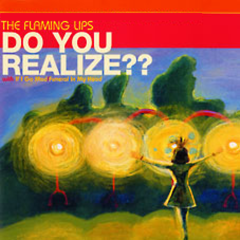
“Do You Realize” was written by Wayne Coyne, Steven Drozd, Michael Ivans and David Fridmann and appears as the ninth song of The Flaming Lips’ 10th studio album, Yoshimi Battles the Pink Robots. Released as a single in August 2002, it has become one of The Flaming Lips’ most popular songs and has been certified Gold by the Recording Industry Association of America (RIAA). In 2009 it was adopted as the Official Rock Song of Oklahoma. The song’s lyrics deal with the precarious balance of the cycle of life and death. The video for the song was shot in the colorful neon glare of Fremont Street in Las Vegas. It features Flaming Lips singer Wayne Coyne surrounded by female dancers in baby doll lingerie, people wearing rabbit and pig heads, and an elephant. Another typical day in a Flaming Lips video shoot. Willie Nelson recorded a version of the song that was included on his Last Leaf on the Tree album, released in November 2024. The Nelson album was produced by Willie Nelson’s son, Micah Nelson, who has also done time playing bass in The Flaming Lips. Wayne Coyne has said Nelson’s cover of their song was “an utter joy and probably brings more meaning to it.” Personnel on the record were: Wayne Coyne (vocals, guitar), Steven Drozd (guitar, bass, drums, keyboards), and Michael Ivans (bass, keyboards).
Yoshimi Battles the Pink Robots was recorded between June 2000 and April 2002 at Tarbox Road Studios in Cassadaga, NY. Produced by The Flaming Lips, Dave Fridmann and Scott Booker, the album was released in July 2002. It went to #50 on the Billboard 200 Albums chart and has been certified Gold by the RIAA. Four singles were released from the LP.
The Flaming Lips are an American psychedelic rock band formed in Oklahoma City in 1983 by Wayne Coyne. Their live shows are visual extravaganzas reminiscent of Pink Floyd and Grateful Dead shows of the past with perhaps more psychedelics involved. They have released 16 studio albums, 18 EPs, 10 compilation albums and 15 singles. The band has won three Grammy Awards. Eighteen members have passed through the band since its beginnings, with founder Wayne Coyne the only original member still in the group. They continue to record and have tour dates scheduled for Germany, Portugal and Spain through June.