Here at RBN, we’ve built our analytics around the concept that hydrocarbon commodity markets — crude oil, natural gas, and NGLs — are fundamentally and closely linked. That’s why in all that we do, we emphasize that, in order to have an understanding of one market, you must also be competent in the others. That can be difficult at times when not only the market structure, but the very rules governing the upstream, midstream, and downstream sectors of oil and natural gas transportation are so different from each other. For example, consider the many contrasts between how oil and natural gas pipelines are regulated. Today, we look at how federal oversight of pipelines has evolved and why it matters for folks trying to move a barrel of crude oil or an Mcf of natural gas from Point A to Point B.
Regulation is a funny thing (as in “funny-peculiar,” not “funny-ha-ha”). Some see the legalities and nuances of regulations as issues for pipeline attorneys to stay up late worrying about, but that’s not how it really works for a heavily regulated sector like interstate pipelines. For midstream companies and the shippers that use their pipelines, regulation matters as much as gravity does to an airline — it’s not something that the CEO wants to think about every day, but it’s a set of rules that can be lethal if not adequately appreciated. Cheap fares may get people on an airliner, but if the airline forgets about gravity, the outcome may not be good. In the case of regulation, forgetting about it can put a pipeline company out of business (or at least make it pay some humongous penalties).
With all the action in the oil sector these days, of course, lots of natural gas attorneys are scrambling to make sure they understand the differences in regulation between oil and natural gas pipelines. But businesspeople, who constitute most of RBN’s readership, also should do the same. You don’t want to have to ask an attorney every time you do something, you want to stay in the mainstream of compliant pipelines and shippers. We began discussing the impacts of each system of regulation way back in Hey Crude – The Costs and Challenges of Building Crude Oil Pipelines and we revisited the subject when some serious questions arose regarding the governance of crude oil carriers in Please Don’t Throw Me In That Briarpatch, Will U.S. Markets be Roiled by a New FERC Order?

About the song
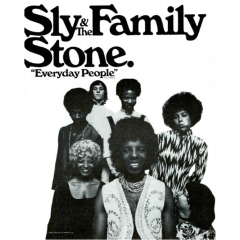
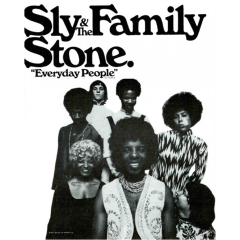
"Everyday People" was written by Sly Stone and appears as the first song on side two of Sly and the Family Stone's fourth studio album, Stand! Released as a single in November 1968, the song went to #1 on both the Billboard Soul Singles and Billboard Hot 100 Singles charts. It was the first #1 single for the band. With its lyric of "different strokes for different folks," the song is a call for peace and equality for different races and social groups. That lyric became a popular catchphrase in modern culture and would later inspire the name of the hit television series, Diff’rent Strokes.
San Francisco's Sly and the Family Stone, along with Los Angeles rock band Love, were the first integrated rock bands to have albums out. Sly and the Family Stone also featured two women in the group: Rose Stone and Cynthia Robinson. "Everyday People" is one of the most covered songs by Sly and the Family Stone, with artists such as Aretha Franklin, Joan Jett, The Staple Singers, and Pearl Jam recording the song. Personnel on the record were: Sly Stone (vocals), Rose Stone (vocals, keyboards), Freddie Stone (vocals, guitar), Larry Graham (vocals, bass), Gregg Errico (drums, vocals), Jerry Marini (sax, vocals), and Cynthia Robinson (trumpet, vocal ad-libs).
Stand! was recorded in 1968 and 1969 at Pacific High Recording Studios in San Francisco, with Sly Stone producing. Released in May 1969, the album went to #3 on the Billboard Top R&B chart and #13 on the Billboard Top 200 Albums chart. It has been certified Platinum by the Recording Industry Association of America. Two singles were released from the album. Stand! was selected by the Library of Congress for inclusion in the National Recording Registry.
Sly and the Family Stone were an American soul/rock band formed in San Francisco in 1966 by Sly Stone. Sly was already a popular DJ and record producer in the Bay Area when he put the band together. The original band was active until 1975, when internal problems led to their dissolution. Sly Stone retired from the music business in 1987. The group released 11 studio albums and 40 singles. The band left a strong impression after its appearance at the Woodstock music festival in 1969 and are featured in the film and soundtrack of that historical event as well as the 40th Anniversary Edition. Eighteen people passed through Sly and the Family Stone until its final breakup. The work of the band greatly influenced the sound of American funk, soul, pop, R&B, and hip-hop music. The band was inducted into the Rock and Roll Hall of Fame in 1993 and the Vocal Group Hall of Fame in 2007.