As the price of gasoline continues its seemingly never-ending upward path in the U.S. (not withstanding a bit of a pause in the past week), the cause (or blame, if you prefer) continues to shift. Of course, the Biden administration has heavily promoted the phrase “Putin’s price hike,” and the Russian president can certainly claim some of the blame. His invasion of Ukraine and the subsequent sanctions on the world’s second-largest exporter of refined products (after the U.S.) have led to the loss of several hundred thousand barrels per day of product supply. However, prices for refined products were already rising before his late February invasion due to a variety of other factors, both on the supply and demand sides of the equation. Perhaps the most important factor has been the loss of significant U.S. refining capacity over the last few years, which is limiting the ability of refiners to respond to the strong demand recovery and loss of supply. In its highly publicized June 15 letter to U.S. oil executives, the administration acknowledged this as it demanded refiners reactivate lost capacity and increase production. In today’s RBN blog, we summarize the shutdowns which have taken place in the U.S. and discuss the reasons behind those closures.

The Future of Fuels bi-annual report by RBN's Refined Fuels Analytics provides an in-depth analysis of the U.S. and global refinery industries, focusing on crude oil and fuel market dynamics, supply and demand, alternative fuels, refinery capacities, and price forecasts to help stakeholders navigate the evolving energy landscape.
Prior to 2019, the U.S. refining industry had been in a general growth phase, adding about 3.5 million barrels per day (MMb/d) of refining capacity since 1995. Over that period, U.S. plants evolved into the most competitive facilities in the world and the U.S. became the world’s largest exporter of refined products — a necessary step since domestic demand growth was slowing due to demographic factors, improved fuel efficiency, and policies encouraging a shift away from petroleum fuels.
The refining-capacity growth trend wasn’t universal across the U.S., with some regions faring much better than others. The Gulf Coast (as defined by PADD 3) saw the lion’s share of capacity growth, adding about 3 MMb/d since 1995 as it benefited from ready access to growing export markets, primarily in Latin America. Inland refiners in PADD 2 (Midcontinent) and PADD 4 (Rocky Mountains) also grew capacity as they benefited from the boom in light tight oil (LTO) production. On the other hand, crude-supply challenges, a tough regulatory environment and generally higher costs resulted in capacity declines on both the East and West coasts (PADDs 1 and 5, respectively). East Coast facilities were particularly hard hit as the Atlantic Basin is an extremely competitive market, with external supply options from the Gulf Coast, Europe and even the Middle East, resulting in a number of refinery closures and a net loss of over 700 Mb/d of capacity through 2019. Table 1 below summarizes the changes in refining capacity across the U.S. from 1995 through 2019.
About the song
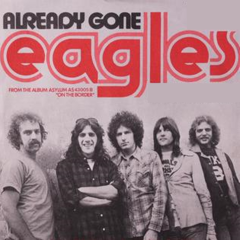
“Already Gone” was written by Jack Tempchin and Robb Strandlund. It appears as the first song on the Eagles’ third studio album, On the Border. It was released as the first single from the album in April 1974 and went to #32 on the Billboard Hot 100 Singles chart. Personnel on the record were: Glenn Frey (lead vocals, guitar solo), Don Henley (drums, backing vocals), Bernie Leadon (guitar, backing vocals), Randy Meisner (bass, backing vocals), and Don Felder (guitar solos).
On the Border was initially being produced by Glyn Johns, who had the band recording at Olympic Studios in London. After disagreements between the band and Johns, the band relocated to The Record Plant in Los Angeles and hired producer Bill Szymczyk, who had recently produced Joe Walsh who was managed by the Eagles’ manager, Irving Azoff. The band wanted to go in a more rock direction with the album. Johns produced two songs on the album, Szymczyk produced the rest. Bernie Leadon’s friend Don Felder so impressed the band with his guitar skills on “Already Gone” and “Good Day in Hell” that they asked him to join the Eagles. Released in March 1974, On the Border went to #17 on the Billboard 200 Albums chart and has been certified 2x Platinum by the Recording Industry Association of America. It was the first album of the Eagles to be released in quadraphonic sound in addition to stereo. Three singles were released from the LP.
The Eagles are an American rock band formed in Los Angeles in 1971. They are one of the most successful rock bands in history, with records sales of over 200 million worldwide. They have released seven studio albums, two live albums, 10 compilation albums and 30 singles. They have won six Grammy Awards and have been inducted into the Rock and Roll Hall of Fame and the Vocal Group Hall of Fame. The band received Kennedy Center honors in 2016. Nine members have passed through the band since its inception. Glenn Frey died in January 2016 at the age of 67. The band continues to record and tour and is scheduled to perform at the Sphere in Las Vegas in April and September.