


The Renewable Identification Number, or RIN, market is so misunderstood that even its main participants don’t agree on its financial impact, effectiveness, or even basic fairness. RINs are a feature of the federal Renewable Fuel Standard (RFS), which requires renewable fuels like ethanol and bio-based diesel to be blended into fuels sold in the U.S. And depending on your point of view — trader, farmer, refiner, blender, consumer, politician — you may have a very different perspective about how the system works. In today’s RBN blog, we discuss highlights from our new Drill Down Report that attempts to make sense of the complexities of the RINs market.
Let’s start with the basics. RINs were designed to ensure compliance with the federal RFS, which was created by the Energy Policy Act of 2005 and expanded and extended by the Energy Independence and Security Act of 2007. To explain how the system works, we’ll refer to Figure 1 below and consider a simplified example of E10, a 90-10 mix of “unfinished gasoline” (oil-based blendstock for oxygenated blending, or BOB) and ethanol. Beginning on the left-hand side, refiners and/or importers (dashed black circle) are subject to the RFS and incur Renewable Volume Obligations (RVO) that they need to fulfill for any BOB that they produce or import. When renewable fuel (ethanol) is produced for blending into BOB, a RIN — a 38-digit number — is assigned and “attached” to each gallon (dashed green circle).
About the song
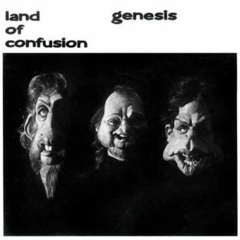
“Land of Confusion” was written by Mike Rutherford (lyrics) and Tony Banks and Phil Collins (music). It appears as the third song on side one of Genesis’ 13th studio album, Invisible Touch. Released as a single in November 1986, it went to #4 on the Billboard Hot 100 Singles chart. The video for the song featured puppets from the UK show “Spitting Image.” The puppets also appear on the picture sleeve for the single, which parodies The Beatles’ With The Beatles album cover art. Personnel on the record were: Phil Collins (vocals, drums, percussion), Mike Rutherford (guitars, bass), and Tony Banks (keyboards, synth bass).
Invisible Touch was recorded between October 1985 and February 1986 at The Farm in Surrey, England. Produced by Genesis with Hugh Padgham, the album was released in June 1986. It went to #3 on the Billboard 200 Albums chart and has been certified 6x Platinum by the Recording Industry Association of America. Five singles were released from the LP.
Genesis are an English progressive rock band formed in Godalming, England, in 1967 by Phil Collins, Mike Rutherford and Tony Banks. Their lineup in the 70s also featured singer Peter Gabriel and guitarist Steve Hackett. After Gabriel left the band in 1975, Phil Collins took over lead vocal duties. Eleven people have passed through the group. They have released 15 studio albums, six live albums, four compilation albums, two EPs, and 43 singles. Genesis has sold more than 100 million records worldwide. They have won one American Music Award, one Grammy Award, and one Ivor Novello Award. At Genesis’ last live show in March 2022, Phil Collins said on stage, “It’s the last show for Genesis.” All three Genesis members are actively involved in recording for their respective solo careers.




Comments
Before the ethanol mandate, refiners produced 87 R+M/2 octane gasoline. Now, refiners produce 84 R+M/2 gasoline. This octane shift allows for less volume loss across the refinery - effectively increasing gasoline yield per bbl of crude. This has created significant value for refiners. Refiners would blend ethanol without the RIN requirement - economics would be favorable. The burden of the mandate is reporting, auditing, and review required by all parties.
In reply to Octane value of ethanol blending by Don Leigh
George Hoekstra here responding on behalf of RBN: Thanks for reading and for your comment. Yes, you are correct about refiners benefitting from ethanol's octane contribution. Before the amount of ethanol in gasoline reached 10% in 2013 --refiners were putting ethanol into gasoline, it was an economical octane booster and that is why the D6 RIN price was only 1 cent then (as you say, it was only the administrative cost). But in 2013 the D6 RIN shot up to $1.00, that's because when ethanol in gasoline hit the 10% ceiling for E10 saturation, the additional required D6 RINs could only be produced by making more biodiesel -- at that point refiners started paying for the subsidy needed to stimulate (non-economic) production of biodiesel which, unlike ethanol, had no benefit to refiners except meeting the mandate for more D6 RINs -- please see our 2-part big bang series.
A question for the commentor -- do you see tightness in the octane market today?