The world consumes about 100 MMb/d of liquid fuels, which are critically important to every segment of the global economy and to nearly every aspect of our daily lives. The size and scope of this market means it’s impacted by all kinds of short-term forces — economic ups and downs, geopolitics, domestic developments and major weather events, just to name a few — some of which are difficult, if not impossible, to foresee. But while these events can sometimes come out of nowhere, there are some long-term forces on the horizon that will shape markets in the decades to come, even if the magnitude of these changes might be up for debate. One is a move to prioritize alternative fuel sources rather than crude oil, but a meaningful shift won’t happen as quickly as many forecasts would indicate — and that has big implications for liquid fuel demand and the outlook for U.S. refiners. In today’s RBN blog, we discuss these issues and other highlights from the recent webcast by RBN’s Refined Fuels Analytics (RFA) practice on their newly released update to the Future of Fuels report.

It's no secret that energy markets can sometimes turn on a dime. That’s been especially true since the beginning of the 2020s. In the past three-plus years, a variety of events — including a pandemic-induced market crash, followed by a price spike sparked by the largest land war in Europe since World War II — has sometimes left us feeling like we’re on an old wooden roller-coaster ride, complete with all the gut-wrenching ups and downs and twists and turns that leave your brain rattling around in your head. Other rides are smoother and slower — like the small-scale railroad that circles an amusement park — and you can generally anticipate what’s coming down the track, similar to the long-term move toward alternative fuels, which has largely been driven by government policy. In the U.S., those policies include higher fuel-efficiency requirements for new cars and trucks and expanded tax credits to speed the adoption of electric vehicles (EVs). It’s a commonly repeated refrain that peak global oil demand is on the horizon, perhaps even in the next decade or so, but RFA continues to believe that the horizon is farther away than the consensus, due largely to several economic, technical and market-related hurdles.
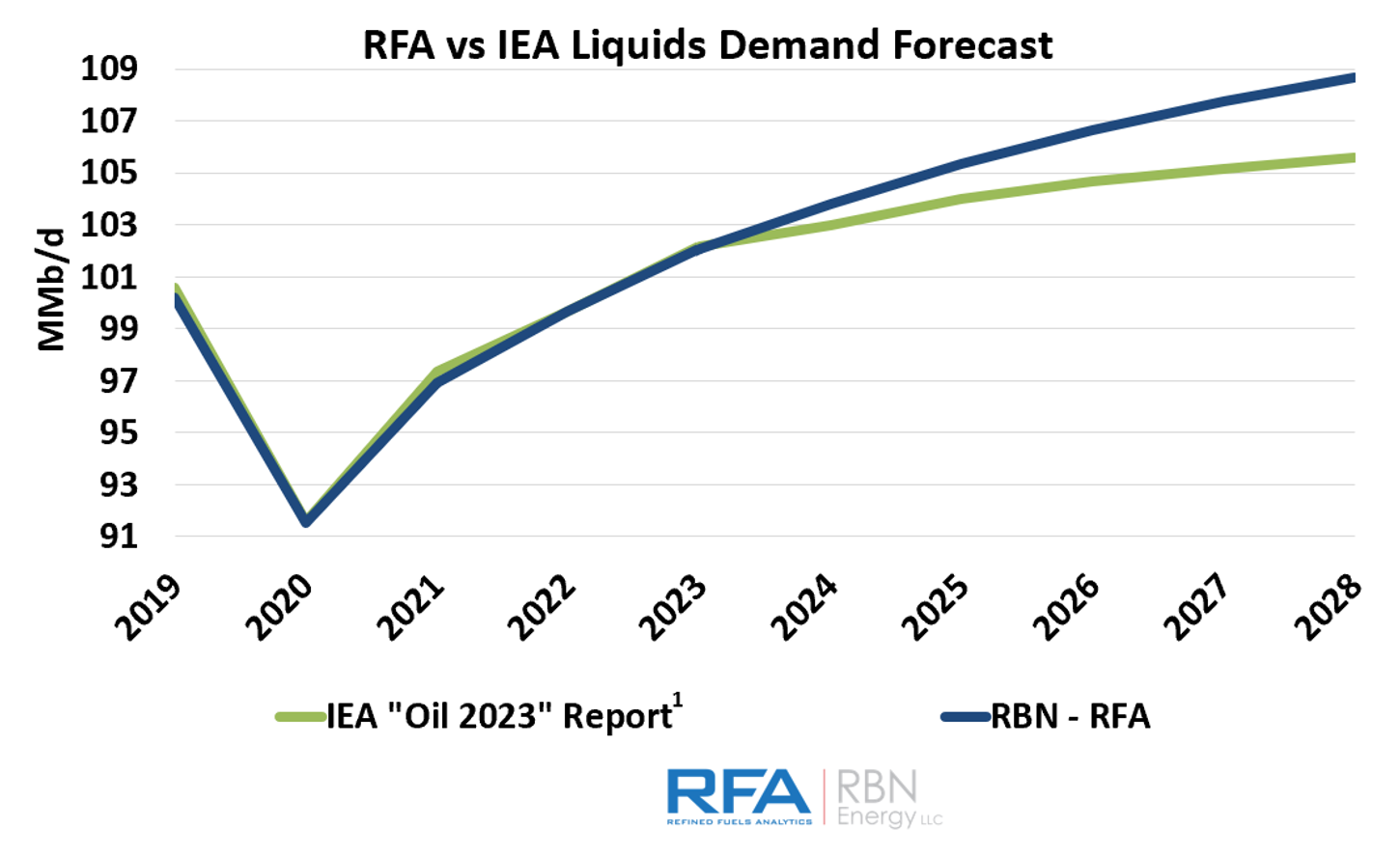
Figure 1. RFA and IEA Liquids Demand Forecast. Sources: RFA, IEA
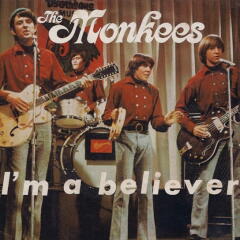
About the song
“I’m a Believer” was written by Neil Diamond and appears as the sixth song on side two of the Monkees’ second studio album, More of the Monkees. Recorded in October 1966 at RCA Studio A in Hollywood, the song was released as a single in November 1966. It went to #1 on the Billboard Hot 100 Singles chart and remained there for seven weeks. It has been certified Gold by the Recording Industry Association of America. Personnel on the record were: Micky Dolenz (lead, backing vocals), Davy Jones, Peter Tork (backing vocals), Al Gorgoni, Sal DiTroia (electric guitars), Neil Diamond (acoustic guitar), Stan Free (organ), George Butcher (electric piano), Russ Savakus (bass), Buddy Salzman (drums), and George Devens (tambourine).
More of the Monkees was recorded between June-November 1966 at RCA Studio A in Hollywood with Jeff Barry, Tommy Boyce, Bobby Hart, Michael Nesmith, Jack Keller, Gerry Goffin, Carole King, Neil Sedaka, and Carole Bayer Sager producing. Thirty-four songs were recorded for the album, with 12 being chosen for inclusion on the LP. The album was released in January 1967 and went to #1 on the Billboard 200 Albums chart. It has been certified 5x Platinum by the RIAA. Three singles were released from the LP.
The Monkees were an American pop rock band formed in Los Angeles in 1966 featuring Micky Dolenz, Michael Nesmith, Davy Jones and Peter Tork. The band was put together by producers Bob Rafelson and Bert Schnieder to star as the fictional band for their sitcom, The Monkees. The series aired from 1966 to 1968 and featured music credited to the Monkees. They released 13 studio albums, eight live albums, 31 compilation albums, 24 singles, and one feature-length motion picture. The group was inducted into the Vocal Group Hall of Fame in 2007. The band officially broke up in 1970, with each member pursuing solo careers. Over the years there have been several reunion tours featuring various members of the group. Davy Jones died in February 2012 at the age of 66, Peter Tork died in February 2019 at the age of 77, and Michael Nesmith died in December 2021 at the age of 78. Micky Dolenz continues to act, direct, and perform live concerts.