The Niobrara production area in the Rockies is a complicated place to determine crude oil supply and demand balances. It’s at the crossroads of a number of supply areas, with volumes coming in from Canada and the Bakken, as well as locally from the Powder River and Denver-Julesburg basins. And in terms of destinations, there are well-established local markets, or you can send the molecules to Salt Lake City, or southeast to the Cushing, OK, hub and beyond. The Niobrara is one of the few growth areas we look at where there is substantial pipeline capacity for inflows and outflows, with the option to service multiple markets. Now, there are a couple of new pipeline projects ramping up in the Rockies, and given the region’s interconnectivity, it’s a good bet that the status quo in the Niobrara is in for some big changes. Today, we recap the new pipeline projects and then dive into what it could mean for the midstream balance in the Powder River and D-J.

Canadian crude output is rising, requiring new export routes. As traditional pathways face constraints, the U.S. Rockies—especially the Guernsey, WY hub—are emerging as key corridors for moving Canadian heavy crude to downstream markets, including the Gulf Coast.
In Part 1 of this series, we highlighted the myriad of new projects that have been announced in the Rockies and Western Canada in the past few months. Chief among them a prospective expansion of the Dakota Access Pipeline (DAPL), and the decision to proceed with construction of the Liberty Pipeline. DAPL (orange line in Figure 1), co-owned by Energy Transfer Partners and others, is a 570-Mb/d system that could be expanded up to 1.1 MMb/d if its open season goes well. You can read more about that project, and the downstream pipe expansion, in Part 2 of this series. The Liberty Pipeline (dashed pink line in Figure 1), which we also highlighted in Part 1, is a Phillips 66 and Bridger Pipeline project with a capacity of around 400 Mb/d, and the ability to connect to Cushing and Gulf Coast markets. Now, here in Part 3, we will examine what the possible advancement of both projects will do to the supply/demand balance in the Niobrara, and how that could impact other projects moving forward.
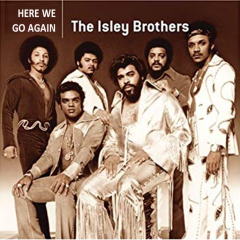
About the song
"Here We Go Again" was written by Isley brothers Ernie, Marvin, Rudolph, O'Kelly and Ronald with Chris Jaspers, and appears on The Isley Brothers' 18th album, Go All the Way. The song went to #11 on the Billboard R&B chart when released as the second single from the album. Go All the Way was recorded at Bearsville Studios in Bearsville, NY, with The Isley Brothers producing. Released on the Isley's own T-Neck Records label in April 1980, the LP went to #1 on the Billboard Top Soul Albums chart and #8 on the Top 200 Albums chart. Personnel on the record were: Ronald Isley (lead and background vocals), O'Kelly Isley (background vocals), Rudolph Isley (background vocals), Ernie Isley (guitar, drums, percussion and background vocals), Marvin Isley (bass and background vocals) and Chris Jasper (keyboards, drums and background vocals). The album also yielded the #1 R&B single, "Don't Say Goodbye (It's Time for Love)."
The Isley Brothers are an American musical group originally founded in Cincinnati, OH. They have released 31 studio albums, four live albums, 15 compilation albums and 111 singles during their career to date. They have recorded for T-Neck, Motown, Buddah, Epic and Warner Bros. Records during their career. The group were inducted into the Rock and Roll Hall of Fame in 1992, and are members of the Vocal Group Hall of Fame. Rudolph Isley quit the music business and became a Christian minister in 2004. O'Kelly Isley died in 1986, and Marvin Isley in 2010. Ron and Ernie Isley collaborated on an album with Carlos Santana, Power of Peace, which was released in 2017. They continue to tour under The Isley Brothers banner.