The battle for pipeline supremacy in the Permian is really heating up. From Cactus II, to EPIC, to Gray Oak, to a bevy of upcoming expansions and a couple of longer-term behemoth greenfield projects, there are multiple new takeaway options for Permian producers. But could it all be coming online at the wrong time? If there’s one thing we’ve learned from third-quarter earnings calls and recent conversations with producers, it’s that balance-sheet management and fiscal conservativism are top of mind right now. As a result, drilling plans and production growth expectations have been tamped down considerably for 2020 and beyond. Midstreamers and pipeline companies in the Permian are responding quickly. Tariffs are being slashed, margins are getting cut, and competition for West Texas barrels is fierce. Today, we look at recent developments and what they’ll mean for revenues and market differentials heading into the New Year.
Several Permian-focused exploration and production (E&P) companies’ stocks took a hit after third-quarter investor calls revealed their previous production targets had been missed, or that upcoming goals would be lowered. While Permian wells are still highly productive, producers there are being pressured by Wall Street to focus less on absolute productivity, and more on profitability and financial sustainability. As a result, in their earnings calls, many producers announced lower capital budgets for 2020 and scaled-back drilling plans. Further, productivity improvements are having less of an impact than they did a couple of years ago when the basin was ramping up, meaning that lower producer activity will not be offset as much by increasing well results. The cumulative effect of initial decline rates on all of the recently drilled wells in the Permian is huge, so you need to keep completing more and more wells to keep production numbers increasing. The production treadmill that E&Ps are on is getting faster as the proportion of new wells (experiencing typically much higher decline rates) to legacy wells (whose decline rates have leveled off) has increased, and producers are having a harder time staying on it while keeping their investors happy.

To truly understand Cushing — what it does and how it works — you need to know the hub’s assets and how they fit together. RBN’s Cushing Crude Oil Playbook provides the first one-stop, comprehensive guide to the hub’s assets.
This producer paradigm shift is occurring right after a number of midstream companies made major investments in the Permian to build-out new pipeline takeaway capacity. Those pipes were lusted after by producers less than a year ago when supply growth was outpacing available takeaway capacity. But now, with ample space open and production rates getting tougher to maintain, midstreamers are locked in a tough competition for smaller and smaller subsets of incremental production. In Part 1 of this series, we discussed the potential overbuild facing Permian takeaway pipelines being developed to serve the Gulf Coast market. In our view, that scenario is a realistic one, even after assuming Permian production growth of almost 2 MMb/d between October 2019 and year-end 2021.
About the song
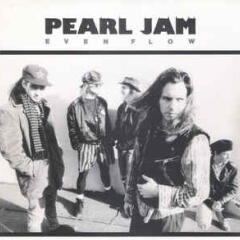
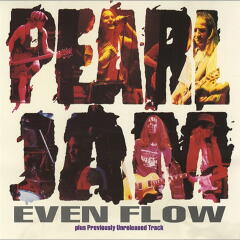
“Even Flow” was written by Stone Gossard and Eddie Vedder. It is the second song and second single from Pearl Jam’s debut album, Ten. Ironically, the band was never satisfied with the version that ended up on their debut album. Pearl Jam guitarist Mike McCready claims the band did more than 50 takes on the song, to the point that “we hated each other” after such a grind. Released in April 1992, the song went to #3 on the Billboard Mainstream Rock, #21 on the Modern Rock Tracks, and #62 on the Hot 100 charts. Personnel on the record were: Eddie Vedder (vocals), Stone Gossard (rhythm guitar), Mike McCready (lead guitar), Jeff Ament (bass), and Dave Krusen (drums).
Ten was recorded in March and April 1991 at London Bridge Studios in Seattle, with the band working with producer Rick Parashar. Released in August 1991, it went to #2 on the Billboard Top 200 Albums chart. Three singles from the LP made the charts. It has been certified 13x Platinum by the Recording Industry Association of America.
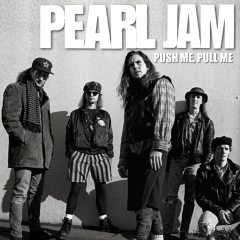
Pearl Jam is an American rock band formed in Seattle in 1990 by Stone Gossard and Jeff Ament. Their former band, Mother Love Bone, came to a quick demise after their lead singer Andrew Wood died of a heroin overdose on the day their album was released. Pearl Jam has had four drummers, up to the inclusion of former Soundgarden drummer Matt Cameron on the skins in 1991. Original members Vedder, Gossard, McCready and Ament have been in the band since its formation. They have released 11 studio albums, 23 live albums, three compilation albums, one EP, and 42 singles and have sold more than 85 million records worldwide. The band has won five American Music Awards, two Grammy Awards, and four MTV Video Music Awards. They were inducted into the Rock and Roll Hall of Fame in 2017. Pearl Jam still records and performs live. Their new album, Dark Matter, drops in April.