Western Canadian natural gas producers have long battled unrelenting competition from growing shale gas supply in the U.S. But recent price action at AECO — Canada’s benchmark natural gas hub in Alberta — suggests market conditions there have gone from bad to worse. AECO prices in recent months have fallen to the lowest levels in more than a decade, even dropping below zero at one point in intraday trading this fall. Fundamentals are increasingly bearish, given that Canadian gas production has rebounded to the highest level in close to 10 years, storage there is near to five-year highs and exports are facing further cutbacks as U.S. gas supply is itself at record highs. In addition, producers are contending with a number of transportation issues closer to home. Today, we begin a look at the factors affecting the Western Canadian gas market.
Ever since the start of the Shale Revolution, Western Canadian gas producers have weathered numerous challenges to their ability to grow supply and increase — or even maintain — market share in the U.S., something we’ve discussed in detail in the RBN blogosphere. No event has been more impactful in that respect than the explosive rise of Marcellus/Utica gas production — and as a result, the rejiggering of gas price relationships and flow patterns in the U.S. Northeast — which has eroded Alberta gas producers’ traditional markets in Ontario, Quebec and the U.S. Midwest and Northeast (see Return to Sender and One Way Or Another).
NATGAS Permian is a weekly natural gas fundamentals analysis focusing entirely on the key market drivers within the Permian basin. The report contains details and forecasts around natural gas production, demand, pricing, and a summary of pipeline outflows and capacities from the Permian to neighboring regions.
To remain competitive and hold on to market share in the U.S., prices at the AECO trading hub in Alberta have had to come down in tandem with the corresponding supply hubs in the Marcellus/Utica region and other competing supply sources in the Rockies and Midcontinent. For some years, that, along with growing domestic gas demand from gas-fired power generation and oil sands development, has helped stabilize exports to the U.S. and keep prices steady. However, more recently, Alberta prices have taken a beating, indicating producers are facing fresh challenges in the region (see Figure 1 below).
About the song
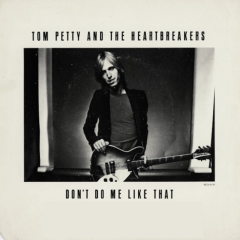
"Don't Do Me Like That" was written by Tom Petty and originally cut in 1975 at Shelter Records’ The Church Studio in Tulsa, OK, as a demo by his band from Gainesville, FL, called Mudcrutch. Mudcrutch members included future Heartbreakers Mike Campbell and Benmont Tench. That same year, Mudcrutch, along with Gainesville friend Charlie Souza on bass, made their only live appearance at The Cain's Ballroom in Tulsa, opening for country-swing band Asleep at the Wheel. Shelter co-owner & producer Denny Cordell pitched the song to the J. Geils Band to record as a single in 1975, but they passed on it, only to see it go to #10 on the Billboard Hot 100 in 1979, as the first single to be released from Tom Petty and the Heartbreakers’ third album, titled Damn the Torpedoes. It was also the first top 10 single for Tom Petty and the Heartbreakers and became a popular song in their live shows.