


The drivers behind most upstream M&A the past couple of years have been consistent — namely, to gain scale (mostly in the Permian) and the economies that come with it, boost free cash flow (and share more with shareholders), and replenish reserves to keep the good times rollin' into the 2030s. There are hints of all that in California Resources’ recently announced $2.1 billion agreement to acquire Aera Energy, creating what would be California’s largest crude oil producer. But in other ways the deal is as different as, well, California and Texas themselves. In today’s RBN blog, we examine the planned acquisition, what it reveals about the companies, and the pros and cons of operating in the nation’s most populous, least-friendly-to-hydrocarbons state.
We’ve made it a habit to blog about the multibillion-dollar acquisitions that have become almost commonplace in both the upstream and midstream sectors the past couple of years. We do this partly to gain a deeper understanding of the individual companies involved in these deals — and to share what we learn with you all — but also because the deals collectively help to reveal where the energy industry as a whole is heading and how a variety of integrated giants, public and private E&Ps, and midstreamers are preparing for their futures.
The value of the M&A that’s been happening is staggering. As we recently discussed in Keep on Dancing, upstream M&A soared to $192 billion last year, a mark 79% above the previous 10-year high and more than the previous three years combined. The Permian accounted for $103 billion of that total, capped off by Q4 2024’s ExxonMobil/Pioneer Natural Resources and Occidental Petroleum/CrownRock LP deals. And the Permian remained a primary focus in early 2024 with APA Corp.’s planned purchase of Callon Petroleum and, most recently, Diamondback Energy’s deal to buy Endeavor Energy Resources.

Canadian crude output is rising, requiring new export routes. As traditional pathways face constraints, the U.S. Rockies—especially the Guernsey, WY hub—are emerging as key corridors for moving Canadian heavy crude to downstream markets, including the Gulf Coast.
Today, we’ll be discussing a prospective combination that couldn’t be more different, though — like all the Permian-related deals noted above — the deal tells us a lot about how at least some upstream managements see the next few years shaking out. California Resources announced last month that it will acquire privately held Aera Energy LLC in an all-stock transaction that values Aera at about $2.1 billion. California Resources shareholders will own about 77% of the pro forma company when the deal closes in the second half of this year. The two companies, both of which are active only in California, said in their deal-reveal that their complementary assets — and there really is a lot of overlap between what they do and where they do it — will enable California Resources to roughly double the E&P side of its business and expand its carbon-management platform.
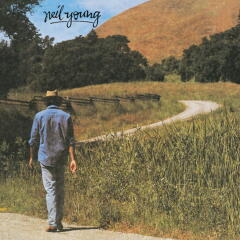
About the song
“California Sunset” was written by Neil Young and appears as the first song on side two of Young’s 14th studio album, Old Ways. The song is a homage to California — the Golden State — and its breathtakingly beautiful sunsets. California proved to be golden for Toronto-born Young, who, after growing up in Winnipeg, MB, left in the mid-1960s in a black 1953 Pontiac hearse named “Mortimer” in search of rock-and-roll gold in Hollywood. “California Sunset” was recorded live at a performance at The Opry in Austin for Austin City Limits in September 1984. It featured Neil Young (lead vocals, guitar), and his band, International Harvesters, with Anthony Crawford (guitar, mandolin), Ben Keith (pedal steel guitar), Spooner Oldham (piano), Tim Drummond (bass), Karl Himmel (drums), and Rufus Thibodeaux (fiddle).
Old Ways features country music tracks recorded between January 1983 and April 1985 at House of David in Nashville; The Castle in Franklin, TN; Pedernales Recording Studio in Spicewood, TX; and live at The Opry in Austin. It was produced by Neil Young, David Briggs, Ben Keith, and Elliot Mazer. It was Young’s full-on foray into country music and featured the cream of the crop of Nashville season players at the time. Willie Nelson and Waylon Jennings made appearances on the album. Released in August 1995, the LP went to #75 on the Billboard 200 Albums chart. Two singles were released from the album.
Neil Young is a Canadian-American singer, songwriter, musician, and record producer. After Winnipeg, he formed the folk-rock band Buffalo Springfield in Los Angeles in 1966 before embarking on a solo career in 1968, often backed by the band Crazy Horse. He joined Crosby, Stills, Nash & Young in 1969, drifting in and out of the band as his solo career demanded. As a solo artist, he has released 45 studio albums, 12 live albums, three compilation albums, four soundtrack albums, two EPs, and 62 singles. Young has won three Grammy Awards and one MTV Video Music Award. He is a member of the Canadian Music Hall of Fame and has been inducted into the Rock and Roll Hall of Fame twice, as a solo artist in 1995 and, in 1997, as a member of Buffalo Springfield. Young continues to record and tour and will begin a U.S. tour with Crazy Horse beginning in April.







Comments
Niel Young was born in Toronto and began his career in Winnipeg, Manitoba (MB not SK).