After the crude oil price crash in the spring of 2020 and flat-at-$40/bbl oil last summer and early fall, prices for both WTI and Brent have been increasing steadily the past several months, and now stand at a kind-of-remarkable $75/bbl. This rise has been driven by a combination of demand recovery and supply restraint from both OPEC+ and U.S. producers — which begs the questions: what’s next on the supply and demand fronts, and how much more will oil prices increase from here? There’s been a lot of chatter lately that we might see $100/bbl crude prices sometime soon, and there are a lot of interested parties — many of whom don’t normally see eye-to-eye — who, for one reason or another, see their interests converge around the $100/bbl mark. The only problem is, it’s not showing up in the forward curve. Today, we look at the potential for “Benjamin-a-barrel” oil and how it might play out.
For most of us, Fourth of July this year was a heck of a lot more social and fun than last year, when COVID-19 lockdowns, mask-wearing, and a general sense of anxiety had just about everyone in a funk. No doubt, there’s a lot of reason for optimism nowadays. These high hopes have even extended to the energy sector too. Demand for gasoline, diesel, and jet fuel are up among developed nations and the U.S. in particular. Last Friday, heading into the holiday weekend, U.S. gasoline and diesel prices soared to their highest level in seven years and U.S. refiners are running hard to keep pace, with refinery utilization up to 93% recently. Crude oil production has been increasing more slowly than demand, however, resulting in inventory draws and higher prices for crude and refined products. The modest, measured gain in production is partly by design. The members of OPEC, led by Saudi Arabia, along with Russia (OPEC+), have been uncharacteristically disciplined in ratcheting up their crude oil output, and have been rewarded by steadily higher prices — we’ll come back to that topic a bit later.

Crude Oil TradeView provides up-to-date data and insights into the behavior of differentials for 33 crude assessments across North America. Each week, it also walks you through the reasoning of why differentials widen, narrow, flip (premium vs. discount), or blow out.
First, before we consider the potential for the first $100 barrel of crude since July 2014 — seven years ago this month!—we should take a quick look back at how we got to where we are today. If we hit the rewind button to 2019, from the outside looking in, the oil industry still seemed relatively healthy. The economy was riding high, for the most part, and WTI’s average cash settlement for the fourth quarter of 2019 was $57/bbl. That price is lower than where WTI stands today and was nothing to write home about in the context of prices frequently experienced in the years prior to 2015 and major shale oil growth, but it was still a manageable foundation for E&Ps to run profitable businesses. However, even at that time, before the COVID and the early-2020 OPEC+ dispute that caused crude oil prices to tumble, the cracks had already begun to appear in the oil patch (and we said so at the time in Can’t Afford to Love You). Now, fast-forward through the depths of COVID and the series of unfortunate events that pushed the price of WTI into negative territory for the first time ever (which we chronicled in several blogs, including Wipe Out and One Way Out), the oil market finds itself back by popular demand, albeit somewhat begrudgingly in some cases (see Paradise, Part 2). Should 2019’s fundamental supply and demand imbalances reemerge, so would the cracks we noted in the market back then. But while there definitely are substantial long-term headwinds, there is also a lot of bullish pressure. Sure, the ever-increasing environmental concerns are probably here to stay but, in the near term, the world still runs on gasoline and diesel and that isn’t going to change overnight.
About the song
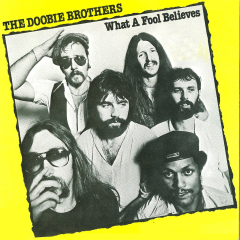
"What a Fool Believes" was written by Michael McDonald and Kenny Loggins. Kenny Loggins released his version of the song on his album Nightwatch five months prior to The Doobie Brothers releasing their better-known version of the song. It appears as the second song on side one of The Doobie Brothers’ eighth studio album, Minute by Minute. The Doobie Brothers released it as a single in January 1979, and it went to #1 on the Billboard Hot 100 Singles chart. The song received Grammy Awards in 1980 for Song of the Year and Record of the Year. It has been certified Gold by the Recording Industry Association of America (RIAA). Personnel on the record were: Michael McDonald (lead, backing vocals, keyboards, synthesizers), Patrick Simmons, Jeff "Skunk" Baxter (guitar), Tiran Porter (bass), Keith Knudson, Ted Templeman (drums), Bill Payne (synthesizer), and Bobby LaKind (congas).
Minute by Minute was recorded during 1978 at Warner Bros. Recording Studios in North Hollywood and Sunset Sound in Los Angeles, with Ted Templeman producing. Released in December 1978, it went to #1 on the Billboard Top 200 Albums chart. The LP has been certified 3X Platinum by the RIAA. It received a Grammy Award for Best Pop Vocal Performance by a Duo or Group in 1980. Three singles were released from the album.
The Doobie Brothers are an American rock band formed in San Jose, CA, in 1970. Thirty seven members have passed through the band since its formation over five decades ago. The current membership includes founding members Patrick Simmons and Tom Johnston, along with Michael McDonald, John McFee, John Cowan, Marc Russo, Bill Payne, and Marc Quinones. The band has released 14 studio albums, six live albums, nine compilation albums, and 36 singles and has sold more than 40 million records worldwide. The Doobie Brothers are members of the Rock and Roll Hall of Fame and the Vocal Group Hall of Fame. They continue to record and tour, with their 50th Anniversary Tour resuming in August 2021.