When the Group of Seven (G-7) countries placed a $60/bbl cap on the price of Russian crude oil in December 2022 — one of many responses to Russia’s February 2022 invasion of Ukraine — there were two primary goals. The first was to keep Russian barrels flowing to the market to help keep global prices in check, and the second was to slash the profitability of Russian oil exports and thereby reduce its ability to wage war against Ukraine. In today’s RBN blog, we look at how effective the sanctions have been and how Russia has tried to work around the price cap.
As we discussed last winter in Like a Rolling Stone, the U.S. was among the first to respond to Russia’s invasion of Ukraine with sanctions, announcing just days after the war began that it would prohibit imports of Russian oil and certain refined products (along with LNG and coal) and ban U.S. investment in Russia’s energy sector. Similar measures were soon adopted by Australia, Canada, Japan and the U.K., and Russian banks were banned from the SWIFT system, which enables financial transactions and plays a crucial role in the global oil trade. In addition, integrated oil companies such as BP, Equinor and Shell announced their intention to exit upstream oil and gas projects in Russia. The U.S. and the U.K. also rolled out foreign investment restrictions on several Russian companies and key figures in Russia’s energy industry were targeted for individual sanctions.
On the oil side, the European Union’s (EU) partial embargo against Russian imports went into effect on December 5, 2022. It prohibits the purchase, import or transfer of seaborne Russian crude unless it is purchased at or below a price cap established by the EU and the G-7 members — Canada, France, Germany, Italy, Japan, the U.K., and the U.S. The price cap was set at $60/bbl, a target intended to be high enough to incentivize Russian production but low enough to hurt financially.

Crude Oil TradeView provides up-to-date data and insights into the behavior of differentials for 33 crude assessments across North America. Each week, it also walks you through the reasoning of why differentials widen, narrow, flip (premium vs. discount), or blow out.
Here’s how the $60/bbl cap on Russian crude is supposed to work. Each party in the supply chain is required to demonstrate or confirm that Russian oil has been purchased at or below the price cap. This begins with so-called Tier 1 market participants, namely refiners, importers, commodity brokers, traders, and customs brokers. They are expected to share price information and provide an attestation about cap compliance with Tier 2 or Tier 3 entities. Tier 2 entities (financial institutions and shippers), in turn, are expected to retain and share as needed that pricing information — or an attestation from a Tier 1 entity when direct receipt of price information is not practicable. Lastly, Tier 3 entities (insurance brokers, insurers and reinsurers) are expected to receive attestations from Tier 1 and Tier 2 groups about compliance with the price cap.
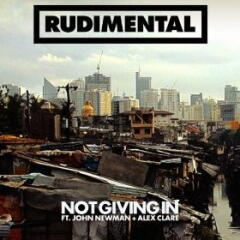
About the song
“Not Giving In” was written by Piers Aggett, Amir Amor, Kesi Dryden, and John Newman. It appears as the ninth track on Rudimental’s debut album, Home. The song features vocals from John Newman and Alex Clare. A video for the song, shot in the shanty towns of Manila in the Philippines, won Best Dance Video at the UK Video Music Awards and Best New Director at the Cannes Lions Festival. Released as a single in November 2012, it went to #16 on the U.K. Hottest 100 Singles chart. Personnel on the song were: Piers Aggett, Kesi Dryden, Leon Rolle (programming, sequencing, production, mixing), and John Newman, Alex Clare (vocals).
Home was the first album released by British drum-and-bass band Rudimental. Recorded during 2012 in London and produced by Rudimental with Mike Spencer, the album was released in April 2013. It went to #1 on the U.K. Albums chart. The album’s cover features the Dalston Peace Mural in London. Eight singles were released from the LP.
Rudimental was formed in London in 2009 by Piers Aggett, Kesi Dryden, and Leon Rolle. All three grew up on the same street and went to the same school in London. Dryden said he had a music teacher at school who was always asking him, “Rudiments, rudiments, where are your rudiments?” Hence the name: Rudimental. Amir Amor joined the group in 2012. They have released four studio albums, one EP, and 17 singles. A two-disc gold vinyl edition of Home became available in 2023. The group continues to record and tour.