The wave of Permian corporate consolidations has continued unabated as spring transitioned into summer with the public company purchases of two EnCap-funded Delaware Basin private operators: Forge Energy, which was purchased by Vital Energy for $540 million, and Novo Oil & Gas, which was purchased by Earthstone Energy for $1.5 billion. Although the theme hasn’t changed, the funding of the transactions includes an intriguing new element — Northern Oil & Gas, which primarily invests in non-operated minority interests, partially funded the acquisitions by agreeing to take 30% and 33% interests in the assets from buyers Vital Energy and Earthstone Energy, respectively. In today’s RBN blog, we review the emergence of three public non-op-focused E&Ps — Northern Oil & Gas, Granite Ridge Energy and Vitesse Energy — and their recent evolution from consolidators of asset packages to trusted partners of acquisition-focused operators.
First, some background. Non-operated oil and gas interests are ownership stakes in oil and gas leases that do not involve the day-to-day management of the wells. While most E&Ps have accumulated non-operated interests in the normal course of building their portfolios, many of these interests have typically been held by investors who want to participate in the profits from oil and gas wells without having to bear the responsibilities and costs associated with operating the lease. Non-op interest owners also have the right to decide to participate (or not) in any individual well proposed by the operator, which provides capital investment flexibility. The downside is that the operator decides whether to further develop the lease, establishes the timing of any development, and controls the costs of drilling, completing, and operating the wells. Profiting from non-op investment requires careful assessment of the quality of the acreage involved, the predictability of well results, and evaluation of the financial strength, investment strategy and operational expertise of the operator.

Canadian crude output is rising, requiring new export routes. As traditional pathways face constraints, the U.S. Rockies—especially the Guernsey, WY hub—are emerging as key corridors for moving Canadian heavy crude to downstream markets, including the Gulf Coast.
Non-op investments were primarily traded through brokers or private-equity funded entities that provided some level of asset valuation and accounting services. A sole public entity, Northern Oil & Gas (NOG), was founded in 2006 to focus on non-operated interests in the Williston Basin and went public on the former American Stock Exchange (now known as NYSE American) in 2008. The firm prospered through the onset of the shale boom in 2011-14, but its market valuation cratered to just $54 million after the 2014-15 price crash. But a timely cash infusion by a private equity firm, TPG Sixth Street Partners, in early 2018 triggered an aggressive acquisition program targeting non-op Williston Basin interest holders who were unable or unwilling to respond to capital calls from operators who were increasing their Bakken Shale drilling programs. This effort, which the company called its “Ground Game Strategy,” focused on a rigorous evaluation of assets to identify those that would return the purchase price in three years or less.
About the song
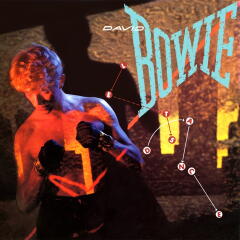
“Let’s Dance” was written and recorded by David Bowie and was the title track on his 1983 album of the same name. The song was transformed from its folk origins to an unforgettable dance number thanks in part to the studio effects of sound engineer Bob Clearmountain and the use of musicians Bowie had not previously worked with, including a then-unknown Texas guitarist named Stevie Ray Vaughan. The full-length, seven-minute track, which helped make Bowie an international star, offers a successful mix of rock, funk, dance, new-wave and post-disco. It soared to the top of the charts in more than a dozen countries around the world, including the U.S. and the UK, and was at least a Top 10 hit almost everywhere else. Personnel on the recording were: David Bowie (lead vocals), Stevie Ray Vaughan (lead guitar), Nile Rodgers (rhythm guitar), Carmine Rojas (bass guitar), Omar Hakim (drums), Robert Sabino (Hammond organ, keyboards), Mac Gollehon (trumpet), Robert Aaron and Stan Harrison (tenor sax), Steve Elson (baritone sax), Sammy Figueroa (woodblocks, congas and tambourine), and Frank Simms, George Simms and David Spinner (backing vocals).
The album Let’s Dance was David Bowie’s 15th LP. It was recorded in December 1982 at The Power Station in New York City. For the first time, Bowie only sang — he played no instruments. The album, which included other hits like “China Girl” and “Modern Love,” rose to #4 on Billboard’s Top 200 Albums chart and was Bowie’s best-selling album ever.
David Bowie (David Robert Jones) was an English singer, songwriter, musician, and actor. He released 26 studio albums, 21 live albums, 46 compilation albums, 10 EPs, three soundtrack albums, and 128 singles and has sold over 100 million records worldwide. Bowie appeared in 11 television shows and 23 motion pictures, and won five Brit Awards, one Daytime Emmy Award, six Grammy Awards, four Ivor Novello Awards, and four MTV Video Music Awards. A member of the Rock and Roll Hall of Fame, Bowie left this planet in January 2016.