It now seems likely that Elliott Investment Management’s Amber Energy will acquire CITGO Petroleum for $7.3 billion in mid-2025, thereby ending a yearslong legal drama about the fate of CITGO’s three large U.S. refineries and related pipelines and terminal assets. So what exactly is Amber buying and how will the refineries in question fare in the increasingly competitive global market for refined fuels? In today’s RBN blog, we’ll summarize the long legal battle that led to Amber’s selection by a federal court’s “special master” as the preferred buyer, examine the assets to be acquired, and assess what’s ahead for CITGO’s refineries, which have a combined capacity of more than 800 Mb/d.

The Natural Gas Master Class is a one-day online event focusing on understanding flow analysis, interpreting pipeline data and forecasting future flows. This course is designed to equip you with the knowledge and skills to effectively analyze the complexities of natural gas markets, flow analysis, and pipeline modeling. Join us online
October 21 | Online
For a few years now, there’s been a mostly below-the-radar battle playing out in the U.S. District Court for the District of Delaware about how best to help satisfy the claims of a dozen-plus creditors who collectively lost more than $20 billion when the government of Venezuela — the de facto owner of CITGO Petroleum and its parent company, PDV Holding (PDVH) — defaulted on its bonds. In May 2021, U.S. District Court Judge Leonard P. Stark appointed Robert B. Pincus as a special master tasked with devising a plan to sell PDVH/CITGO. After a two-round bidding process that concluded in June, Pincus on September 27 recommended that the district court approve Amber Energy and its $7.3 billion bid, which while considerably lower than the $11 billion to $13 billion appraised value of PDVH/CITGO, was found to be the best offer the bidding process generated.
CITGO has a long and storied history. Starting out in 1901 as the Indian Territories Illuminating Oil Co., Cities Service Co. — formed in 1910 — by the mid-1930s had accumulated dozens of oil and gas companies and several refineries. In the early 1940s, it was part of a consortium of oil giants that quickly built the famed “Big Inch” and “Little Inch” pipelines from Texas to New Jersey to support the war effort. In 1982, Cities Service was acquired by Occidental Petroleum (Oxy), which the following year flipped the company’s then-only refinery (in Lake Charles, LA) and thousands of CITGO-badged retail gas stations to Southland Corp., which was then the owner of the 7-Eleven convenience store chain. Southland sold a 50% stake in CITGO to Petróleos de Venezuela SA (PDVSA, which owns PDVH) in 1986 and sold it the rest in 1990.
Hurricane Helene Spares Gulf Coast Ports, Yet Crude Exports Declined Last Week
There have been many ups and downs and twists and turns since then, not only within PDVH and CITGO but in Venezuela itself. Most important for our discussion of CITGO and its current assets, the company acquired a half-stake in the Lemont Refinery 30 miles southeast of Chicago in 1989 (from Unocal) and purchased the other half in 1997. Also, CITGO came to own the Corpus Christi Refinery as part of its merger with Champlin Refining & Chemicals in 1991.
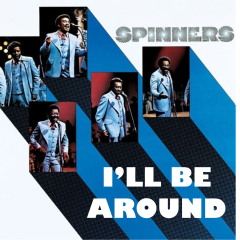
About the song
“I'll Be Around” was written by Thom Bell and Phil Hurtt. It appears as the fifth song on side one of The Spinners’ third studio album, Spinners. Released as a single in July 1972, it went to #1 on the Billboard Hot Soul chart and #3 on the Billboard Hot 100 Singles chart. The song has been covered by such artists as The Afghan Whigs, Joan Osborne and Hall & Oates. Personnel on the record were: Bobby Smith (lead vocals); Philippe Wynne, Pervis Jackson, Henry Fambrough and Billy Henderson (backing vocals); Linda Creed and The Sigma Sweethearts (backing vocals); Norman Harris (guitar), Ronnie Baker (bass) and Larry Washington (congas), with instrumentation by MFSB (Sigma Sound house band).
The album, Spinners, was recorded in 1972-73 at Sigma Sound in Philadelphia and produced by Thom Bell. Released in March 1973, it went to #1 on the Billboard Top Soul Albums chart and #14 on the Billboard 200 Albums chart. It has been certified Gold by the Recording Industry Association of America. Five singles were released from the LP.
The Spinners are an American R&B vocal group that was formed in Ferndale, MI, in 1954 by Henry Fambrough. The group was also known as The Detroit Spinners and The Motown Spinners due to their early recordings for Motown Records. They have released 21 studio albums, three live albums, 13 compilation albums and 58 singles and are members of the Vocal Group Hall of Fame and the National Rhythm & Blues Hall of Fame. Nineteen members have passed through the group since its formation. Henry Fambrough, the last surviving member of the original Spinners, died in February 2024 at the age of 85. A quartet featuring the lead vocals of C.J. Jefferson continues to record and tour as The Spinners. The group released their latest album, Full Circle, in May 2024 and is on tour in the U.S. through November.