Crude oil prices continued to increase this week, with WTI at Cushing closing Tuesday at $84.65/bbl, the highest level since October 13, 2014. The rise in crude since the spring of 2020 has been swift and almost relentless, interrupted only by pauses at $40, $60, and $70, when the market took breathers and seemed to say to itself, “We’re not done yet, right?” The question now is, can anything stop WTI from topping $90 and yes, the magic $100 mark — something that few would have predicted we’d see again so soon . The reality is, there are many factors driving crude prices higher but few holding prices down. In today’s RBN blog, we discuss what’s driving the rapid run-up in oil prices, whether $100/bbl WTI is a sure thing, and what happens if — when? — oil hits triple digits.

The Natural Gas Master Class is a one-day online event focusing on understanding flow analysis, interpreting pipeline data and forecasting future flows. This course is designed to equip you with the knowledge and skills to effectively analyze the complexities of natural gas markets, flow analysis, and pipeline modeling. Join us online
October 21 | Online
A year and a half ago, against the backdrop of the huge run-up in crude supplies precipitated by the Shale Revolution and capped by the fastest and most severe crude oil demand destruction ever, WTI traded at a negative $37.63/bbl. Barring the physical collapse of the universe, Armageddon, or nuclear catastrophe — pick your poison — it was safe to say the day after April 20, 2020, that oil prices had nowhere to go but up. It was just a matter of how quickly the price of crude would rebound and how high prices would rise before they settled into something approaching an equilibrium, a new range within which the U.S. and the wider world would be producing enough oil to meet its needs. As shown in Figure 1, crude prices returned to $40/bbl in what now seems like a flash, mostly thanks to a flurry of domestic production shut-ins and an OPEC+ production-cap agreement that went into effect in May 2020.
About the song
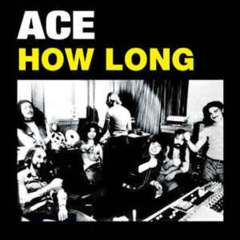
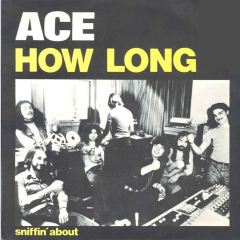
"How Long (Has This Been Going On)" was written by Ace keyboardist and vocalist Paul Carrack when he discovered Ace bassist Terry Comer was secretly working on the side with the band Sutherland Brothers & Quiver. Comer returned to Ace to record their debut album, Five-A-Side, which was released in 1974 and includes the single "How Long." Released in March 1975, the song (which featured Carrack's vocals) rose to #3 on the Billboard Hot 100 chart. Several other artists have covered the song over the years.
Five-A-Side was recorded at Rockfield Studios in Wales, and Trident Studios in London, with John Anthony producing. It went to #11 on the Billboard Top 200 Albums chart. Personnel on the record were: Paul Carrack (keyboards, vocals), Phil Harris (lead guitar, vocals), Alan King (rhythm guitar, vocals), Terry Comer (bass), and Fran Byrne (drums, percussion).
The band Ace was formed in Sheffield, England, in 1972, and disbanded in 1977. The group recorded three studio albums and released six singles. After Ace broke up, Carrack, Comer and Byrne joined Frankie Miller's band for a while. Paul Carrack went on to perform with Roxy Music, Squeeze and Roger Waters before becoming co-lead singer with Paul Young of Mike + the Mechanics. He has had an active solo career, with many artists covering songs he has written. Waters has released 17 solo albums to this day. Carrack's soulful vocalizations can be heard on the hits "Tempted" by Squeeze, and "Silent Running (On Dangerous Ground)” by Mike + the Mechanics.