They are unsung heroes, the guys and gals who get in early, stay late, and are usually working odd hours on the weekends. They resolve issues before they arise, solve complex problems when they do pop up, and are always working the phones to get the next hot piece of intel. No, we’re not talking about the new cast from Season 2 of “Jack Ryan,” and no, it’s not the kids from “Stranger Things.” The keyboard warriors we’re referring to are crude oil schedulers. They’re at the forefront of the daily logistics taking place at truck injection points, gathering systems, and takeaway pipelines from Western Canada down to the Gulf Coast (and around the rest of the world as well). As more and more new pipelines get built out in places like West Texas, it’s important to revisit the basics of how crude oil moves and the role that crude schedulers play. Today, we bring it back to the roots of crude oil operations and shine some light on an underappreciated group of crude oil operators.
Scheduling. When the layperson thinks about the word, they think about their dentist planning their root canal, or their contractor planning their roof repair. In the world of crude oil, scheduling refers to a person, or group of people, tasked with ensuring that every barrel that is being purchased or produced makes it to the next delivery point or sales destination. Schedulers tend to be unheralded because when they do their job well, everything runs smoothly and no one notices. But if there’s a missed detail, a tariff error, or an ill-managed calendar, well, these things are noticed as they can cost companies anywhere from thousands to millions of dollars. Schedulers can range in age and experience from new hires straight out of college and junior analysts waiting to get tapped to become traders or management folks who run large teams, to lifers who often know more about the intricacies of the pipelines they schedule than the owners themselves.

Crude Oil TradeView provides up-to-date data and insights into the behavior of differentials for 33 crude assessments across North America. Each week, it also walks you through the reasoning of why differentials widen, narrow, flip (premium vs. discount), or blow out.
Schedulers also exist along every level of the value chain. There are producer schedulers, who manage the delivery of their own production from the wellhead to a gathering system or facilitate the trucks that are buying their barrels at the lease. Then there are schedulers on those gathering and major pipeline systems, who make sure their own specific pipe runs as efficiently as possible. Every old and new pipeline that flows crude has a team of folks scheduling it. There are shipper schedulers — those who work for trading and marketing shops and are buying barrels upstream, injecting them into pipelines or buying them on the pipe itself, and moving them to a downstream market. From there, refinery and barge schedulers make up the last bit of logistical planning. Refinery schedulers work with the refinery supply team to keep operations tidy, while barge/export schedulers deal with lining up pipeline arrivals and barge dates to avoid delays and demurrage as much as possible. For the purposes of today’s blog, we’ll focus on the shipper schedulers, because they get to touch many different parts of the value chain and give us insight into how the myriad pieces fit together.
About the song
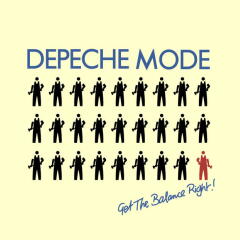
"Get the Balance Right!" was written by Martin Gore, and was the seventh single released by Depeche Mode. Recorded at Blackwing Studios in London in December 1982, the record was released in January 1983. Produced by Daniel Miller and Depeche Mode, the song went to #31 on the Billboard Hot Dance Music/Club Play chart. "Get the Balance Right!" appears on the compilation albums, People Are People and The Singles 81-85. Personnel on the record were: Martin Gore (synthesizer, guitar, backing vocals), Alan Wilder (synthesizer, backing vocals), Andy Fletcher (synthesizer, backing vocals) and Dave Gahan (lead vocals).
Depeche Mode is an English electronic synth/pop band formed in Basildon, Essex, England, in 1980. The band took its moniker from a French magazine of the same name, which translated means "fashion update." The group has released 14 studio albums, seven live albums, 10 compilation albums and 55 singles. Depeche Mode has sold 100 million records worldwide. The band has won one BMI Award, one Brit Award and one Ivor Novello Award, and has been nominated for inclusion in the Rock and Roll Hall of Fame. The band, with original members Gore, Gahan and Fletcher, still records and tours, supplemented by touring musicians Christian Elgner (drums) and Peter Gordeno (bass, keyboards, backing vocals) for live performances.