Crude oil pipeline shippers across the U.S., and especially in the Permian, are about to experience something they haven’t seen in a few years: a bunch of new crude takeaway capacity with lower-cost tariffs coming online, and the sudden need among committed shippers to fill their pipe space. This also affects some folks committed to space on older pipelines, whose higher-cost tariffs could leave them out of the money. The start-up of pipelines like Plains All American’s Cactus II, with a super-low $1.05/bbl tariff — and several pipelines in other basins lowering tariffs — has traders with pipeline commitments old and new re-running their economics and trying to determine their best strategy moving forward. Some may be forced to move volume at a loss. Today, we analyze the recent trend in tariff compression and how traders deal with uneconomical take-or-pay contracts.
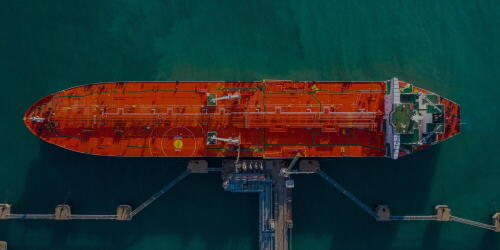
The Crude Voyager is a weekly analysis of U.S. Gulf Coast loading activity that explains the ebbs and flows of crude loadings, destinations, and geopolitical issues impacting U.S. exports. It outlines the major paths for laden tankers hauling U.S. crude all over the world and reflects the change in tanker departures to the main regions that consume U.S. crude.
We are witnessing a dramatic change in the cost to ship crude oil across the U.S. — particularly between West Texas and the Gulf Coast. Previously, pipelines in the area were charging committed shippers well over $2/bbl to transport crude from key Permian hubs like Midland, Crane or Colorado City, TX, to the coast (think the BridgeTex or Longhorn pipelines, among others). Uncommitted rates were north of $4-$5/bbl. Those rates had seemed reasonable, especially when takeaway capacity was constrained and spreads between West Texas and the Gulf Coast or Cushing were far higher — in some cases $15-$20/bbl or more. But as new pipeline capacity out of the Permian has been built out, operators have been offering lower tariff rates in an effort to entice new shippers to (a) commit to their pipeline, and (b) gobble up any uncommitted capacity that may be left unused.
Specifically, new Permian-to-Gulf Coast pipelines in the area, like Plains' Cactus II (dashed red line in Figure 1) and the EPIC system (dashed purple line) have set much lower tariffs for committed shippers, and those are setting a new precedent for how much folks are willing to pay to ship crude in the basin. Plains recently unveiled its A-level committed shipper rate, a pricing category for those shipping 300 Mb/d or more on the system, at only $1.05/bbl. Now we know in this specific case that the $1.05/bbl rate is unique to trading giant Trafigura, which anchored the pipeline project with a 300-Mb/d commitment. But Trafigura aside, other shippers on the pipe that have committed more than 25 Mb/d (and, in some cases, acreage dedications) are receiving tariff rates between $1.15/bbl and $1.75/bbl. Those rates seriously undercut any committed tariffs we have seen in the past for Permian pipelines.
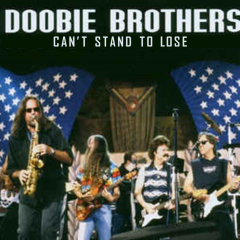
About the song
"Can't Stand to Lose" was written by Doobie Brothers touring bassist John Cowan and Poco's Rusty Young. It features original Doobie Brother Pat Simmons on lead vocals, and is the 8th cut on The Doobie Brothers 12th studio album Sibling Rivalry. The album was produced by Guy Allison, Terry Nelson and The Doobie Brothers. It was released in October 2000, and is the first studio album by the band since 1991's Brotherhood album. The record features original band members Tom Johnston and Patrick Simmons on lead vocals, along with drummer Keith Knudsen and multi-instrumentalist John McFee. Personnel on the record were: Tom Johnston (guitars, vocals), Patrick Simmons (guitars, banjo, vocals), John McFee (guitars, dobro, pedal steel guitar, harmonica, violin, mandolin, vocals), Keith Knudsen (drums, vocals), Michael Hossack (drums, percussion), John Cowan (bass, vocals), Guy Allison (keyboards, vocals), Marc Russo (horns), Maxayn Lewis (backing vocals) and Yvonne Williams (backing vocals).
The Doobie Brothers are an American rock band formed in San Jose, California, in 1970. They have been active for five decades, with 29 different musicians passing through its ranks during that time. They have sold more than 46 million records worldwide. They have released 14 studio albums, five live albums, nine compilation albums and 36 singles. They have won two Grammy Awards, and were inducted into the Vocal Group Hall of Fame in 2004. The band still records and is currently touring with Santana through September.