


One positive element to the oil price crash is that consumers are paying less at the pump for their gasoline. Of course it is natural that prices at the pump don’t fall as fast as they do in spot or futures markets – there is a lag – usually measured in days. However, while average retail gas prices have fallen over $1/Gal in the past year – more or less in line with spot and futures markets, it seems that changes to diesel prices at the pump have lagged further behind refinery prices. The result is that retail buyers filling their diesel truck at the pump have benefited far less from the oil price windfall than gasoline powered vehicle owners – at least so far. Today we review the data.
This blog began with a visit to the gas station last week. We noticed that although regular gasoline prices have been falling consistently in the past six months – making everyone feel happier about filling up their tank - the retail posted price for diesel doesn’t seem to have fallen nearly as far or as fast – to the tune of a differential at the pump of $0.50/Gal - $1.00/Gal between unleaded regular and diesel. That was a pretty unscientific survey based on prices in Houston and Austin, TX. We decided to dig into the data to see if we were just imagining things or if retail diesel prices were not responding as fast at the pump as gasoline.
For our analysis we used the Department of Energy’s Energy Information Administration (EIA) published weekly average retail prices for gasoline and diesel by region across the U.S. We looked first at the overall U.S. and then zoomed in on the Gulf Coast. Our goal was to compare the drop in prices at the spot market level – as measured by prompt month futures contracts on the CME NYMEX and retail pump prices as reported by the EIA. We did the analysis first for gasoline and then for diesel to see if there was a difference. Turns out we were correct in our observation that - on average - diesel prices have been falling more slowly – to the tune of about 40 cents/Gal both nationally and in the Gulf Coast region.
Starting with the national picture for gasoline, Figure #1 shows prices in $/Gal over the past year from week ending January 13, 2014. The blue line is the weekly EIA U.S. average retail unleaded gasoline price. The red line is the weekly average settlement price for prompt CME NYMEX gasoline futures – which is a price for delivery in New York Harbor. As expected, futures prices for gasoline are lower than the retail prices because the retail prices include various taxes and transport costs, plus a bit of retail profit margin. You can see that both prices follow a roughly similar trajectory during the year – dropping off sharply as crude prices tumbled in the second half of 2014. At the start of 2014 – about a year ago – retail prices were about 39 cents/Gal higher than CME futures. At the end of last week (January 9, 2015) the spread had widened to 42 cents/Gal – meaning that retail prices had fallen about 3 cents/Gal slower than futures but still well within range.

About the song
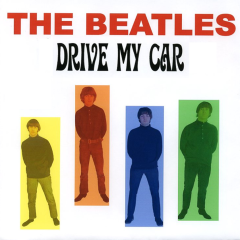
"Drive My Car" was written by Paul McCartney and John Lennon. The song was recorded at EMI Abbey Road Studios in London in October 1965, with George Martin producing. It has been suggested that the lyrics were inspired by an incident involving Beatles friend and Brian Epstein protégée Cilla Black, and her then-boyfriend, Bobby Willis. The song was the first cut on the UK version of Rubber Soul, and on the American release of Yesterday and Today. It was the first Beatles song to feature a slide guitar solo, played by Paul McCartney. Personnel on the record were: Paul McCartney (lead vocal, bass, piano, slide guitar), John Lennon (lead vocal, tambourine), George Harrison (backing vocals, lead guitar) and Ringo Starr (drums, cowbell).
Yesterday and Today was The Beatles’ 12th studio album and ninth album for Capitol Records in the U.S. It pulled together songs from the UK releases of Rubber Soul, Help, the not-yet-released Revolver, and the single of "Day Tripper"/"We Can Work It Out." The original album cover photo for the album by Robert Whitaker featured The Beatles wearing butcher smocks and draped with pieces of meat and body parts from plastic baby dolls. It has been presumed to be a reaction by The Beatles to Capitol Records in America pulling cuts culled from their UK releases, thus "butchering" the song selection and order. After a furor from U.S. retailers over the cover, Capitol pulled the album from stores and stickered over them with a new, non-offensive photo of the band. These re-stickered albums are referred to as the "butcher cover," and bring hefty prices in the collectors’ market. In 2016, an ultra-rare sealed mint stereo copy of the original cover was sold at auction for $125,000. Yesterday and Today was released in June 1966, and went to #1 on the U.S. Billboard Top 200 Albums chart. It has been certified 2x Platinum by the Recording Industry Association of America.
The Beatles were a British rock band formed in Liverpool, England, in 1960. With the line-up of John Lennon, Paul McCartney, George Harrison and Ringo Starr, The Beatles went on to change the face of rock music and pop culture during their time together. They are the best-selling music artists in history, with estimated record and digital sales of over 800 million worldwide. The band released 23 studio albums, five live albums, 53 compilation albums, 21 EPs and 63 singles. The Beatles have won one Academy Award, one Billboard Music Award, four Brit Awards, 26 Grammy Awards, 15 Ivor Novello Awards, one MTV Video Music Award and three World Music Awards. They are members of the Rock and Roll Hall of Fame, the UK Music Hall of Fame and Vocal Group Hall of Fame, and are Members of the Order of the British Empire, as appointed by Queen Elizabeth II. John Lennon died in 1980 and George Harrison in 2001. Paul McCartney and Ringo Starr continue to record and tour as solo artists.





Comments
I would guess that the difference between gasoline and diesel price lag is related to all of the light, tight oil which is much closer to gasoline range so a larger total gasoline yield at the refineries.
The fact that for every 3 gallons of crude refines to about 2 gallons of gasoline and 1 gallon of diesel also supports gasoline dropping more than diesel.