Weather is the perpetual wildcard in the natural gas market, but it’s been particularly shifty this winter, keeping market participants — and weather forecasters, for that matter — on their toes. Gas futures prices started this season at $3.30-plus/MMBtu, but then endured some of the warmest weather on record (in November and January), including a couple of polar vortex head fakes over the past month or so — weather forecasts at times in January started off much colder but ultimately reversed course. Prompt CME/NYMEX Henry Hub futures prices have seesawed as a result. Despite the weather setbacks, however, prices have held on in the $2.40-$2.70/MMBtu range through much of winter and averaged more than $0.60/MMBtu higher year-on-year in January. And, with an Arctic blast set to unfurl across the Lower 48 this week, prices last Friday topped $3/MMBtu again in intraday trading before settling in the high-$2.80s/MMBtu Friday and Monday. Today, we examine the supply-demand factors underlying the recent price action, and prospects for sustained $3/MMBtu gas prices.

The Natural Gas Master Class is a one-day online event focusing on understanding flow analysis, interpreting pipeline data and forecasting future flows. This course is designed to equip you with the knowledge and skills to effectively analyze the complexities of natural gas markets, flow analysis, and pipeline modeling. Join us online
October 21 | Online
In yesterday’s blog, Cold As Ice, we discussed the potential impacts of this week’s polar vortex event on the U.S. propane market (and how it may differ from similar events in the past). Now we turn our attention to what the extreme weather will mean for the U.S. natural gas market.
Well before the storage withdrawal season got underway in November 2020, it was apparent that the gas market was poised to tighten in late 2020. Rig counts were at decade-long lows, Lower-48 gas production was trailing by more than 7 Bcf/d year-on-year heading into the winter season (November through March), and it would take months, if not more than a year, for production volumes to return to their pre-pandemic peaks. At the same time, U.S. LNG exports were set to make a strong comeback after being throttled by anemic international demand and prices for much of 2020. But the storage inventory had exited injection season (April through October) with a 200-Bcf surplus vs. the previous year. So the question was not whether the market would tighten but rather by how much. And that ultimately would come down to weather — still the biggest driver of domestic gas consumption and the #1 unknown, made even dicier by the polar vortex effect in recent years. A cold winter could rapidly wipe out the storage surplus and even lead to a substantial deficit, enough to support prices throughout 2021. On the other hand, another warm winter could easily offset the effects of production losses and LNG exports, leaving a lingering or even larger storage surplus to weigh on prices.
About the song
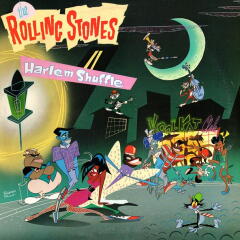
"Harlem Shuffle" was written by Bob Relf and Earl Nelson and originally released by the soul music duo Bob & Earl as a single in 1963. That release went to #44 on the Billboard Hot 100 Singles chart. It was subsequently re-released in the UK in 1969, when it went to #7 on the UK charts. George Harrison reportedly called it his favorite record of all time.
The Rolling Stones' cover version of the song appeared as the third song on side one of their 20th American studio album, Dirty Work. Released as a single in February 1986, the song went to #5 on the Billboard Hot 100 Singles chart. It was the first cover song that the Stones released as the opening single of a studio album since 1965. Personnel on the record were: Mick Jagger (lead and backing vocals), Keith Richards (guitars, backing vocals), Ronnie Wood (guitars, tenor sax, backing vocals), Bill Wyman (bass), Charlie Watts (drums), Chuck Leavell, Phillip Saisse (keyboards), Dan Collette (trumpet), with backing vocals from Bobby Womack, Jimmy Cliff, Don Covay, Beverly D'Angelo, Kirsty MacColl, Dolette McDonald, Janice Pendarvis, Patti Scialfa, and Tom Waits.
Dirty Work was recorded between April and August 1985 and released in March 1986. Produced by Steve Lilywhite and The Glimmer Twins (Jagger and Richards), the album went to #4 on the Billboard Top 200 Albums chart. It has been certified Platinum by the Recording Industry Association of America. Two singles were released from the album.
The Rolling Stones are an English rock band formed in London in 1962 by Mick Jagger, Keith Richards, Brian Jones, Bill Wyman, and Charlie Watts. Brian Jones left the band one month before his death in 1969. He was replaced by Mick Taylor, who left the band in 1974, to be replaced by Ronnie Wood. Bill Wyman left the band in 1993, and Darryl Jones has been their bassist since that time. The Rolling Stones have released 30 studio albums, 33 live albums, 29 compilation albums, three EPs, and 121 singles. They have won one Billboard Music Award, two Grammy Awards, seven Grammy Hall of Fame Awards, three MTV Video Music Awards, and two World Music Awards. They were inducted into the Rock and Roll Hall of Fame in 1989. The band continues to record and tour.