Term charter rates for medium-range Jones Act tankers have fallen by two-thirds since they peaked at $120,000/day in mid-2014, to only $38,000/day done in September 2016, which is good news for producers but a punch in the stomach for ship owners. A sharp rise in the number of vessels being added to the Jones Act fleet has surely contributed to the charter-rate collapse. Less obvious are the degrees to which the rate drop may have been influenced by the decline in superlight Eagle Ford crude oil production, or by the lifting of the ban on U.S. crude oil exports. Today, we examine the evidence.
The Jones Act (see The Sea and Mr. Jones) is a federal statute requiring that all goods transported by water between U.S. ports be carried in U.S.-flagged ships, constructed in the U.S,, owned by U.S. citizens, and crewed by U.S. citizens and/or U.S. permanent residents. The Jones Act fleet used by the petroleum industry consists of three main categories of vessels: smaller barges that typically carry either 10 MBbl or 30 MBbl of crude or refined products and operate on inland waterways as well as coastal canals; coastal barges, including larger articulated tug barges (ATBs); and self-propelled tankers that operate in both coastal and international waters and generally carry over 300 MBbl of crude oil or refined product. We’ve discussed developments in the Jones Act fleet a number of times here in the RBN blogosphere, including Flirtin' With Disaster, Old and In The Way, and Rock the Boat. Our focus today is on large ATBs and a subset of the self-propelled tanker category, namely medium-range (MR) or “Handy” size tankers that carry about 330 Mbbl and that are largely engaged on term charters by oil companies to move crude or refined products between U.S. ports.

Visualize the infrastructure behind U.S. NGL movement.
The U.S. NGLs Map provides a comprehensive view of the transport, processing, and export networks moving NGLs across the U.S.
In May 2014, just before crude oil prices started free-falling, large ATBs and MR/Handy tankers were in high demand and short supply, and a high point was reached with a term charter (actually a “re-let” from one charterer to another) for an MR tanker at a very healthy $120,000/day. But the rates for modern MR Jones Act tankers have been on a steady decline ever since (see Figure 1).
About the song
“You Can't Always Get What You Want” was written by Mick Jagger and Keith Richards and appears as the fourth song on side two of The Rolling Stones’ eighth studio album, Let It Bleed. It was recorded in November 1968 at Olympic Sound Studios in London as part of the sessions for The Stones’ Beggars Banquet album but was held for release until the 1969 Let It Bleed album. It’s unusual in that it features producer Jimmy Miller on drums, not Stones drummer Charlie Watts. Al Kooper played keyboards on it and the French horn intro. The London Bach Choir (who asked that their name be removed from the album credits to no avail) was brought in to supplement the choruses at the end. A short version was released as the B-Side of the “Honky Tonk Women” single in July 1969. It ended up being re-released as an A-Side single in 1973 and going to #42 on the Billboard Hot 100 Singles chart. The song remains one of the most popular songs at Stones’ live concerts, with audiences singing along with the refrains. Personnel on the record were: Mick Jagger (lead vocals), Keith Richards (guitars), Bill Wyman (bass), Al Kooper (piano, organ, French horn), Jimmy Miller (drums), Rocky Dijon (congas, maracas, tambourine), Madeline Bell, Nanette Workman, Doris Troy (backing vocals), and the London Bach Choir, arranged by Jack Nitzsche (choral vocals).
Let It Bleed was recorded between November 1968 and November 1969 at Olympic Sound Studios in London and Elektra and Sunset Sound in Hollywood with Jimmy Miller producing. Released in November 1969, it went to #3 on the Billboard 200 Albums chart and has been certified 2X Platinum by the Recording Industry Association of America. Two singles were released from the LP.
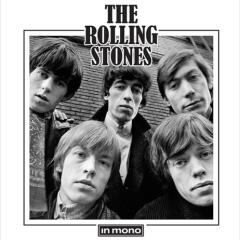
The Rolling Stones are an English rock band formed in London in 1962. Mick Jagger and Keith Richards are the only remaining members of the original group. Past members include Brian Jones (died in July 1969), Charlie Watts (died in August 2021), Ian Stewart, Mick Taylor and Bill Wyman. Ronnie Wood joined the band as a permanent official member in 1975. Steve Jordan has been drumming for the group since Watts’s passing. The Rolling Stones have been active for over six decades and have sold over 250 million records worldwide. They have released 31 studio albums, 39 live albums, 25 compilation albums, three EPs and 122 singles and have received three Grammy Awards and a Grammy Lifetime Achievement Award. The Stones are members of the Rock and Roll Hall of Fame and the U.K. Music Hall of Fame. Their latest album, Hackney Diamonds, was released in October 2023. They continue to record and tour.