The prospect of a massive buildout of data centers across the U.S. has utilities preparing for a surge in power demand. And while access to an uninterrupted power supply is a critical factor for companies deciding where to build a data center, it’s not the only variable — power prices and proximity to customers also play a major role. In today’s RBN blog, we’ll look at where data centers are deployed across the U.S., the major factors that determine where a facility gets built, and how the sudden expansion is playing out in the major U.S. technology hubs.
As we wrote in Storm Front, a data center is a facility housing many networked computers that work together to process, store and share data. Most major tech companies — such as Amazon, Google and Meta — rely heavily upon data centers as a central component in delivering online services. Most relevant to our discussion today, data centers are energy-intensive, consuming anywhere from 10 to 50 times the energy per floor space of a typical commercial office building, with electrical demand at larger facilities ranging from 100 to 300 megawatts (MW), or enough to power tens of thousands of homes.

The Canadian NATGAS Billboard is a weekly, early morning email and report that’s designed to keep physical and financial participants informed of the various fundamental components that make up the complex Canadian natural gas market. This service saves readers time and confusion by compiling all the most critical data points into one clear and concise report.
This substantial growth in data center capacity, which we detailed in Smarter Than You, has been driven largely by the increasing demand for artificial intelligence (AI) and what are generally classified as AI-powered tasks, such as speech recognition, image recognition, predictive analytics, personalized diagnostics/treatments, logistics/mapping applications, fraud detection, and of course, generative AI. The rapid rise in interest in generative AI is particularly noteworthy, catalyzed by the sudden success of ChatGPT (which launched in November 2022) and a few other AI chatbots that have popped up riding that wave, including Claude, Copilot, Jasper and perplexity.ai.
And as we noted recently in We’ll Be Together, the growing number of data centers coming online across the U.S. is spurring utilities to ramp up their plans to add new sources of power generation but also complicating their efforts to decarbonize. One of the hottest topics in energy today is how plans to restart shuttered nuclear plants and initiatives by U.S. economic titans Google and Amazon to build new advanced reactors to help power their data centers could help accomplish both goals.
Let’s look next at how many data centers are already online and how many are expected to be in operation by the end of 2025. According to our friends at IIR Energy, a global leader in market research, there are 1,066 hyperscale data centers operational in the U.S., with another 122 expected to be online by the end of 2025. That total includes cloud servers, web hosting servers, AI-focused centers, and cryptocurrency/bitcoin mines. (Hyperscale facilities are generally considered to have at least 5,000 servers and be at least 10,000 square feet in size. The biggest data centers, however, can be more than 1 million square feet across multiple buildings.) Virginia, California and Texas lead the nation in existing sites (blue bars in Figure 1 below), while Virginia and Texas are far and away the leaders in expected additions (orange bars).
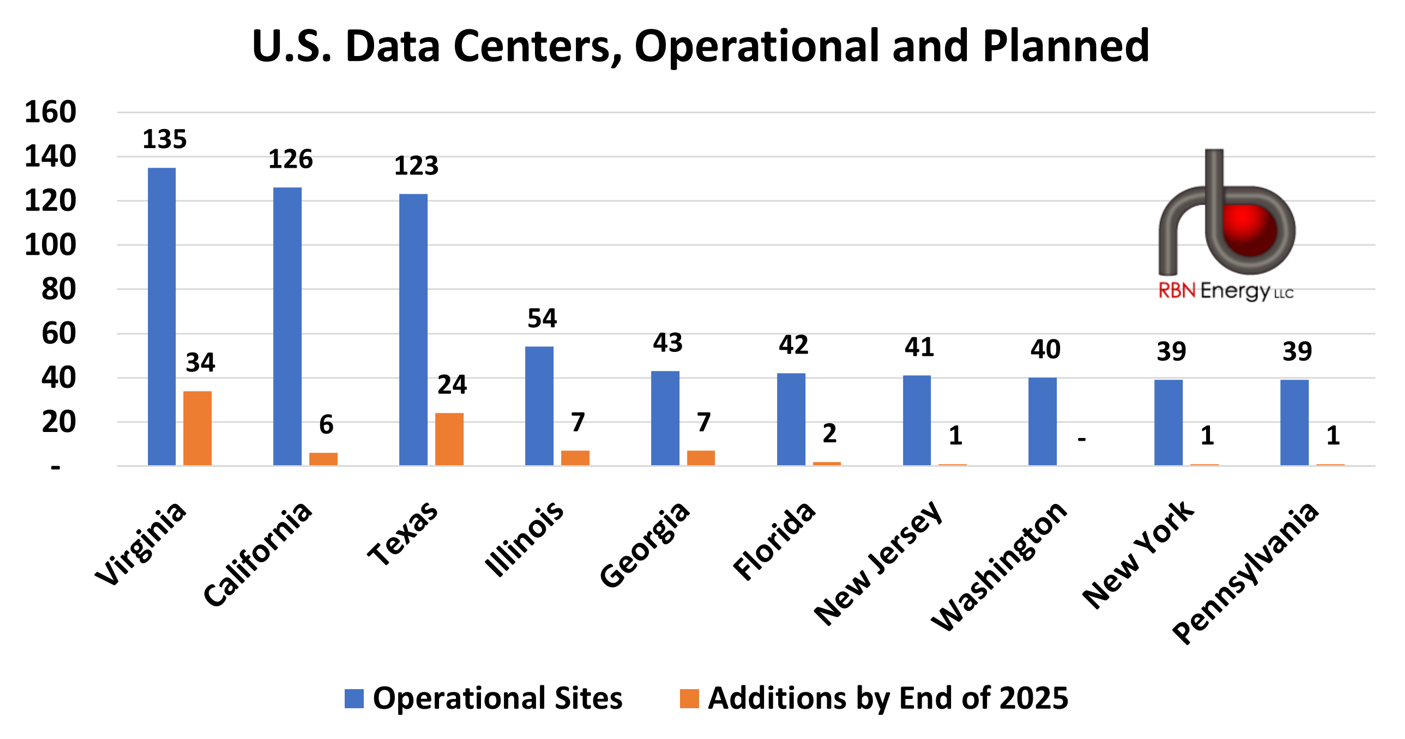
Figure 1. U.S. Data Centers, Operational and Planned. Source: IIR Energy
About the song
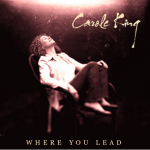
“Where You Lead,” sometimes titled as “Where You Lead I Will Follow,” was written by Carole King and Toni Stern and appears as the second song on side two of Carole King’s second studio album, Tapestry. Barbra Streisand would release her version from her Barbra Joan Streisand album as a single in June 1971. It went to #3 on the Billboard Adult Contemporary and #40 on the Billboard Hot 100 Singles charts. Personnel on Carole King's version were: Carole King (vocals, acoustic piano), Merry Clayton, Julia Tillman (backing vocals), Danny Kortchmar (electric guitar), Charlie Larkey (bass), Ralph Schuckett (electric piano), and Russ Kunkel (drums).
Tapestry was recorded at A&M Studios in Hollywood during January and February 1971. Produced by Lou Adler, it was released in February 1971 and went to #1 on the Billboard 200 Albums chart, where it remained for 15 consecutive weeks. The Recording Industry Association of America has certified it 14x Platinum. The album won Grammy awards for Album of the Year, Best Female Pop Vocal Performance, Record of the Year (It's Too Late), and Song of the Year (You've Got a Friend). Two singles were released from the LP.
Carole King (Carol Joan Klein) is an American singer, songwriter and musician. One of the most successful songwriters in history, King has written or co-written 118 songs that have appeared in the Billboard Hot 100 Singles chart. She has released 17 studio albums, four live albums, one soundtrack album, seven compilation albums, and 33 singles. She has won four Grammy Awards, has a Grammy Lifetime Achievement Award, is a member of the Rock and Roll Hall of Fame as a songwriter and solo artist, is a member of the Songwriters Hall of Fame, has a Library of Congress Gershwin Prize, has received Kennedy Center Honors, and has a star on the Hollywood Walk of Fame. She has appeared in five motion pictures and eight television shows. She continues to record and make occasional live performances.