The CME/NYMEX Henry Hub prompt contract settled at $1.482/MMBtu yesterday, down 11.5 cents (7%) from the previous day and the lowest settle that the market has ever seen during June trading. That’s also a 33-cent (18%) drop from just two weeks ago when prompt futures were around $1.80/MMBtu. The immediate rationale is the larger-than-expected and larger-than-normal storage build reported by the Energy Information Administration yesterday. But current price levels are also indicative of bigger problems looming for the gas market, namely that while gas production is down, total demand, including exports, has been exceptionally weak too. As a result, by mid-July, the storage inventory appears likely to reach record highs for that time of year — record highs that may well persist through the end of injection season in early November unless there is a substantial correction in the gas supply-demand balance. Moreover, it’s looking less and less likely that relief will come from the demand side. Today, we look at the drivers behind the latest gas market meltdown and implications for the balance of injection season.

The Natural Gas Master Class is a one-day online event focusing on understanding flow analysis, interpreting pipeline data and forecasting future flows. This course is designed to equip you with the knowledge and skills to effectively analyze the complexities of natural gas markets, flow analysis, and pipeline modeling. Join us online
October 21 | Online
U.S. natural gas futures haven’t been on the same nausea-inducing roller coaster that oil prices have thus far in 2020, but it’s fair to say that the gas market is feeling its collective stomach drop right about now. As we explained a few days ago in That’s Schadenfreude!, gas prices already were weak, averaging about $1.80/MMBtu in 2020 to date, lower than the annual average has been in the past 25 years. As shown in Figure 1 (left graph), prompt futures started the year above $2/MMBtu but quickly tumbled to multi-decade lows by mid-January as wintry weather failed to materialize and it became clear that the year-on-year surplus in storage that had carried over from 2019 wasn’t going anywhere anytime soon (see Oops, Winter’s Out of Time and Flirtin’ with Disaster). Then came COVID-19 and market worries that business closures and social distancing measures would clip domestic consumption, sending front-month futures still lower through March. In reality, the impact to domestic gas consumption was offset by colder-than-normal weather through April, which ended up boosting residential/commercial use enough to whittle down the storage surplus somewhat and buoy prices again.
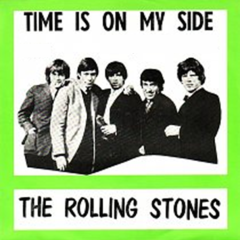
About the song
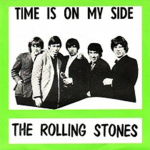
"Time Is On My Side" was written by Norman Meade (Jerry Ragovoy), and appears as the fourth song on side one of The Rolling Stones' second album, 12X5. The song had been previously recorded by Kai Winding, and Irma Thomas; the Stones' version borrows heavily from the Irma Thomas rendition. The Stones recorded two versions of the song in 1964. The first version, recorded at Regent Sound in London, features an organ intro. This was the version that was released as a single in the U.S. in September 1964. The second version, recorded at Chess in Chicago, and featuring a guitar intro, was the single released in the UK. "Time Is On My Side" went to #6 on the Billboard Hot 100 Singles chart, making it the first Top 10 single for The Rolling Stones in the U.S. Personnel on the record were: Mick Jagger (lead vocals, tambourine), Keith Richards (lead guitar, backing vocals), Brian Jones (rhythm guitar, backing vocals), Bill Wyman (bass, backing vocals), Charlie Watts (drums), and Ian Stewart (Vox Continental organ).
12X5 was the second studio album by The Rolling Stones. Recorded between February and September 1964 at Regency Sound in London, and Chess in Chicago, the Andrew Loog Oldham-produced album was released in October 1964. It went to #3 on the Billboard Top 200 Albums chart, and has been certified Gold by the Recording Industry Association of America.
The Rolling Stones are an English rock band formed in London in 1962. They have released 30 studio albums, 28 live albums, 26 compilation albums, three EPs, and 120 singles. They have sold over 240 million records worldwide. The Stones have won one Billboard Music Award, four Grammy Awards, three MTV Video Music Awards, and two World Music Awards. They are members of the Rock and Roll Hall of Fame, the Grammy Hall of Fame, and the UK Music Hall of Fame. Mick Jagger was knighted by the Queen of England in 2006. Mick Jagger, Keith Richards, Charlie Watts, and Ronnie Wood are the current members of the band. The Rolling Stones continue to record and tour.