We’re now in the midst of the summer vacation season, but a recent survey showed that just two out of five Americans are planning a trip that requires a flight and/or hotel stay — the fact is, inflation has whittled away at discretionary income. U.S. E&P companies are in a similar boat. After a brutal decade marked by intense commodity price volatility, oil and gas producers over the past couple of years have won back investors with a new fiscally conservative approach that prioritizes harvesting free cash flow to fund surging shareholder returns. But more recently, lower commodity prices and persistent inflation have significantly eroded the funds available for dividends and share repurchases. In today’s RBN blog, we analyze the increasingly difficult cash allocation decisions oil and gas producers made in Q1 2023 and are likely to face in future quarters.
First, a couple definitions. Discretionary income is what’s left after we pay our taxes and fixed costs like housing, food, and clothing. We can use the remainder to save or invest, treat ourselves to luxuries, donate to charity, indulge in recreation, etc. The equivalent for E&Ps is cash flow from operating activities (CFOA), which is the net income the company generates adjusted for non-cash expenses like depreciation and stock-based compensation, and for changes in working capital. The largest allocation of this cash is investing in replenishing oil and gas reserves and growing production through capital expenditures. What’s left is free cash flow, the funds available to fund acquisitions, pay down debt, and return capital to shareholders through dividends and share buybacks.
The replay of our Fall 2026 School of Energy (September 9 & 10, Houston) is now available online!
Learn from RBN experts, participate in hands-on Excel modeling, connect with industry peers, and gain a stronger understanding of today's interconnected energy markets.
Just last summer in Make It Rain, we reported that the 41 U.S. oil and gas producers we monitor were showering cash on shareholders as cash flows rose with soaring commodity prices, with some E&Ps offering double-digit payouts. As we described in Spread It Around, dividends and share repurchases hit record levels in 2022. However, commodity prices headed downhill in late 2022 and early 2023, and cash flows from operations declined 21% in Q4 2022 and another 9% in Q1 2023 to $32.5 billion. Free cash flow decreased at a steeper rate, falling 32% in Q4 2022 and 29% in Q1 2023 because of a combination of rising capital expenditures and lower oil and gas prices.
About the song
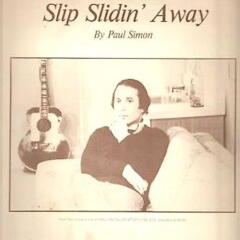
“Slip Sliding Away” was written by Paul Simon and has appeared on the compilation albums Greatest Hits, Etc. and Negotiations and Love Songs. The song was originally recorded and slated for release on Simon’s 1975 album, Still Crazy After All These Years, but at the last minute Simon decided not to include it on the album. Released as a single in October 1977, it went to #5 on the Billboard Hot 100 and #4 on the Easy Listening Singles charts. It has been certified Gold by the Recording Industry Association of America. Personnel on the record were: Paul Simon (lead vocals, acoustic guitar), Anthony Jackson (Bass), Richard Tee (Fender Rhodes electric piano), Steve Gadd (drums), Ralph McDonald (percussion), and The Oak Ridge Boys (backing vocals).
Simon was half of the popular duo Simon & Garfunkel, which was officially formed in 1964 and sold millions of records until their breakup in 1970. A little-known fact is that Paul Simon and Art Garfunkel had been a team since they were teenagers. Under the name Tom & Jerry, the duo got a record deal in 1957 with the independent New York record label, Big Records. They had a minor hit with the Simon-penned “Hey Schoolgirl,” which went to #49 on the Billboard Hot 100 Singles chart and led to an appearance on American Bandstand with Jerry Lee Lewis, who was promoting “Great Balls of Fire” at the time. Between 1957 and 1964, Simon wrote, recorded, and released more than 30 records.
As a solo artist. Paul Simon has released 15 studio albums, three live albums, 11 compilation albums and 15 singles. He has won 16 Grammy Awards and a Grammy Lifetime Achievement Award, and has been inducted into the Rock and Roll Hall of Fame twice: as a member of Simon & Garfunkel in 1990 and as a solo artist in 2001. He continues to write and record, and to make occasional public appearances. He released his 15th solo studio album, Seven Psalms, in May 2023. It went to #25 on the Billboard Top Rock Albums chart and #153 on the Billboard 200 Albums chart.