


In the five years since gas production began to take off in the Marcellus, gas processing capacity in the northeast has expanded nearly 13 times over from 600 MMcf/d to 7,600 MMcf/d. Natural gas liquids (NGL) production from those plants began to expand significantly in 2011 and is now over 245 Mb/d. Midstream companies have developed gas processing infrastructure from a small group of stand-alone plants into a fully integrated system designed to operate without the luxury of significant NGL storage capacity. Today we begin a new series describing how the innovative infrastructure build=out has overcome regional constraints.
We have made numerous posts in the past three years recounting the phenomenal expansion of natural gas production in the Marcellus and Utica basins in Pennsylvania, West Virginia and Ohio (beginning with our The Marcellus Changes Everything series). Along the way we devoted a lot of RBN blogosphere to the challenges of building out new infrastructure to connect expanding Marcellus/Utica gas production to close by traditional demand centers such as Canada (see Return to Sender), New England (see Please Come to Boston) and New York (see Another Gassy Day in New York City). And as northeast gas production has exceeded local demand the focus of infrastructure has turned to reversing existing gas pipelines to deliver gas outside the region (see They Long to Be Close to You and 50 Ways to Leave The Marcellus). During 2011 and 2012 as natural gas prices fell in response to oversupply, shale drillers began to focus on “wet” gas liquids and crude oil plays to take advantage of higher returns. The resulting expansion in Marcellus gas production from the Southwest wet gas area of the play has had a dramatic impact on NGL production in the northeast and required a significant increase in processing capacity to extract liquids from gas. We documented the early build out of gas processing and fractionation capacity in the northeast in 2013 (see Whoville, the Big New NGL Hub in Marcellus/Utica). The blog series we start today represents a more in-depth examination of the infrastructure challenges associated with booming NGL production in the Northeast.
The Marcellus/Utica has seen more midstream infrastructure built more rapidly to process natural gas in the past 5 years than any other region. Just over 5 years ago, there was 600 MMcf/d of natural gas processing capacity in the northeast region. Most of that capacity was operated by either Dominion or Mark West, and was scattered across wide geographies, with essentially each facility operating on a stand-alone basis. It was disjointed infrastructure for a sleepy backwater producing region. Total production in the region was about 2 Bcf/d, and two thirds of that was dry gas. Much of it was coming from wells 50 to 100 years old.
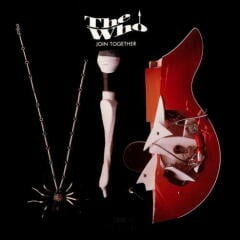
About the song
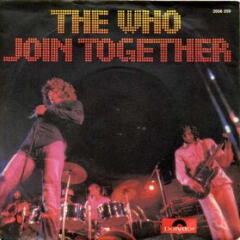
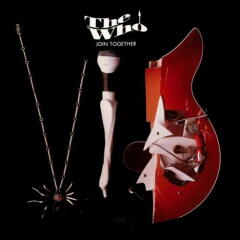
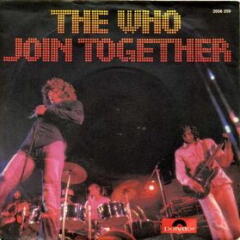
“Join Together” was written by Pete Townshend. The song was originally intended to be a part of The Who’s Lifehouse project, an unfinished science fiction rock opera that Pete Townshend was writing as a follow-up to Tommy. Recorded at Olympic Studios in London in May 1972, “Join Together” was released as a single in June 1972. Produced by The Who with Glyn Johns, it went to #17 on the Billboard Hot 100 Singles chart. The song has been included in several Who compilation albums, beginning with the Hooligans double hits album released in September 1981. Personnel on the record were: Roger Daltry (lead vocals, harmonica), Pete Townshend (guitar, synthesizer, Jew's harp, backing vocals), John Entwistle (bass, backing vocals), and Keith Moon (drums).
Hooligans is a double compilation record of hits from The Who running from 1964 to 1978. Released in September 1981, the LP went to #52 on the Billboard 200 Albums chart and has been certified Gold by the Recording Industry Association of America.
The Who are an English rock band formed in London in 1964. Its core lineup was Roger Daltry on lead vocals, Pete Townshend on guitar, John Entwistle on bass, and Keith Moon on drums. They are considered by many to be one of the most influential rock bands of the 20th century. They have released 12 studio albums, 16 live albums, four soundtrack albums, 27 compilation albums, four EPs and 58 singles and have sold over 100 million records worldwide. The Who are members of the Rock and Roll Hall of Fame and UK Music Hall of Fame, and are the recipients of a Lifetime Achievement Award from the Grammy Foundation. Roger Daltry and Pete Townshend received Kennedy Center Honors as members of The Who in 2008. Daltry and Townshend have both released solo albums over the years, and both continue to record and tour as The Who. The Who are currently on the road with The Who Hits Back! tour in the UK.




Comments
RBN, I just wanted to point out that there is another significant player in the midstream infrastructure being built for the Marcellus/Utica. Utica East Ohio Midstream currently has 920 MMcf/d of gas processing built, 88 MBpd of C3+ fractionation capacity and will have 950,000 Bbls of NGL storage in-service by year end 2015.
Utica East Ohio Midstream is a joint venture between Momentum, Williams (formally Access Midstream), and EnerVest.
Thanks for all of the great write ups and I enjoy reading the morning notes.
Ben