The fast-growing need for natural gas processing and fractionation capacity in the Marcellus/Utica is creating tremendous opportunities for midstream companies. But determining which assets to develop and when to develop them is complicated by the volatility of hydrocarbon markets, and by the fact that the region has only minimal NGL storage capacity. In today’s blog, we continue our in-depth review of NGL-related infrastructure in the Upper Ohio River Valley with a look at Blue Racer’s existing and planned assets there.
The Utica and Marcellus regions have become a real hot-spot in the natural gas and natural gas liquids (NGL) world in the past four years. As we said in Episode 1 and Episode 2 of our series, natural gas production in Pennsylvania, West Virginia and Ohio now approaches 20 Bcf/d—five times where it stood in 2011. And as interest in the Utica and Marcellus areas west and south of Pittsburgh soared over that same period, gas processing capacity has rocketed too, from 600 MMcf/d to 7.6 Bcf/d. NGL production from those gas plants now exceeds 245 Mb/d, and an ever-increasing amounts of those mixed or “y-grade” NGLs are being fractionated locally into ethane and other NGL purity products. In Episode 3 we started our deep dive into the Marcellus/Utica’s midstream infrastructure with a discussion of the eight major pipelines that move natural gas through and out of the region; and in Episode 4 and Episode 5 we considered the gas processing plants, de-ethanizers and C3+ fractionation facilities MarkWest has been developing. (For more on what de-ethanizers, C3+ plants and fractionators do, see Episode 5.) Then, last time in Episode 6, we described the ethane and C3+/Y-grade pipeline interconnections between MarkWest’s eight (and soon nine) gas/NGL complexes in southwestern Pennsylvania, northern West Virginia and eastern Ohio, and their links to third-party pipelines that take NGLs out of the region. We also explained how the elements of MarkWest’s “machine” work together to ensure smooth operation, even in the event of NGL-takeaway disruptions that could otherwise be very troublesome in a region without much NGL storage capacity to take up the slack. The fact that we devoted three blogs to describing MarkWest’s gas processing, fractionation and NGL pipeline assets reflects the company’s unquestioned big-dog status in the Marcellus/Utica midstream sector.
But there is a lot more important midstream development going on in the Marcellus/Utica. A major player in the region concentrating primarily on the Utica is Blue Racer Midstream. The company is a joint venture of Caiman Energy II and Dominion formed in December 2012 to own, operate, develop and acquire midstream assets in the Utica Shale and certain adjacent areas in the Marcellus Shale. As part of the formation of the company, Dominion contributed most of its gathering and processing assets in the region, including Dominion East Ohio’s existing rich gas gathering network, other portions of its gathering system, Dominion’s Natrium Extraction Plant and a Dominion Transmission pipeline connecting Natrium to the Dominion East Ohio gathering system. Blue Racer (named for a fast-moving snake found in the Midwest) calls its interconnected network in the region the “Super System,” and can use this system to gather and process natural gas, fractionate NGLs and deliver residue gas and purity NGL products to multiple locations. Blue Racer’s aim is to both provide that end-market optionality and—through the connectivity between its facilities—to give its producer customers a high degree of operational reliability, even if an NGL takeaway pipeline is shut down unexpectedly. Let’s run through Blue Racer’s assets in the region using RBN’s new Pipeline GIS map-building system.
|
Today’s blog utilizes RBN’s new Pipeline GIS, a Geographical Information System (GIS) capability provided for RBN members and Backstage Pass subscribers. For more information, click on the map below. |
The map in Figure #1shows Blue Racer’s existing and planned infrastructure in the region. Plants are the small blue dots and the fractionator is the larger orange dot. Where there are multiple facilities at the same location, the dots are stacked. Any facility that is planned (does not exist yet) has a black outline, so the Lewis plant is shown outlined in black. For reference we also show Spectra’s Texas Eastern (TETCO) pipeline that runs by Blue Racer’s Berne and Natrium plants.
If you click on Figure #1 it will take you to the ‘live’ version of the map in Pipeline GIS. You can turn the pipelines, plants, and fractionators on and off to better see how components of the system work together.
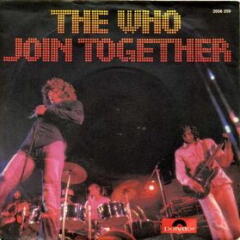
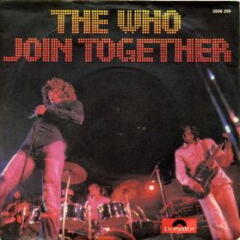
About the song
“Join Together” was written by Pete Townshend. The song was originally intended to be a part of The Who’s Lifehouse project, an unfinished science fiction rock opera that Pete Townshend was writing as a follow-up to Tommy. Recorded at Olympic Studios in London in May 1972, “Join Together” was released as a single in June 1972. Produced by The Who with Glyn Johns, it went to #17 on the Billboard Hot 100 Singles chart. The song has been included in several Who compilation albums, beginning with the Hooligans double hits album released in September 1981. Personnel on the record were: Roger Daltry (lead vocals, harmonica), Pete Townshend (guitar, synthesizer, Jew's harp, backing vocals), John Entwistle (bass, backing vocals), and Keith Moon (drums).
Hooligans is a double compilation record of hits from The Who running from 1964 to 1978. Released in September 1981, the LP went to #52 on the Billboard 200 Albums chart and has been certified Gold by the Recording Industry Association of America.
The Who are an English rock band formed in London in 1964. Its core lineup was Roger Daltry on lead vocals, Pete Townshend on guitar, John Entwistle on bass, and Keith Moon on drums. They are considered by many to be one of the most influential rock bands of the 20th century. They have released 12 studio albums, 16 live albums, four soundtrack albums, 27 compilation albums, four EPs and 58 singles and have sold over 100 million records worldwide. The Who are members of the Rock and Roll Hall of Fame and UK Music Hall of Fame, and are the recipients of a Lifetime Achievement Award from the Grammy Foundation. Roger Daltry and Pete Townshend received Kennedy Center Honors as members of The Who in 2008. Daltry and Townshend have both released solo albums over the years, and both continue to record and tour as The Who. The Who are currently on the road with The Who Hits Back! tour in the UK.