In the past 10 years Marcellus and Utica shale drilling has transformed the U.S. Northeast from a sleepy backwater of gas production into a powerhouse that (according to the Energy Information Administration) supplied 22% of total U.S. gas production in December 2014. NGL production from the region is already 8% of the U.S. total and likely headed toward 20% by 2020. These vast shale formations cover most of Pennsylvania, West Virginia and Eastern Ohio, but it turns out that most of the production comes from only 20 or so counties across those three states. Such geographic concentration has significant implications for regional infrastructure development and capacity. Today we describe where producers have found success in the region.
In Part 1 we described the huge growth in Marcellus natural gas production since 2010 and the subsequent expansion in natural gas liquids (NGL) production from Marcellus and Utica shale wet gas when drillers switched their focus to liquids in 2011 (see Join Together With Demand). In the five years since gas production took off in the Marcellus, gas processing capacity in the northeast has expanded nearly 13 times from 600 MMcf/d to 7,600 MMcf/d. NGL production from those plants is now over 245 Mb/d. Midstream companies have built gas processing infrastructure from a small group of stand-alone plants into a fully integrated system designed to operate without the luxury of significant NGL storage capacity. How that works is the subject of this blog series and the clue is in our title - “Join Together With Demand” – designing infrastructure to join supply to demand with fault tolerance as a foundation of the design. In this episode we provide an overview of the Marcellus and Utica producing regions.
Figure #1 shows the northeast U.S. with the Marcellus (dark grey shaded area) and Utica (lighter grey shading). The Utica completely envelops the Marcellus, so in effect the Marcellus region shown is where the basins overlap. The two areas where drilling (and thus production growth) is concentrated are shown in the two yellow shaded ovals. The Marcellus formation is named for a distinctive outcrop near the village of Marcellus, New York and it extends throughout much of the Appalachian Basin from upstate New York south through Pennsylvania to West Virginia and west to parts of Ohio. The Utica shale formation lies a few thousand feet underneath the Marcellus and is thicker and more geographically extensive – extending over the U.S. border into Quebec. Most of the drilling activity in the Utica Shale has occurred in eastern Ohio where it is less than 3000 feet below the Marcellus. The productive portion of the Marcellus shale does not extend into Ohio. In contrast, the Utica is very deep in Pennsylvania making the shallower Marcellus a better drilling target for most producers. (There are exceptions to that rule that we’ll get to in a later episode of this blog series).
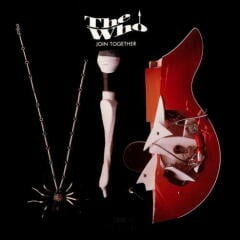
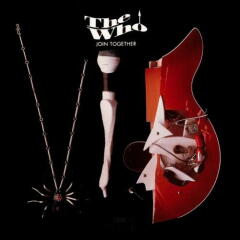
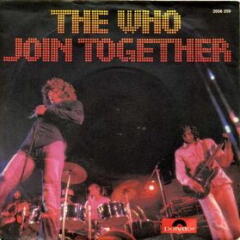
About the song
“Join Together” was written by Pete Townshend. The song was originally intended to be a part of The Who’s Lifehouse project, an unfinished science fiction rock opera that Pete Townshend was writing as a follow-up to Tommy. Recorded at Olympic Studios in London in May 1972, “Join Together” was released as a single in June 1972. Produced by The Who with Glyn Johns, it went to #17 on the Billboard Hot 100 Singles chart. The song has been included in several Who compilation albums, beginning with the Hooligans double hits album released in September 1981. Personnel on the record were: Roger Daltry (lead vocals, harmonica), Pete Townshend (guitar, synthesizer, Jew's harp, backing vocals), John Entwistle (bass, backing vocals), and Keith Moon (drums).
Hooligans is a double compilation record of hits from The Who running from 1964 to 1978. Released in September 1981, the LP went to #52 on the Billboard 200 Albums chart and has been certified Gold by the Recording Industry Association of America.
The Who are an English rock band formed in London in 1964. Its core lineup was Roger Daltry on lead vocals, Pete Townshend on guitar, John Entwistle on bass, and Keith Moon on drums. They are considered by many to be one of the most influential rock bands of the 20th century. They have released 12 studio albums, 16 live albums, four soundtrack albums, 27 compilation albums, four EPs and 58 singles and have sold over 100 million records worldwide. The Who are members of the Rock and Roll Hall of Fame and UK Music Hall of Fame, and are the recipients of a Lifetime Achievement Award from the Grammy Foundation. Roger Daltry and Pete Townshend received Kennedy Center Honors as members of The Who in 2008. Daltry and Townshend have both released solo albums over the years, and both continue to record and tour as The Who. The Who are currently on the road with The Who Hits Back! tour in the UK.