


Growing volumes of natural gas liquids (NGLs) produced in the Marcellus and Utica need to find a market – inside or outside the region. Getting them to outside markets involves transportation by pipeline, rail, truck or barge. Local demand is either from traditional “legacy” customers that consume propane, butane and natural gasoline or from new ethane-consuming projects such as proposed ethylene crackers. What’s already been done to address the demand side of the NGL equation, and what’s being planned? Today, we conclude our series on NGL infrastructure in the Upper Ohio River Valley with a look at where all those NGLs will be heading.
NGL production in the Marcellus and Utica is expected to top 800 Mb/d within a year or so and may top 1 MMb/d or even 1.2 MMb/d by the 2020 if the recent pullback in drilling is reversed. Given that it can be challenging to store NGLs (ethane in particular) and that the region has little in the way of NGL storage capacity, the increasing supply of NGLs from southwestern Pennsylvania, northern West Virginia and eastern Ohio needs to “join together with demand” (as our series title has been hinting at). Of course some ethane can be “rejected” into the natural gas, but there are BTU limits to pipeline-quality gas—and besides, gas/NGL producers would prefer to sell their ethane to petchem producers, assuming the price is right. The question is, where will the demand for Marcellus/Utica-sourced NGLs come from? Local crackers? Gulf Coast crackers? Export markets? All of the above?
Our series has provided a step-by-step review of the Marcellus/Utica region’s emergence as an NGL production powerhouse. We started in Episode 1 with a description of the region’s history and hydrocarbon potential, followed that up with more detail in Episode 2, then took a look (in Episode 3) at the major natural gas pipelines already criss-crossing the region that are being reworked and expanded to provide increased gas takeaway capacity. In Episode 4 and Episode 5 we considered the gas processing and fractionation assets of MarkWest Energy Partners, and in Episode 6 how the elements of MarkWest’s “machine” are designed to function efficiently, even in the event of NGL-takeaway disruptions. Then, in Episode 7, we looked at the NGL-related assets of Blue Racer Midstream, and in Episode 8 we examined the assets of five other NGL players in the Marcellus/Utica. Throughout the series, we’ve been aided in our discussion gets a big assist by RBN Energy’s new Pipeline GIS mapping function, which allows users to zero in on specific assets or groups of assets, and to add in (or take out) layers of assets—all with the idea of helping to understand how the region’s midstream assets fit together.
The last pieces of the region’s NGL puzzle are takeaway capacity and local consumers, whose combined receipt of NGLs needs to roughly match the volumes being produced (minus any ethane being rejected into outlet gas). First, let’s look at pipelines. There are a total of seven existing or planned NGL takeaway pipelines out of the Marcellus/Utica, some ethane-only, some capable of moving batches of ethane and other NGLs, and one planned system focused on moving mixed or “Y-grade” NGLs.
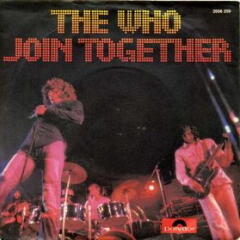
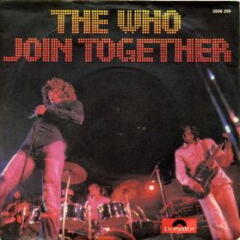
About the song
“Join Together” was written by Pete Townshend. The song was originally intended to be a part of The Who’s Lifehouse project, an unfinished science fiction rock opera that Pete Townshend was writing as a follow-up to Tommy. Recorded at Olympic Studios in London in May 1972, “Join Together” was released as a single in June 1972. Produced by The Who with Glyn Johns, it went to #17 on the Billboard Hot 100 Singles chart. The song has been included in several Who compilation albums, beginning with the Hooligans double hits album released in September 1981. Personnel on the record were: Roger Daltry (lead vocals, harmonica), Pete Townshend (guitar, synthesizer, Jew's harp, backing vocals), John Entwistle (bass, backing vocals), and Keith Moon (drums).
Hooligans is a double compilation record of hits from The Who running from 1964 to 1978. Released in September 1981, the LP went to #52 on the Billboard 200 Albums chart and has been certified Gold by the Recording Industry Association of America.
The Who are an English rock band formed in London in 1964. Its core lineup was Roger Daltry on lead vocals, Pete Townshend on guitar, John Entwistle on bass, and Keith Moon on drums. They are considered by many to be one of the most influential rock bands of the 20th century. They have released 12 studio albums, 16 live albums, four soundtrack albums, 27 compilation albums, four EPs and 58 singles and have sold over 100 million records worldwide. The Who are members of the Rock and Roll Hall of Fame and UK Music Hall of Fame, and are the recipients of a Lifetime Achievement Award from the Grammy Foundation. Roger Daltry and Pete Townshend received Kennedy Center Honors as members of The Who in 2008. Daltry and Townshend have both released solo albums over the years, and both continue to record and tour as The Who. The Who are currently on the road with The Who Hits Back! tour in the UK.




Comments
Dear Mr. Carr
As you have written, none of the cracker projects developers have made a FID, Shell may be ahead of them all because of the permits.
In the case of Odebrecht´s cracker, Braskem´s CEO, Mr Carlos Fadigas has declared it´s WV project could be similar to their Mexico´s Ethylene XXI project, which includes the following plantas: ethylene 1,050 m tonne/year (MTA); two HDPE plants 400 and 350 MTA (INEOS technology) and a LDPE Lyondell technolugy 300 MTA plant. The project is also has a cogeneration plant.
Ethane will be supplied by Pemex (66,000 bbl/day) and investment is near 5 billion UD$