



A $100/bbl diesel crack spread is an incredibly strong market signal, but it doesn’t translate to higher refinery output because most U.S. refiners already operate at or near their practical limits. As global supply disruptions drain inventories and foreign buyers pull more barrels from the U.S., diesel prices have surged even as domestic refinery runs remain near historic highs. In today’s RBN blog, we look at why high crack spreads don’t necessarily increase a refinery’s output, how market disruptions elsewhere can drain U.S. inventories, and the indicators that will help tell us whether the diesel squeeze is easing (or worsening).
As we noted in Part 1 of this mini-series, 2026 will be remembered by some as the year that diesel cracks topped the century mark ($100/bbl) for the first time. On August 17, the U.S. Gulf Coast diesel crack spread (vs. WTI Cushing) surpassed that sky-high level. On Monday, September 1, 2026, the diesel crack closed at $103.29/bbl, the highest close on record, before reaching a record high intraday price the following day of $108.02/bbl. As of publication, the diesel crack soared even higher, closing at a new record high of $107.72/bbl on September 10. It’s important to note that global crude markets are not terribly short of crude in the traditional sense (despite various geopolitically driven constraints). Instead, the world is struggling to refine enough crude oil into middle distillates to satisfy demand. U.S. distillate stocks in August were on track for their lowest end-of-month level since April 2005 and were the lowest for the month since 1951.

The Future of Fuels bi-annual report by RBN's Refined Fuels Analytics provides an in-depth analysis of the U.S. and global refinery industries, focusing on crude oil and fuel market dynamics, supply and demand, alternative fuels, refinery capacities, and price forecasts to help stakeholders navigate the evolving energy landscape.
A crack spread measures the difference between the value of refined products and the crude oil used to produce them. A $100/bbl headline diesel crack (the right end of the orange line, measured against the left axis in Figure 1 below) does not mean a refinery earns $100/bbl in net profit.
First and foremost, U.S. refiners and importers currently incur approximately $15 in RVO/RIN compliance costs for every barrel of diesel sold domestically. That cost is passed through 100% into the domestic diesel price. The headline crack therefore includes the full RVO/RIN cost—an amount the refinery must spend on compliance rather than retain as margin. To calculate the effective crack spread, the entire RVO/RIN cost per barrel of diesel must be deducted:
Effective diesel crack = Headline diesel crack − RVO/RIN cost per barrel of diesel.
Thus, a $100/bbl headline crack less than a $15/bbl RVO/RIN cost yields an $85/bbl effective crack (still a historical high value), before operating costs and other expenses. The same distinction explains why, on a comparable basis, U.S. diesel exports to Latin America typically sell at a discount to domestic diesel equal to the RVO/RIN cost: exported barrels do not carry that domestic compliance obligation.
In addition, refiners still have operating expenses, transportation costs, financing costs, hedging effects and the economics of the other products produced by the refinery. Instead, it means that the market value of diesel relative to crude has become extraordinarily high. If crude (blue line and left axis) is expensive because the world is short of barrels, crude prices should be doing most of the work. But when diesel prices (green dashed line and right axis) rise dramatically relative to crude, the problem is further downstream.
About the song
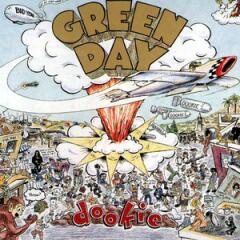
The music for “Basket Case” was written by Green Day, with lyrics by Billie Joe Armstrong. It appears as the seventh song on Green Day’s third studio album, Dookie. Released as the second single from the album in August 1994, it went to #1 on the Billboard Alternative Airplay and #16 on the Billboard Hot 100 Singles charts. The video for the song was filmed at the abandoned Agnew’s Development Center mental institution in Santa Clara, CA, and was directed by Mark Kohr. The video was influenced by the movie One Flew Over the Cuckoo’s Nest, and perhaps by the video of The Cramps performing live at the California State Mental Institution in Napa, CA, in June 1978. The “Basket Case” video was nominated for nine MTV Video Music Awards in 1995 but didn’t win any. Personnel on the record were: Billie Joe Armstrong (lead vocals, guitar), Mike Dirnt (bass, backing vocals), and Tre’ Cool (drums).
Dookie was the band’s first album for a major label (Reprise). It was recorded in September-October 1993 at Fantasy in Berkeley and Music Grinder in Los Angeles with Rob Cavallo and Green Day producing. Released in February 1994, it went to #2 on the Billboard 200 Albums chart and has been certified Diamond (10 million units sold) by the Recording Industry Association of America. In 2024 the album was selected for preservation in the Library of Congress’s U.S. National Recording Registry. Four singles were released from the LP.
Green Day is an American punk rock band formed in Rodeo, CA, in 1987 by Billie Joe Armstrong, Mike Dirnt and Tre’ Cool. They have released 14 studio albums, four live albums, four compilation albums, one soundtrack album, 12 EPs and 50 singles and have sold over 75 million records worldwide. In 2010 a stage adaptation of their album American Idiot played successfully on Broadway, earning two Tony Awards. They have won three American Music Awards, two ASCAP Pop Music Awards, six Billboard Music Awards, two Brit Awards, five Grammy Awards, and 11 MTV Video Music Awards. The group was inducted into the Rock and Roll Hall of Fame in 2015. They last played live at the opening ceremony of Super Bowl LX in February, and have no concert appearances scheduled in the immediate future. They recently released a new single, “I’m Never Gonna R.I.P.,” off of the soundtrack for the comedy film Nimrods, released in August.
"About the Song" -- written by Mickey McMahan , RBN Director of Musicology





Comments
How does Indian diesel export affect the market? The Indian diesel exports have been in the news since the beginning of the Ukraine-Russian conflict.