For many, 2026 will be remembered as the year that diesel cracks topped the century mark ($100/bbl) for the first time. On August 17, the U.S. Gulf Coast diesel crack spread (vs. WTI Cushing) surpassed that sky-high level, and although it has since fallen into the $90s/bbl range, it remains at levels never seen before, even exceeding those during the post-COVID boom year of 2022. In today’s RBN blog, we examine the various factors driving this run-up and what they say about the overall physical refined products market.
Let’s start with some background about where things stand today. The global crude markets are not short of crude in the traditional sense (despite various geopolitically caused constraints). Instead, the world is struggling to refine enough crude oil into middle distillates to satisfy demand. That distinction is critical. According to the EIA’s Weekly Petroleum Status Report (WPSR) for the week ended August 21, distillate inventories fell for a fourth consecutive week, dropping to just above 103 MMbbl (see our Crude Billboard for more details). Distillate stocks are on track for their lowest end-of-month level since April 2005, and are the lowest they have been in the month of August since 1951.

The Natural Gas Master Class is a one-day online event focusing on understanding flow analysis, interpreting pipeline data and forecasting future flows. This course is designed to equip you with the knowledge and skills to effectively analyze the complexities of natural gas markets, flow analysis, and pipeline modeling. Join us online
October 21 | Online
The events of 2026 have created a series of simultaneous disruptions to global refining capacity and refined-product flows. Middle Eastern refineries have been affected by damage inflicted during the Iran conflict and disruptions around the Strait of Hormuz, while Russian refining and exports have been repeatedly set back by Ukrainian drone attacks. This is all coming at a time when global refining capacity was already tight due to a number of permanent shutdowns (many during the COVID years) and limited new capacity coming online. As a result, even as U.S. refiners have been running exceptionally hard and exporting record volumes, the world supply of middle distillates (including diesel and jet fuel) is playing catch-up with demand, resulting in a market in which every additional diesel barrel has become extremely valuable.
A crack spread measures the difference between the value of refined products and the crude oil used to produce them. A $100/bbl diesel crack (right end of orange line and left axis in Figure 1 below), therefore, does not mean a refinery is earning $100/bbl in net profit. Refiners still have operating expenses, transportation costs, financing costs, hedging effects and the economics of the other products produced by the refinery. Instead, it means that the market value of diesel relative to crude has become extraordinarily high. That distinction gives us the first major clue about what is happening. If crude (blue line and left axis) is expensive because the world is short of barrels, crude prices should be doing most of the work. But when diesel prices (green dashed line and right axis) rise dramatically relative to crude, the problem is further downstream.
About the song
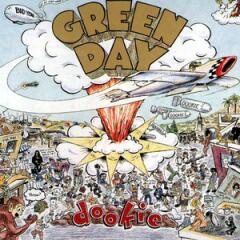
The music for “Basket Case” was written by Green Day, with lyrics by Billie Joe Armstrong. It appears as the seventh song on Green Day’s third studio album, Dookie. Released as the second single from the album in August 1994, it went to #1 on the Billboard Alternative Airplay and #16 on the Billboard Hot 100 Singles charts. The video for the song was filmed at the abandoned Agnew’s Development Center mental institution in Santa Clara, CA, and was directed by Mark Kohr. The video was influenced by the movie One Flew Over the Cuckoo’s Nest, and perhaps by the video of The Cramps performing live at the California State Mental Institution in Napa, CA, in June 1978. The “Basket Case” video was nominated for nine MTV Video Music Awards in 1995 but didn’t win any. Personnel on the record were: Billie Joe Armstrong (lead vocals, guitar), Mike Dirnt (bass, backing vocals), and Tre’ Cool (drums).
Dookie was the band’s first album for a major label (Reprise). It was recorded in September-October 1993 at Fantasy in Berkeley and Music Grinder in Los Angeles with Rob Cavallo and Green Day producing. Released in February 1994, it went to #2 on the Billboard 200 Albums chart and has been certified Diamond (10 million units sold) by the Recording Industry Association of America. In 2024 the album was selected for preservation in the Library of Congress’s U.S. National Recording Registry. Four singles were released from the LP.
Green Day is an American punk rock band formed in Rodeo, CA, in 1987 by Billie Joe Armstrong, Mike Dirnt and Tre’ Cool. They have released 14 studio albums, four live albums, four compilation albums, one soundtrack album, 12 EPs and 50 singles and have sold over 75 million records worldwide. In 2010 a stage adaptation of their album American Idiot played successfully on Broadway, earning two Tony Awards. They have won three American Music Awards, two ASCAP Pop Music Awards, six Billboard Music Awards, two Brit Awards, five Grammy Awards, and 11 MTV Video Music Awards. The group was inducted into the Rock and Roll Hall of Fame in 2015. They last played live at the opening ceremony of Super Bowl LX in February, and have no concert appearances scheduled in the immediate future. They recently released a new single, “I’m Never Gonna R.I.P.,” off of the soundtrack for the comedy film Nimrods, released in August.
"About the Song" -- written by Mickey McMahan , RBN Director of Musicology