Thanks to a warm start to the season and low Asian demand for LNG, Europe has so far been able to stave off a worst-case scenario for natural gas supply this winter. Still, the European market is keeping a keen eye on the years ahead, when the continent will need to rely on new sources of LNG to meet demand and refill inventories with little chance of any Russian gas. The call for more LNG has ushered in a new wave of export-project development, with two U.S. projects reaching a positive final investment decision (FID) this year and LNG offtakers in Europe and elsewhere committing to an incredible 37 MMtpa (4.9 Bcf/d) of long-term contracts from pre-FID sites in North America. This momentum has revived a number of projects from the COVID-induced wasteland, including Sempra’s Port Arthur LNG. In today’s RBN blog, we continue our series on U.S. LNG projects by taking a closer look at Port Arthur, the one most likely to take FID next.

So far in this series we’ve looked at four different U.S. projects. Two of them — Plaquemines LNG and Corpus Christi Stage III, the subjects of Part 1 and Part 2 — have both now taken FID. In Part 4, we discussed NextDecade’s Rio Grande LNG, which closed multiple sales and purchase agreements (SPAs) over the summer and has now sold 75% of its Phase 1 capacity. NextDecade, which is still securing offtakers and financing for the project, raised $85 million in September through a private placement equity sale. Although taking perhaps a little longer than expected, the project remains likely to move forward at this point.
If you’re thinking, “Hey, you skipped Part 3,” there’s a reason for that. That blog covered Tellurian’s controversial Driftwood LNG, which at the time had already begun construction despite not having secured full financing. Since then, Tellurian and Driftwood publicly suffered a major setback after losing two of the project’s three offtakers and rescinding a bond offering due to lack of interest. But Tellurian’s drama has more to do with its project structure than the wider LNG market environment, and other projects continue to see support and make progress toward FID, including the project we’re looking at today, Port Arthur, which in the past few months has leap-frogged several other projects in development and is closing in on FID in the next few months.
About the song
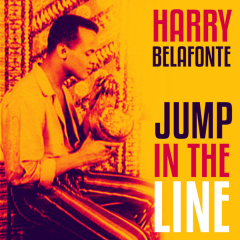
“Jump in the Line (Shake Senora)” was written by Lord Kitchener (“Kitch” was known as the “grand master of calypso” and later was a pioneer in the Soca music movement). The song appears as the seventh tune on Harry Belafonte’s 11th studio album, Jump Up Calypso, and was released as a single in November 1961. It has been covered by many artists over the years, with Belafonte’s version being featured during the end of Tim Burton’s 1988 hit comedy/horror film, Beetlejuice. Personnel on the record were: Harry Belafonte (vocals), The Trinidad Steel Band (instrumentation), Ernie Calabria, Millard Thomas (guitar), and Norman Keenan (bass).
Jump Up Calypso was recorded in 1960 and produced by Bob Bollard. Released in November 1961, the album went to #3 on the Billboard 200 Albums chart.
Harry Belafonte (Harold George Bellanfanti Jr.) is an American singer, songwriter, activist, and actor. He was born in Harlem to Jamaican parents. In the late 1940s Belafonte took acting lessons at the Dramatic Workshop of the New School in New York City alongside Marlon Brando, Sidney Portier and Tony Curtis. He received a Tony Award for his acting in the Broadway revue John Murray Anderson’s Almanac in 1954. He started his career as a singer in New York to help pay for his acting lessons. The first time he sang in front of an audience he was backed up by the Charlie Parker band. His breakthrough album in 1956, Calypso, became the first LP to sell a million copies within a year. It contained his most famous song, “The Banana Boat Song,” with its call and response lyric: “Day-O.” Belafonte has released 30 studio albums, eight live albums, three compilation albums and 20 singles. He has appeared in 35 films and documentaries, and 25 television shows. He has been a longtime humanitarian and political activist, and has won three Grammy Awards, one Emmy Award and one Tony Award. He has received a Kennedy Center Honor, a National Medal of Arts and a Grammy Lifetime Achievement Award, and has a star on the Hollywood Walk of Fame. At the age of 95, he is still active in film, music, and political activism.