Cheniere Energy is by far the largest owner and operator of U.S. LNG capacity, with 45 MMtpa across nine liquefaction trains at two terminals: the six-train Sabine Pass facility in Louisiana and the three-train Corpus Christi terminal in South Texas. But when Sabine Pass Train 6 was placed into service earlier this year, it marked the first time since 2012 that Cheniere had no capacity under construction. The pause may not last long. With global demand for LNG super-strong and prices even stronger — the April Dutch Title Transfer Facility (TTF) contract hit a record $72.53/MMBtu on March 7 — and Russia’s invasion of Ukraine threatening future supplies of Russian gas into Europe, Cheniere may be poised to make a final investment decision (FID) on the next stage of its Corpus Christi LNG. In today’s RBN blog, we continue our series on the next wave of U.S. LNG projects with a closer look at Cheniere’s Corpus Christi Stage III.
As we’ve been saying in recent days, any discussion of global energy markets — particularly Europe’s need for more natural gas — needs to be prefaced by a pause to acknowledge the human tragedy unfolding in Ukraine. We are living through a defining moment in history, and our hearts are with those fighting to defend freedom.

Visualize the infrastructure behind U.S. NGL movement.
The U.S. NGLs Map provides a comprehensive view of the transport, processing, and export networks moving NGLs across the U.S.
Global gas prices — marked by the TTF and the UK’s National Balancing Point (NBP) in Europe and the Japan-Korea Marker (JKM) in Asia — have been on a volatile and incredibly bullish run for well over a year. The winter of 2020-21 saw what at the time was a record price spike for JKM, which flirted with $20/MMBtu in January 2021 before falling back as last winter came to a close. But prices didn’t fall far, or for long — a late-season cold snap pushed European storage inventories to their lowest levels in recent history (see Summertime), and that, coupled with rebounding global demand and extreme weather events, combined to exert upward pressure on prices through the spring, summer and fall.
About the song
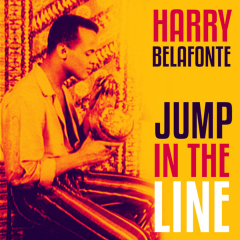
“Jump in the Line (Shake Senora)” was written by Lord Kitchener (“Kitch” was known as the “grand master of calypso” and later was a pioneer in the Soca music movement). The song appears as the seventh tune on Harry Belafonte’s 11th studio album, Jump Up Calypso, and was released as a single in November 1961. It has been covered by many artists over the years, with Belafonte’s version being featured during the end of Tim Burton’s 1988 hit comedy/horror film, Beetlejuice. Personnel on the record were: Harry Belafonte (vocals), The Trinidad Steel Band (instrumentation), Ernie Calabria, Millard Thomas (guitar), and Norman Keenan (bass).
Jump Up Calypso was recorded in 1960 and produced by Bob Bollard. Released in November 1961, the album went to #3 on the Billboard 200 Albums chart.
Harry Belafonte (Harold George Bellanfanti Jr.) is an American singer, songwriter, activist, and actor. He was born in Harlem to Jamaican parents. In the late 1940s Belafonte took acting lessons at the Dramatic Workshop of the New School in New York City alongside Marlon Brando, Sidney Portier and Tony Curtis. He received a Tony Award for his acting in the Broadway revue John Murray Anderson’s Almanac in 1954. He started his career as a singer in New York to help pay for his acting lessons. The first time he sang in front of an audience he was backed up by the Charlie Parker band. His breakthrough album in 1956, Calypso, became the first LP to sell a million copies within a year. It contained his most famous song, “The Banana Boat Song,” with its call and response lyric: “Day-O.” Belafonte has released 30 studio albums, eight live albums, three compilation albums and 20 singles. He has appeared in 35 films and documentaries, and 25 television shows. He has been a longtime humanitarian and political activist, and has won three Grammy Awards, one Emmy Award and one Tony Award. He has received a Kennedy Center Honor, a National Medal of Arts and a Grammy Lifetime Achievement Award, and has a star on the Hollywood Walk of Fame. At the age of 95, he is still active in film, music, and political activism.