The world needs more LNG and the U.S. is answering that call. Two U.S. liquefaction projects, Venture Global’s Plaquemines LNG and Cheniere’s Corpus Christi Stage III, have already reached a final investment decision (FID) on a combined 23.3 MMtpa (3.1 Bcf/d) of export capacity, which will be online by mid-decade. But by the looks of it, we are just getting started. Next up could be NextDecade’s Rio Grande LNG, which has sold 75% of its first two trains’ capacity — enough to take FID, possibly by the end of the year. If it moves forward, not only will the project add another 10.8 MMtpa (1.43 Bcf/d) or more of export capacity to the Gulf Coast, it could also come with a new carbon capture and sequestration (CCS) facility, which has long been a selling point for the project. In today’s RBN blog, we continue our series on the U.S. LNG projects most likely to move forward, this time with a look at Rio Grande LNG.

Visualize the infrastructure behind U.S. NGL movement.
The U.S. NGLs Map provides a comprehensive view of the transport, processing, and export networks moving NGLs across the U.S.
We began this series at the beginning of the year, when there were three U.S. LNG projects that looked poised to move forward and a handful more just behind them — making progress, but not quite to the point of FID yet. In Part 1 we started with Venture Global’s Plaquemines LNG, which became the first U.S. project to take FID in the post-COVID wave of LNG expansion. Next, in Part 2, we covered Cheniere’s Corpus Christi Stage III, whose developer has also since committed to its construction. Both projects are now being built and targeting startups in the 2024-25 timeframe. Beyond that, however, both have continued to sell capacity and are likely to see additional trains take FID before construction is complete. Venture Global so far has taken FID on 13.3 MMtpa (1.8 Bcf/d) of export capacity, but the full project is 20 MMtpa and total capacity is nearly 90% sold out. Cheniere sold 2.8 MMtpa (0.4 Bcf/d) of capacity from an unnamed expansion at Corpus Christi this summer, which it later said would come from two additional mini-trains at Stage III totaling 3.3 MMtpa (0.44 Bcf/d). The project has just started its FERC application process and is already nearly sold out.
In Part 3 in March, we covered the controversial Driftwood LNG, Tellurian’s 11-MMtpa project, which began construction in Louisiana earlier this year but was finding it extremely difficult to secure financing. The project was underpinned by three 10-year deals with no liquefaction fee, which was in part why Tellurian has found financing so challenging, and now two of those deals have been scrapped. Shell pulled out of its agreement with Tellurian last week at the same time Tellurian said it was cancelling its contract with Vitol. This leaves only the 3-MMtpa, 10-year contract with Gunvor intact and means the project’s future is murkier than ever. Tellurian said it will pursue additional equity partners in the project after it pulled out of its contract with Vitol, but now essentially starts its offtaker search from scratch in a much more crowded field than when it made the now-canceled agreements.
About the song
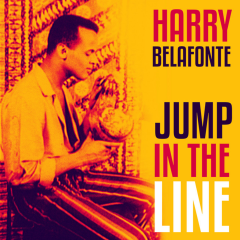
“Jump in the Line (Shake Senora)” was written by Lord Kitchener (“Kitch” was known as the “grand master of calypso” and later was a pioneer in the Soca music movement). The song appears as the seventh tune on Harry Belafonte’s 11th studio album, Jump Up Calypso, and was released as a single in November 1961. It has been covered by many artists over the years, with Belafonte’s version being featured during the end of Tim Burton’s 1988 hit comedy/horror film, Beetlejuice. Personnel on the record were: Harry Belafonte (vocals), The Trinidad Steel Band (instrumentation), Ernie Calabria, Millard Thomas (guitar), and Norman Keenan (bass).
Jump Up Calypso was recorded in 1960 and produced by Bob Bollard. Released in November 1961, the album went to #3 on the Billboard 200 Albums chart.
Harry Belafonte (Harold George Bellanfanti Jr.) is an American singer, songwriter, activist, and actor. He was born in Harlem to Jamaican parents. In the late 1940s Belafonte took acting lessons at the Dramatic Workshop of the New School in New York City alongside Marlon Brando, Sidney Portier and Tony Curtis. He received a Tony Award for his acting in the Broadway revue John Murray Anderson’s Almanac in 1954. He started his career as a singer in New York to help pay for his acting lessons. The first time he sang in front of an audience he was backed up by the Charlie Parker band. His breakthrough album in 1956, Calypso, became the first LP to sell a million copies within a year. It contained his most famous song, “The Banana Boat Song,” with its call and response lyric: “Day-O.” Belafonte has released 30 studio albums, eight live albums, three compilation albums and 20 singles. He has appeared in 35 films and documentaries, and 25 television shows. He has been a longtime humanitarian and political activist, and has won three Grammy Awards, one Emmy Award and one Tony Award. He has received a Kennedy Center Honor, a National Medal of Arts and a Grammy Lifetime Achievement Award, and has a star on the Hollywood Walk of Fame. At the age of 95, he is still active in film, music, and political activism.