The Marcellus/Utica still has vast amounts of economically recoverable natural gas to supply the ongoing surge in demand from power generators and LNG exporters. But there’s a catch: A significant step-up in Appalachian production can only occur if new pipeline infrastructure is built to transport that incremental gas to where it’s needed. In today’s RBN blog, the third in a series about Northeast gas market dynamics, we begin an analysis of the new pipelines and pipeline expansions being planned to move more gas within — and out of — the U.S.’s largest gas production region.
As we said in Part 1, while the dramatic changes happening in Texas and Louisiana have garnered most of the gas market’s attention the past year or two, the Northeast has been quietly evolving in ways that will not only shift flow patterns within the region but also affect flows to the Gulf Coast. New pipeline development is, well, no longer a pipe dream, and, as we detailed in Part 2, gas demand within the Northeast is getting a big boost from the power-generation sector as coal retirements continue and new data centers expect to rely heavily on gas-fired power.
Today, we get down to specifics regarding the new pipeline capacity that is being planned to (1) deliver incremental volumes of gas to customers in the Northeast and (2) move increasing amounts of gas to customers outside the region. We’ll start with a look at the pipeline projects aimed at markets in New England, New York and New Jersey, then shift to projects that will transport more gas within the Marcellus/Utica itself, down the Eastern Seaboard and, finally, to the Midwest. We should note up front that there’s some overlap — for example, at least a couple of projects involve moving gas west into Ohio and then down into the Southeast.
For years, it has been a largely unfulfilled dream of Marcellus/Utica producers and midstream companies to send more gas into New England. Time and again, proposals to significantly expand pipeline infrastructure into and within the six-state region hit a wall of resistance higher than the Green Monster at Fenway. But elected officials and regulators there have become more open to the idea of brownfield expansions to the existing pipeline grid, if only to reduce the need for diesel-fired power during peak winter demand periods and help replace the output of offshore wind projects being delayed or canceled due to opposition from the Trump administration.
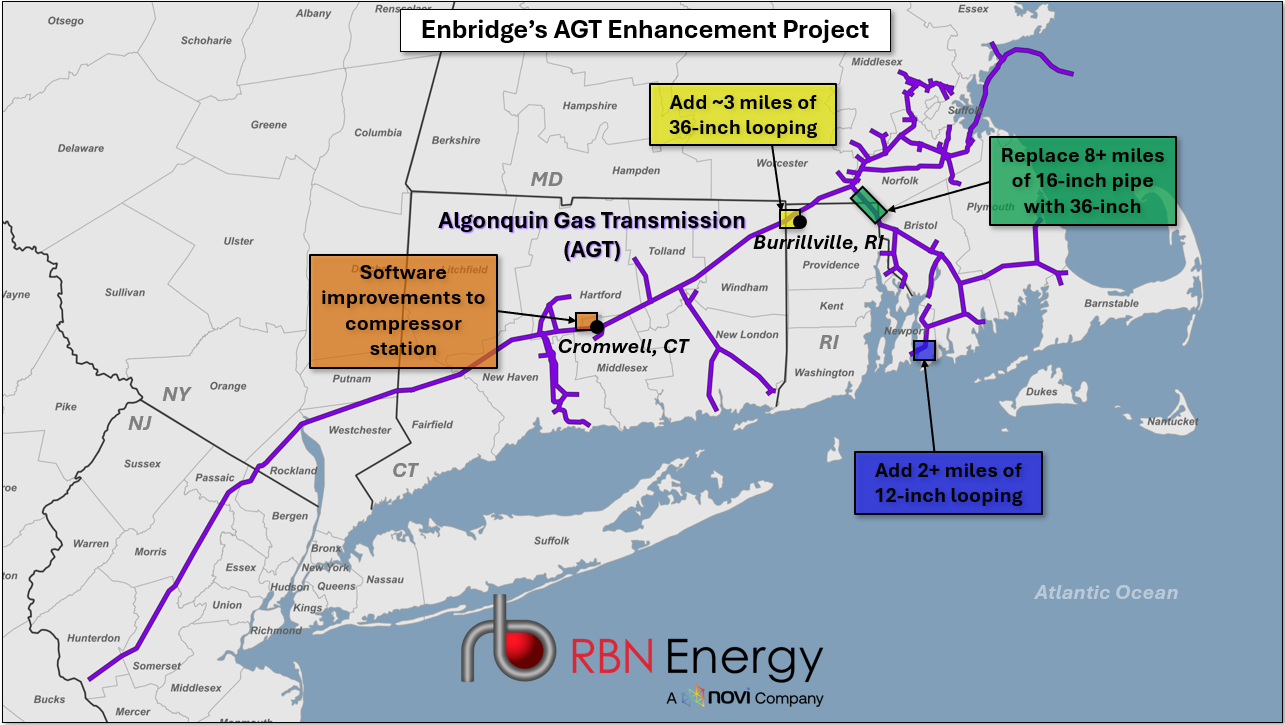
Figure 1. Enbridge’s AGT Enhancement Project. Source: Novi Labs
Plug Power Sells $39.2 Million in Federal Tax Credits from Louisiana Hydrogen Facility
Plug Power said June 2 it has closed on the sale of a federal Investment Tax Credit (ITC) for ~$39.2 million associated with its hydrogen liquefaction facility in St. Gabriel, LA, (operated through Hidrogenii, its joint venture with Olin Corp. The St. Gabriel facility was commissioned in April 2025 and can liquefy up to 15 tons of hydrogen per day.

About the song
“Movin’ Out (Anthony’s Song)” was written by Billy Joel and appears as the first song on side one of his fifth studio album, The Stranger. The song is about working-class New Yorkers struggling to achieve success in their lives. Joel said “Anthony” was a fictitious character. Released as a single in September 1977, the song went to #17 on the Billboard Hot 100 Singles chart and has been certified 2X Platinum by the Recording Industry Association of America (RIAA). Twyla Tharp produced a musical, Movin’ Out, based on the song, which played for 1,307 performances on Broadway at the Richard Rodgers Theater from 2002 to 2005. Personnel on the record were: Billy Joel (lead, backing vocals), Steve Kahn, Hiram Bullock (electric guitars), Doug Steinmeyer (bass, small block 1960s Corvette), Richie Cannata (saxophones), and Liberty DeVito (drums).
The Stranger was recorded in 1977 at A&R Studios in New York City and produced by Phil Ramone. Released in September 1977, it went to #2 on the Billboard 200 Albums chart and has been certified 12X Platinum by the RIAA. Five singles were released from the LP.
Billy Joel is an American singer, songwriter and pianist. Nicknamed “the Piano Man” after his 1973 hit single of the same name, Joel has had a successful career as a solo artist since the early 1970s. Born in the Bronx, Joel started playing piano at 4. He began his professional career playing piano bars while still in high school. His first rock band, The Hassles, made two albums for United Artists Records in 1967. Joel left The Hassles in 1969 and formed the duo Attila, which released one LP in 1970. He released his first solo album, Cold Spring Harbor, in 1971. Joel has released 13 studio albums, seven live albums, 19 compilation albums and 62 singles and has sold more than 150 million records worldwide. He has won an American Music Award, five Brit Awards, six Grammy Awards and a Tony Award, and was inducted into the Rock and Roll Hall of Fame in 1999. Joel, dealing with medical issues, made his last concert appearance at the Mohegan Sun Arena in Uncasville, CT, in February 2025. His last release was the single “Turn the Lights Back On,” which dropped in February 2024.
"About the Song" -- written by Mickey McMahan , RBN Director of Musicology